
Types and Measurement of Clouds
Definition
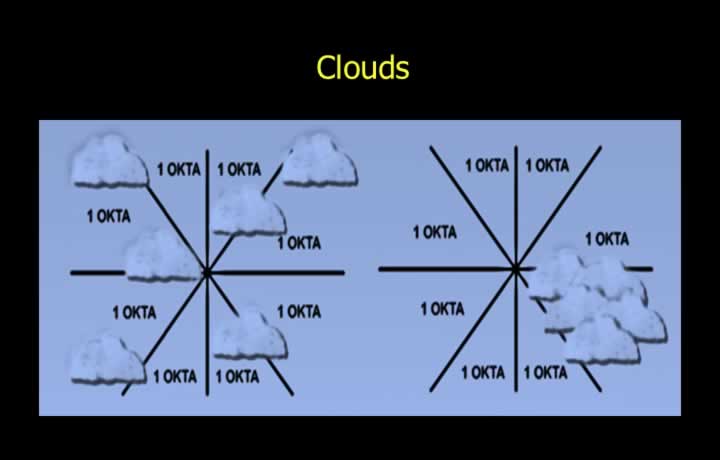
- Clouds are an aggregate of visible water droplets or ice particles formed and sustained by adiabatic lifting and cooling of air.
- Air lifted and cooled adiabatically becomes saturated, leading to condensation into water droplets or deposition into ice crystals.
- Clouds are reported based on their coverage in oktas.
Cloud Cover (Octa Scale)
- Sky clear: nil clouds
- Few: 1–2 oktas
- Scattered: 3–4 oktas
- Broken: 5–7 oktas
- Overcast: 8 oktas
- Sky not visible: cloud observation not possible due to low vertical visibility
Cloud Base and Cloud Ceiling
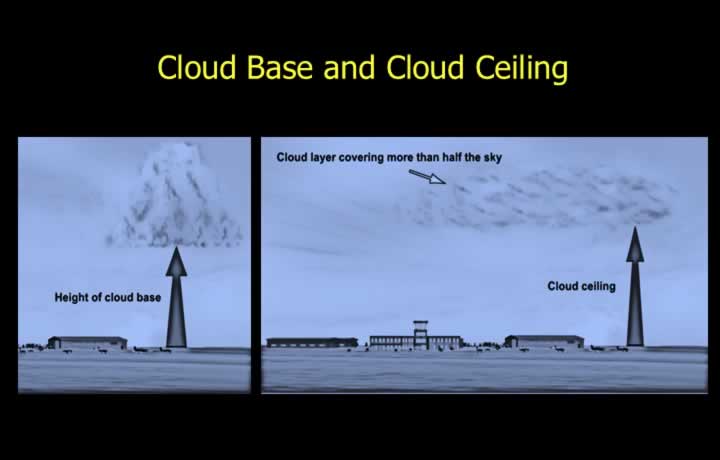
- Cloud base refers to the height of the base of the first cloud above ground level (AGL).
- It is the level where clear air transitions into visible moisture (water droplets).
- Cloud ceiling is the height of cloud base when cloud cover is 5 oktas or more below 10,000 ft.
Cloud Reporting
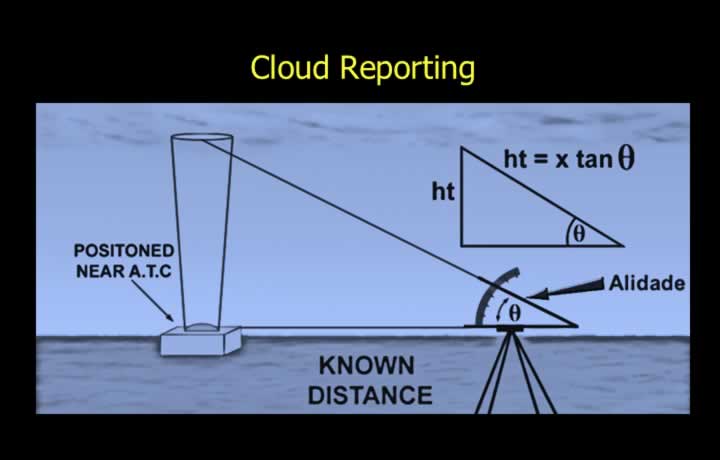
- Cloud base is measured using aircraft observations or rising balloons.
- Ceilometers (laser or optical instruments) are used to determine cloud base.
- Cloud base is reported in AGL for aerodrome reports and AMSL for area forecasts.
- Clouds are classified into low, medium, and high categories.
Cloud Classification
Low Clouds
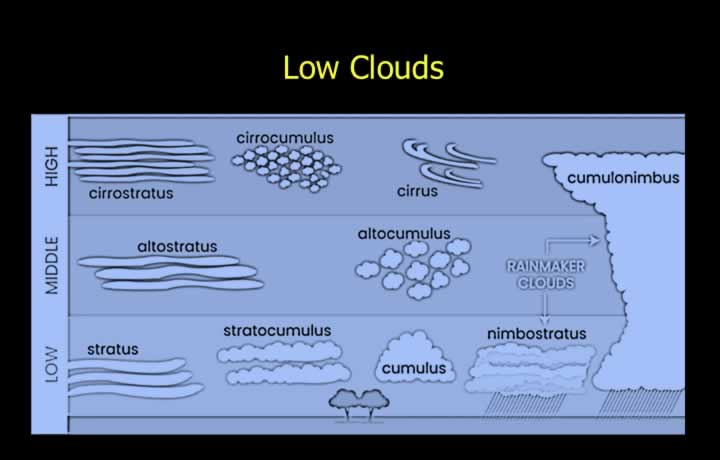
- Height: below 2 km (6500 ft)
- Mainly composed of water droplets; may contain ice in cold climates.
- Types:
- Stratus: uniform grey sheet clouds producing drizzle or freezing rain
- Stratocumulus: low-level patchy cloud formations
- Fractostratus: broken stratus indicating poor weather
- Fog: stratus clouds at ground level
Medium Clouds
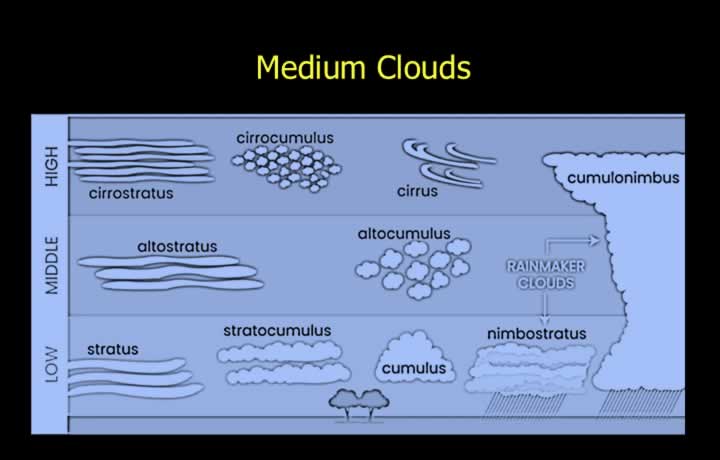
- Height: 2–8 km (6500–25,000 ft)
- Contain both water droplets and ice crystals.
- Types:
- Altocumulus: patchy clouds associated with turbulence and icing
- Altocumulus lenticularis: lens-shaped clouds indicating mountain waves
- Altostratus: uniform sheets producing continuous precipitation and halo effects
- Nimbostratus: thick dark clouds causing steady heavy rain or snow
High Clouds
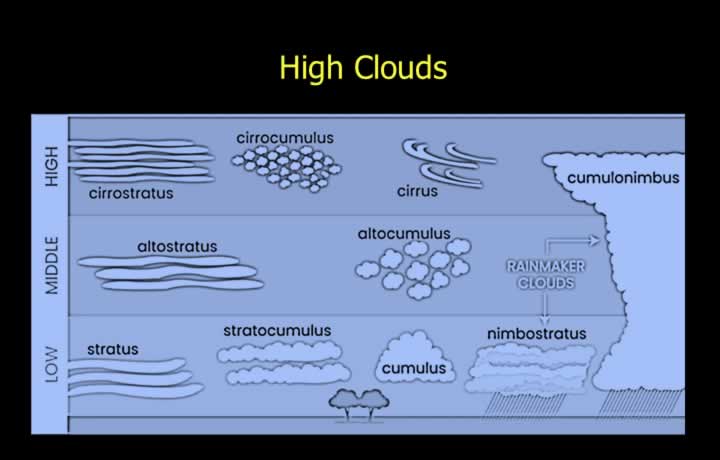
- Height: 6–18 km (20,000–60,000 ft)
- Composed mainly of ice crystals.
- Types:
- Cirrus: thin, fibrous clouds
- Cirrostratus: smooth veil clouds producing halo effects
- Cirrocumulus: small patchy clouds at high levels
- Generally do not produce precipitation or icing.
Vertically Developed Clouds
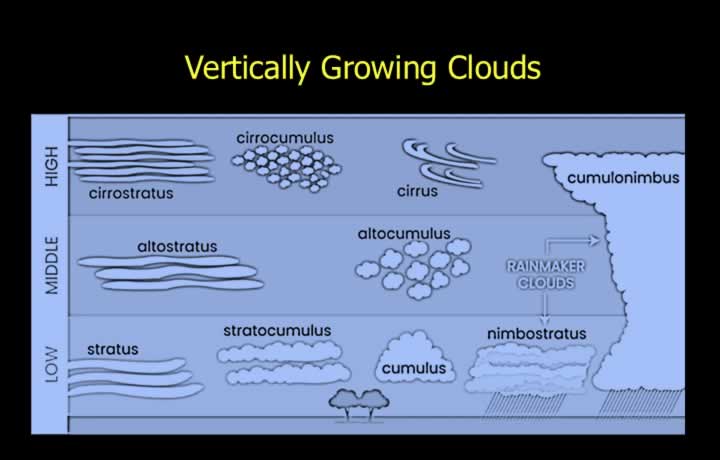
- Cumulus and cumulonimbus clouds extend vertically from low to high levels.
- Cumulonimbus clouds can extend into the stratosphere and produce thunderstorms.
Very High-Level Clouds
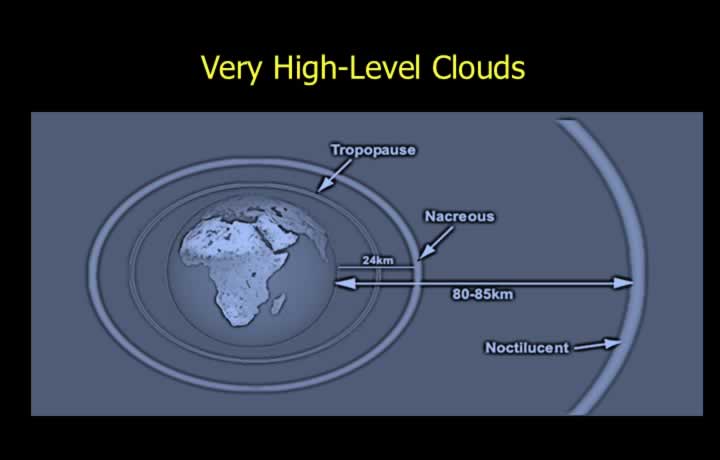
- Found above the troposphere.
- Nacreous clouds occur in the upper stratosphere.
- Noctilucent clouds occur in the upper mesosphere.