
Tropical Revolving Storm (TRS)
Tropical Revolving Storm
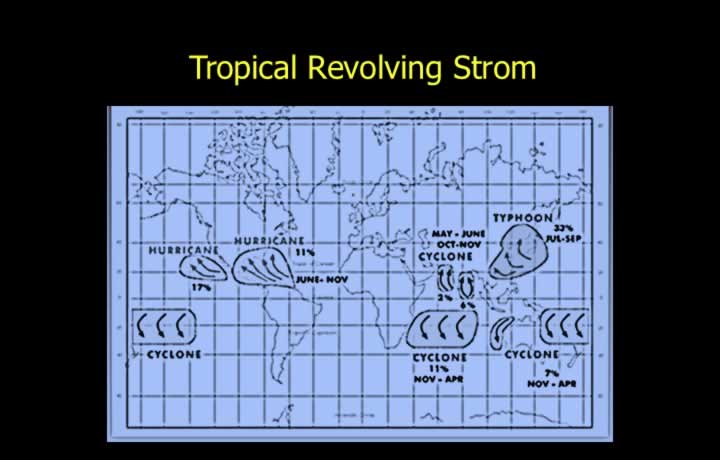
- Tropical Revolving Storms (TRS) occur in tropical regions.
- Depending on the region, they are known as cyclones, hurricanes, or typhoons.
- Wind speeds exceed 65 knots in a TRS.
- A TRS may extend over an area with a diameter ranging from 300 to 1500 km.
Conditions for Formation of TRS
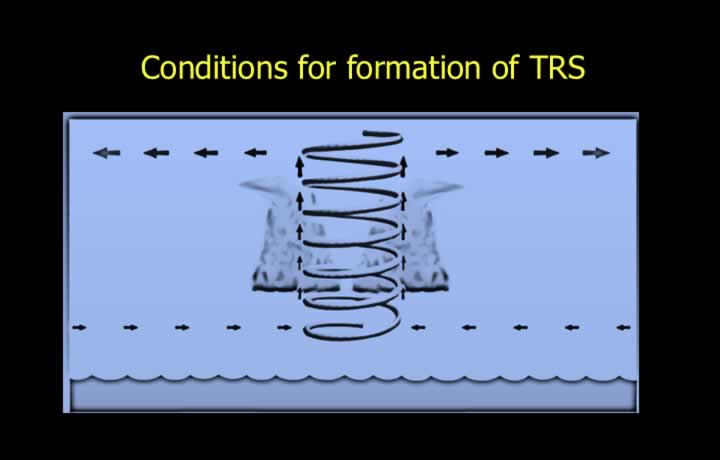
- TRS consists of clusters of Cumulonimbus (CB) cells over the eastern side of oceanic regions.
- These storms draw warm, moist air from the sea, allowing clouds to build up to the tropopause.
- A Tropical Revolving Storm forms over oceans when the following conditions are met:
- Latitude between 5° and 25° north or south of the Equator.
- Sea surface temperature of at least 26°C to a depth of approximately 300 feet (90 m).
- Very little vertical wind shear, preventing the storm from being torn apart.
- Near the Indian subcontinent, TRS commonly forms over the Bay of Bengal because of its high sea surface temperatures, often affecting South India.
Stages and Movement of TRS
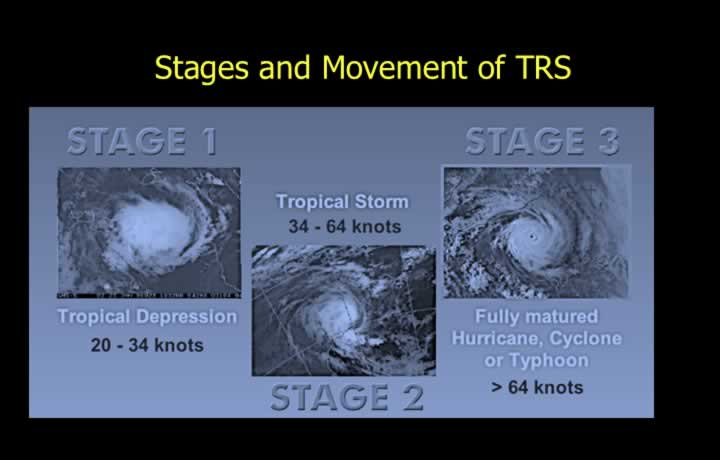
- Tropical storms initially develop as a Tropical Depression before intensifying into a Tropical Storm.
- With continued strengthening, they may develop into Cyclones or Hurricanes.
- TRS generally moves westward over warm ocean waters while gaining strength from the continuous supply of moisture.
- The storm continues to intensify over the ocean before crossing the coastline.
Parts of a Tropical Revolving Storm
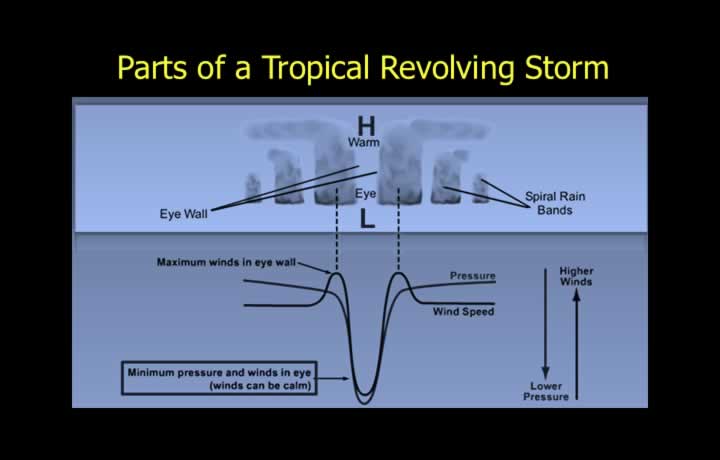
- Eye: The center of the storm, typically extending 20–50 km in radius, containing the area of lowest pressure.
- The eye is generally cloud-free and experiences calm winds.
- Eyewall: The ring of clouds surrounding the eye.
- The eyewall consists of multiple layers of Cumulonimbus clouds and contains the highest wind speeds.
- The eyewall is the most destructive part of a Tropical Revolving Storm.
Aviation Hazards of TRS
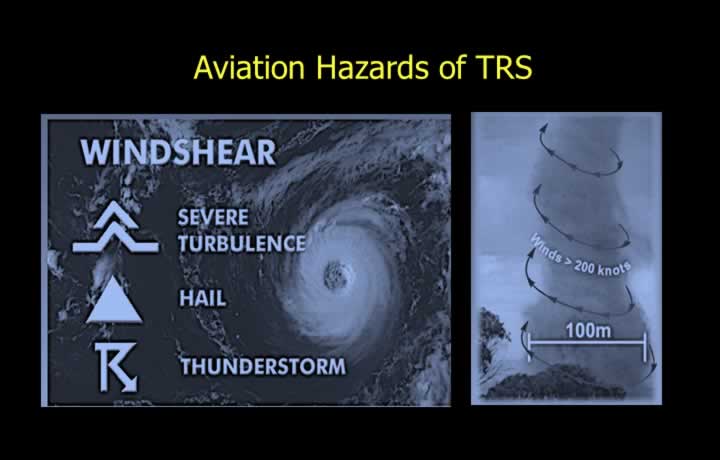
- Aviation hazards associated with a TRS include severe turbulence, hail, and multiple thunderstorms.
- Tornadoes are intense rotating storms that may be associated with severe thunderstorm activity.
- Tornadoes have narrow updrafts and wind speeds that can reach 200 knots.
- They are short-lived and are closely associated with Cumulonimbus cloud activity.
- Tornadoes commonly develop during spring and early summer when surface temperatures are high.