Ambient or Atmospheric Pressure
Atmospheric pressure is the force exerted by the weight of the air (atmosphere) on the Earth’s surface and on all objects. It acts equally in all directions and decreases with increasing altitude.
Atmospheric Pressure
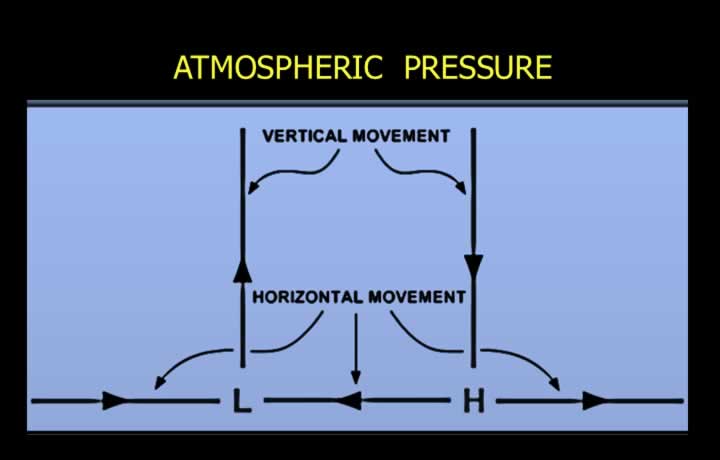
- Atmospheric pressure variation causes movement of the air column.
- Horizontal movement produces winds.
- Vertical movement produces clouds.
- Static (Barometric) Pressure is the force or weight of the air column above a body.
- Dynamic Pressure is the pressure produced due to the movement of an aircraft through the air.
Measurement of Barometric Pressure
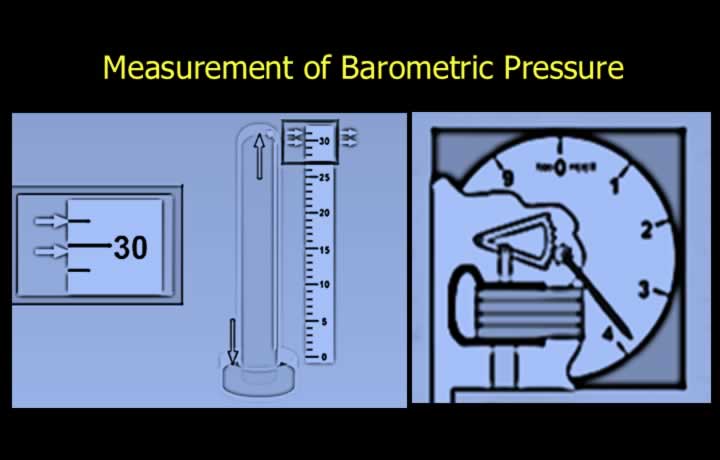
- A Barometer is used to measure static or barometric pressure.
- Barometers are of two types:
- Mercury Barometer
- Aneroid Barometer
- A Barograph continuously records barometric pressure.
- Static or barometric pressure is measured in:
- Millimetres of Mercury (mm Hg)
- Inches of Mercury (in Hg)
- The metric unit of pressure is:
- Millibar (mb)
- Hectopascal (hPa)
Pressure Charts
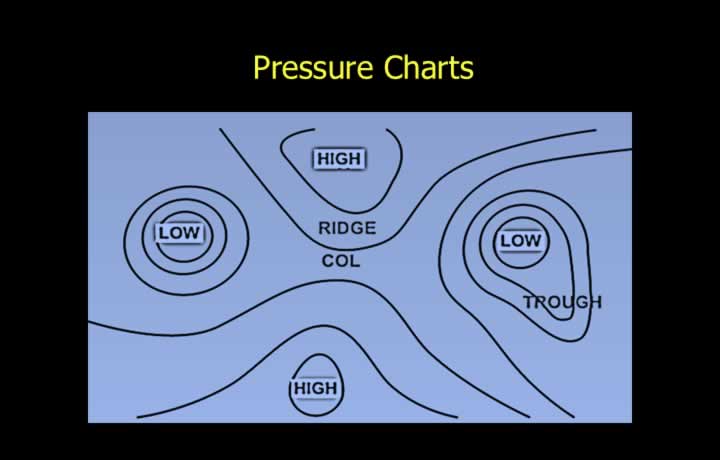
- Isobars are lines joining places of equal pressure.
Isobaric Low
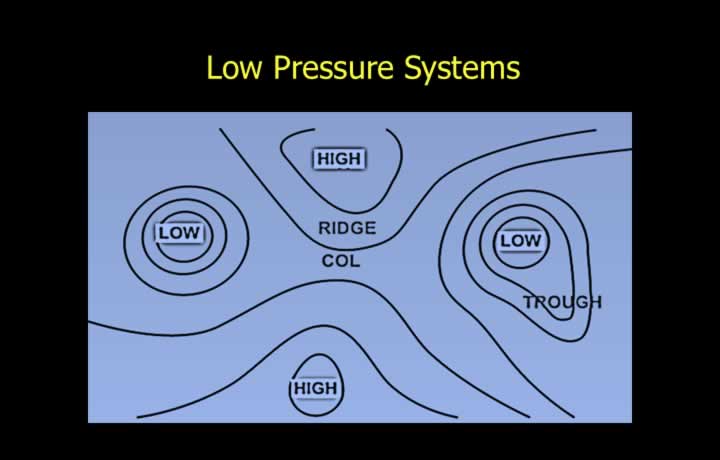
- An enclosed low-pressure area.
- Associated with unstable weather.
- Trough: An intrusion of low pressure.
- Pressure is higher on either side of a trough.
Weather in Low Pressure Systems
Characteristics of Low Pressure Systems:
- Unstable atmospheric conditions.
- Bad weather.
- Convective cloud formation.
- Generally good visibility except during precipitation.
- Winds back (anticlockwise in the Northern Hemisphere).
- Surface winds converge.
Depression
- More than two enclosed isobars at 2 hPa intervals.
Cyclone / Severe Cyclone
- An intensified depression or low-pressure system.
Isobaric High
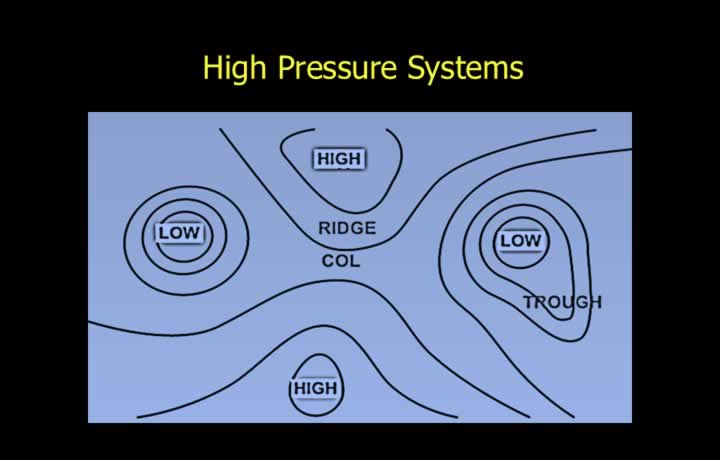
- An enclosed high-pressure area.
- Associated with stable weather.
- Ridge: An intrusion of high pressure.
- Pressure is lower on either side of a ridge.
High Pressure Systems
Characteristics of High Pressure Systems:
- Stable atmosphere.
- Good weather conditions.
- Poor visibility due to fog and low clouds.
- Subsidence and inversion layers are common.
- Winds veer clockwise.
- Surface winds diverge.
Anticyclone
- An intense high-pressure system.
Blocking Anticyclone
- A stationary high-pressure system that blocks cyclone movement.
Col
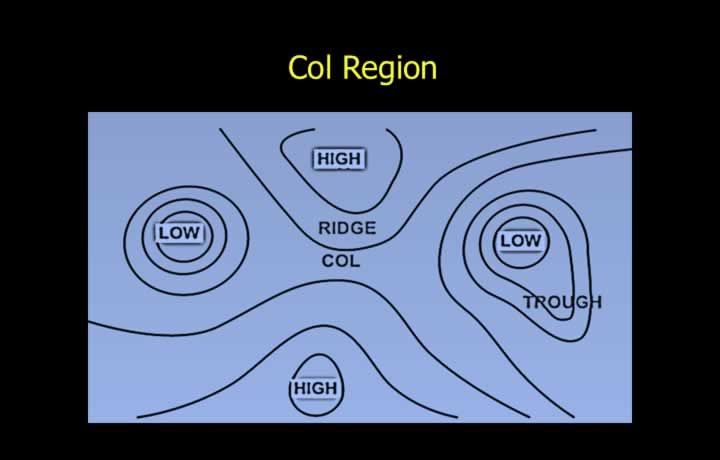
Weather in Col Region
- A col is the area located between two highs and two lows.
- Light and variable winds.
- Generally clear weather conditions.
Isallobars
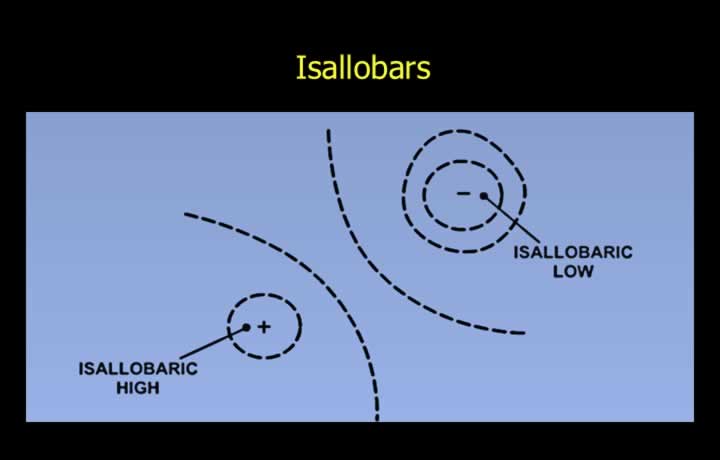
- Isallobars are lines joining places of equal pressure change or pressure tendency.
- Pressure change is measured over the previous 3 hours.
- They indicate approaching weather systems.
- Isallobaric Low: Area of greatest pressure fall during the last 3 hours.
- Isallobaric High: Area of greatest pressure rise during the last 3 hours.
Horizontal and Vertical Pressure Variation
Horizontal Variation in Pressure Charts causing Pressure Gradient Force
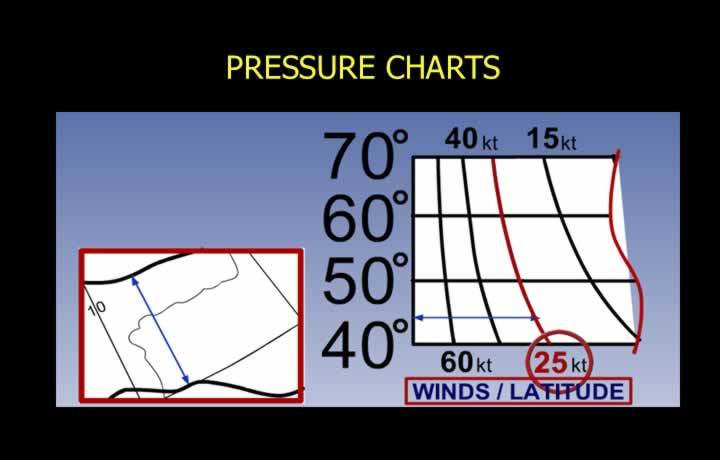
- The spacing between isobars indicates the Pressure Gradient Force (PGF).
- The Pressure Gradient Force determines wind strength.
- Isobars are spaced farther apart in high-pressure areas than in low-pressure areas.
- High-pressure systems have a lower Pressure Gradient Force.
- Low-pressure systems have a higher Pressure Gradient Force.
Vertical Pressure Variation in ISA
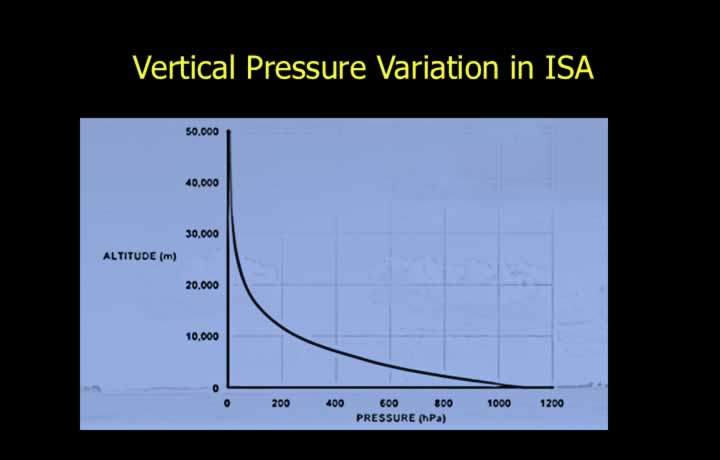
Atmospheric pressure decreases with increasing altitude because the weight of the air column above becomes smaller.
- Static (Barometric) Pressure is the weight of the air column.
- Dynamic Pressure is produced due to movement through the air.
- Under ISA conditions, pressure decreases at a standard rate with height.
Standard Mean Sea Level Pressure (ISA):
- 1013.25 hPa
- 760 mm Hg
- 29.92 in Hg
Vertical Pressure Variation in ISA Conditions
Formula:
Pressure Variation = 96 × Temperature (Kelvin) ÷ Pressure (hPa)
Approximate Height Change for 1 hPa Pressure Difference
- Mean Sea Level: 27 ft
- 2,000 ft: 30 ft
- 20,000 ft: 50 ft
- 40,000 ft: 100 ft
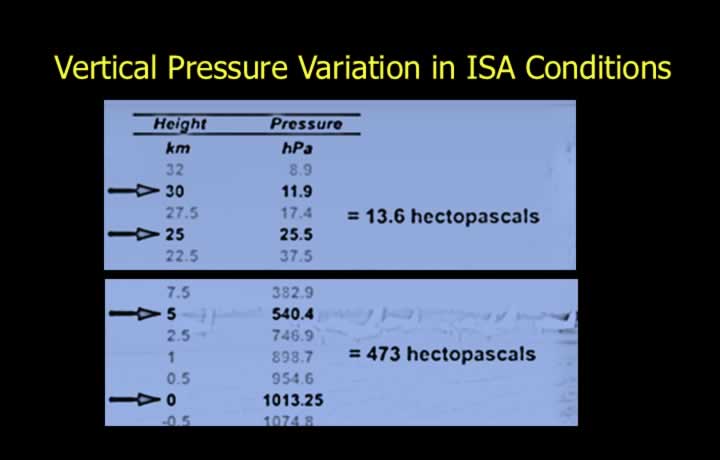
Pressure variation over a height of 5,000 ft:
- At Mean Sea Level: 473 hPa
- At 25,000 ft: 13.6 hPa
Diurnal Variation of Pressure
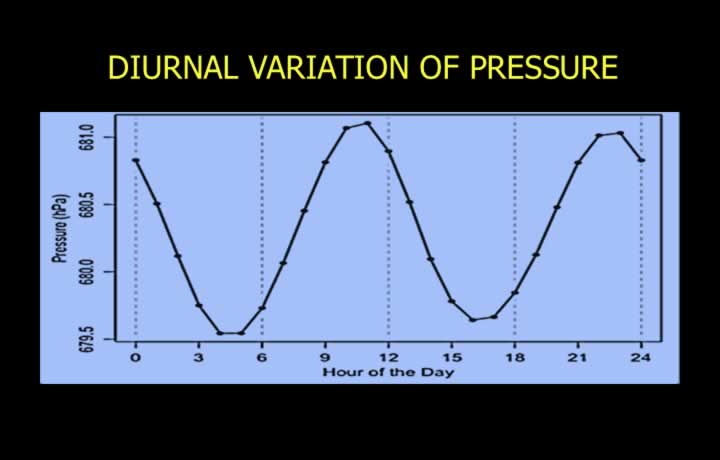
- Atmospheric pressure shows a semi-diurnal variation (two cycles each day).
- Minimum Pressure:
- 0400 hours
- 1600 hours
- These minima occur because of higher temperatures and lower air density.
- Maximum Pressure:
- 1000 hours (Primary Maximum)
- 2200 hours (Secondary Maximum)
- These maxima occur due to cooler temperatures and higher air density.
- Diurnal pressure variation is greatest near the Equator.
Vertical Pressure Variation with Temperature
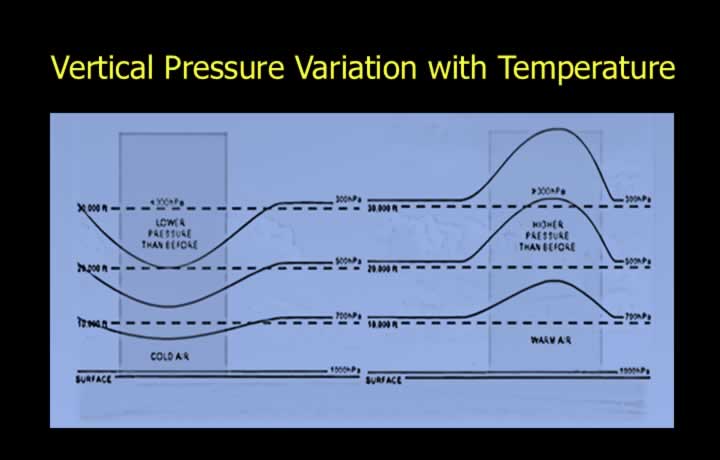
- When air is colder than ISA, pressure decreases more rapidly with height.
- Smaller height changes produce a 1 hPa pressure change.
- When air is warmer than ISA, pressure decreases more slowly with height.
- Larger height changes are required for a 1 hPa pressure change.
- At the same altitude (assuming identical MSL pressure), pressure is higher in warm air than in cold air.
Calculation of Pressure Variation
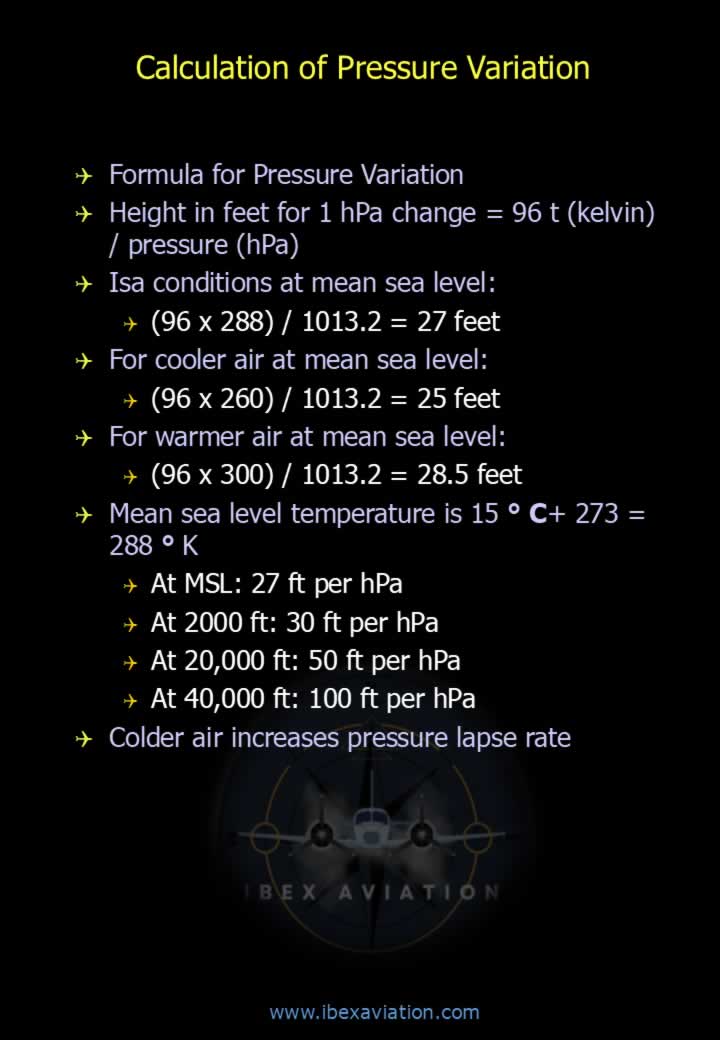
Formula:
Height (ft) for 1 hPa Change = 96 × Temperature (Kelvin) ÷ Pressure (hPa)
Examples
- ISA at Mean Sea Level:
(96 × 288) ÷ 1013.2 = 27 ft - Cooler Air at Mean Sea Level:
(96 × 260) ÷ 1013.2 = 25 ft - Warmer Air at Mean Sea Level:
(96 × 300) ÷ 1013.2 = 28.5 ft
Mean Sea Level Temperature:
15°C + 273 = 288 K
Approximate height for a 1 hPa pressure change:
- Mean Sea Level: 27 ft
- 2,000 ft: 30 ft
- 20,000 ft: 50 ft
- 40,000 ft: 100 ft
Colder air increases the pressure lapse rate.
Horizontal Variation of Pressure
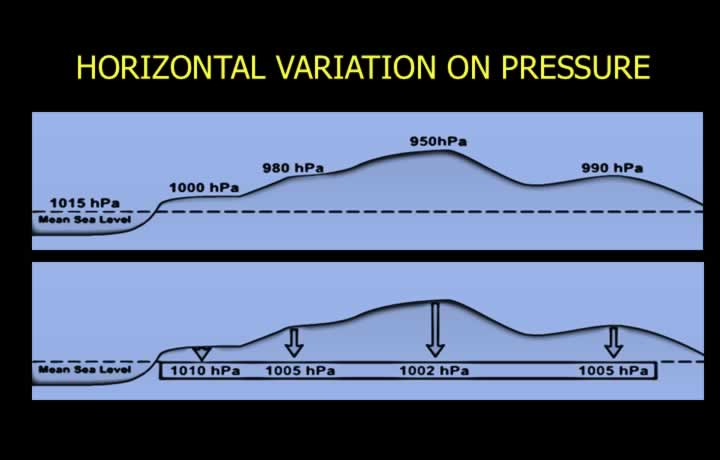
- Horizontal pressure variation can only be compared at the same vertical level.
- Therefore, pressure values are reduced to Mean Sea Level (MSL) for comparison.
Contour Charts
- Contour charts display lines joining places of equal height.
- Contours are drawn using Geo-potential Metres (GPM).
- They are numbered in Geo-potential Decametres (dam).
- Example: 5280 GPM is shown as 528.
- This indicates an air parcel approximately 5280 metres AMSL.
- The same pressure level occurs at a lower altitude over colder regions.
- If the 500 hPa surface is found at a lower altitude, the air mass is colder.
- The vertical distance between pressure levels is called the Thickness of the Layer.
- Thickness isopleths generally coincide with isotherms.