Effect Heat and Temperature of Atmosphere on Weather
Heat and Temperature
- Heat is the total kinetic energy present in the air molecules within a given volume of air.
- Specific Heat is the amount of heat required to raise the temperature of a unit mass by 1°C.
- Specific Heat of:
- Water: 1.0
- Ice: 0.5
- Soil: 0.2
- Since soil has a lower specific heat than water, land heats up and cools down faster than the sea.
- Temperature is the measure of heat in a substance.
- Ambient Temperature is the surrounding atmospheric temperature.
- Virtual Temperature is the temperature at which dry air would have the same pressure and density as moist air.
Centigrade, Fahrenheit and Kelvin
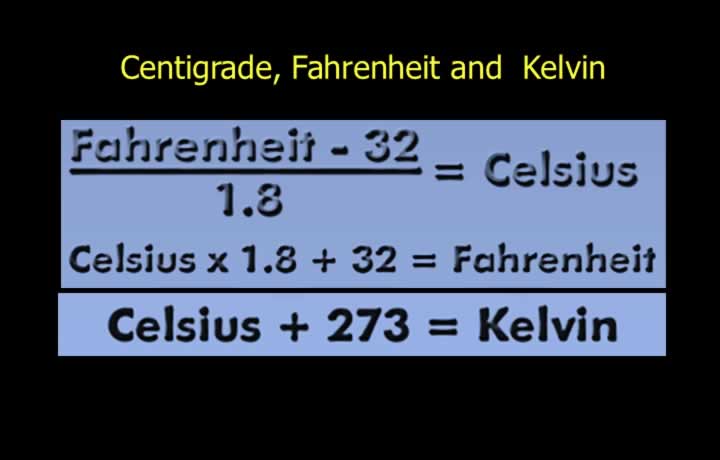
- The Celsius and Fahrenheit scales are based on the melting point of ice and the boiling point of water.
- On the Celsius scale:
- Melting point of ice = 0°C
- Boiling point of water = 100°C
- Centigrade (°C) = [5 × (F − 32)] ÷ 9
- Fahrenheit (°F) = [(9 ÷ 5) × C] + 32
- The Kelvin scale is based on the internal energy contained in matter.
- 0 Kelvin = −273°C (Absolute Zero).
Temperature Measurement Instruments
- Mercury Thermometer – Measures ambient temperature.
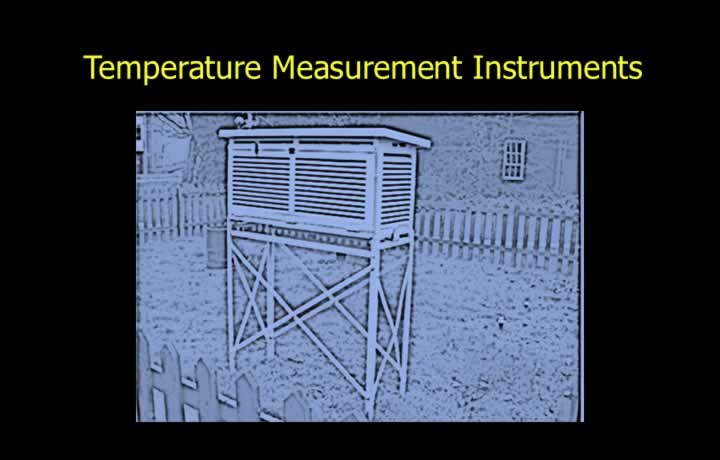
- Stevenson Screen – Used for measuring surface air temperature.
- The Stevenson Screen is installed about 4 ft (1.25 m) above the ground in an open area.
- Alcohol Thermometer – Measures minimum and maximum temperatures.
- Thermograph – Provides a continuous record of temperature.
- Bi-metal Thermometer – Measures Outside Air Temperature (OAT) in aircraft.
- Radiosonde Balloons – Used by meteorological departments for upper-air temperature observations.
- Satellites – Used for thermal imaging.
Solar Radiation
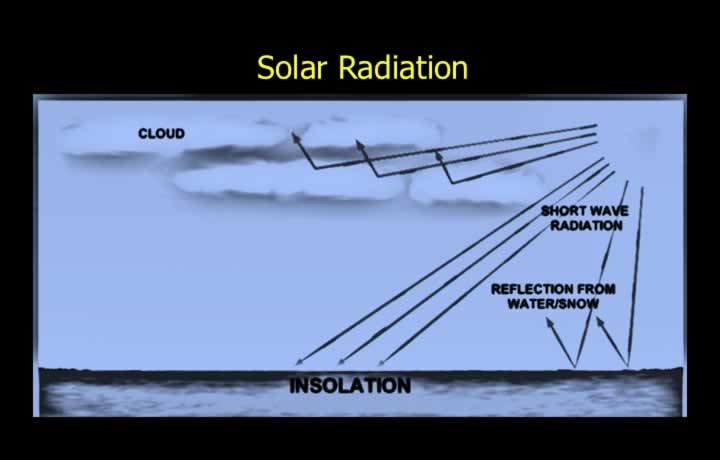
- Radiation is the transfer of heat without the need for a material medium.
- Insolation is the incoming solar radiation reaching the Earth’s surface.
- Insolation is inversely proportional to the obliquity (angle) of the Sun’s rays.
- Maximum insolation occurs near the thermal equator.
- Minimum insolation occurs near the poles.
- Short-wave solar radiation reaches the Earth’s surface with little absorption by the atmosphere.
- Long-wave radiation is partly absorbed by clouds before reaching the Earth.
Albedo
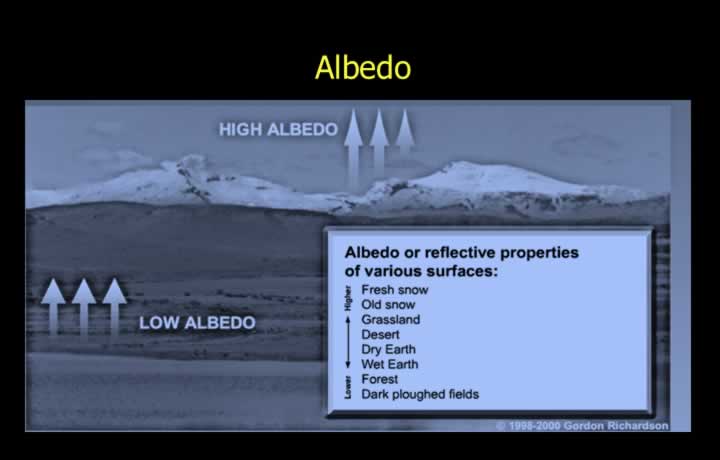
- Albedo is the reflecting power of the Earth’s surface.
- During clear weather, about 85% of the Sun’s energy reaches the Earth.
- Maximum albedo occurs over snow-covered surfaces.
- Minimum albedo occurs over marshy land.
- Heat Budget is the balance between radiation received and radiation emitted.
Terrestrial Radiation
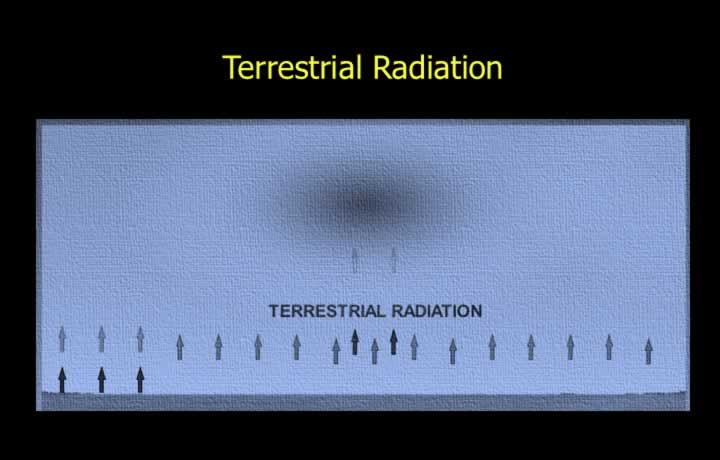
- Terrestrial Radiation is the long-wave radiation emitted by the Earth’s surface.
- The atmosphere is primarily heated by terrestrial radiation.
- Greenhouse Effect is the trapping of terrestrial radiation by carbon dioxide and water vapour.
- Nocturnal Radiation refers to terrestrial radiation emitted during the night.
Types of Heat Transfer in the Atmosphere
Transfer of Heat by Conduction
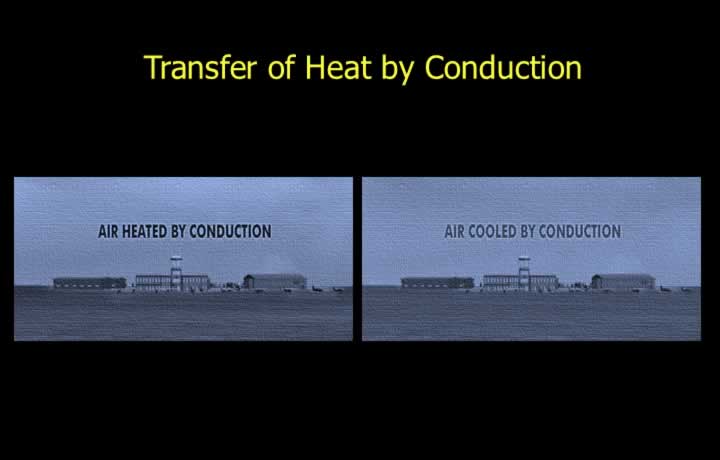
- Conduction is the transfer of heat between molecules that are in direct contact.
- Conduction mainly occurs near the Earth’s surface.
- During the day, the Sun heats the ground, which in turn warms the adjacent air.
- At night, the cooling land cools the air near the surface by conduction.
Transfer of Heat by Convection
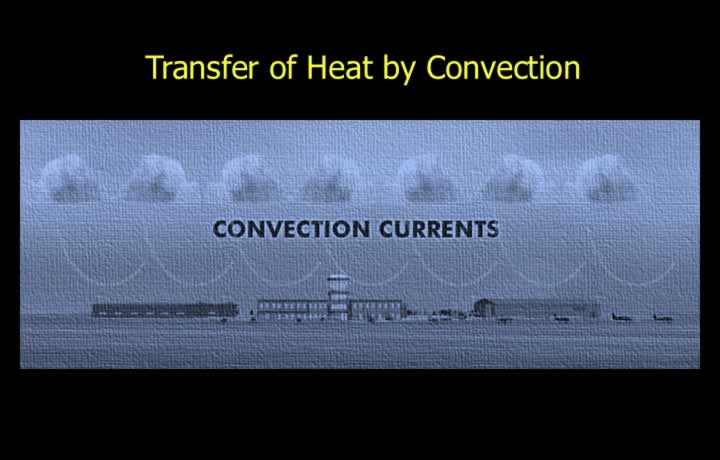
- Convection is the transfer of heat through the vertical movement of air.
- Strong solar heating warms the air near the ground.
- Warm, lighter air rises while cooler, denser air sinks.
- Afternoon cumulus clouds commonly develop due to convection.
Transfer of Heat by Advection
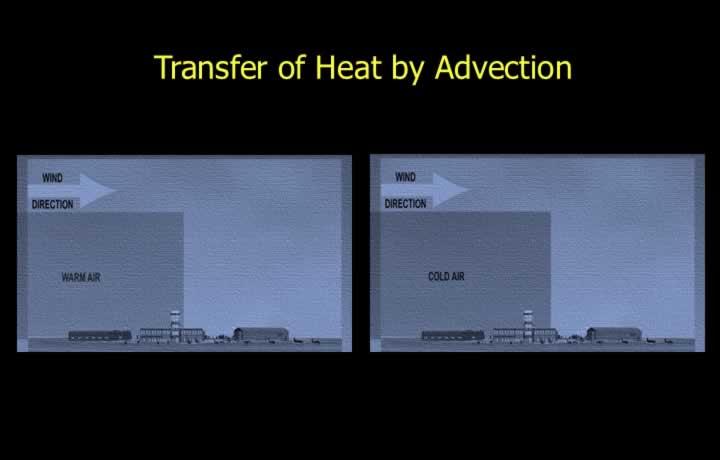
- Advection is the horizontal transfer of heat by wind.
- Warm Advection occurs when warm air moves into a colder region.
- Cold Advection occurs when cold air moves into a warmer region.
Latent Heat
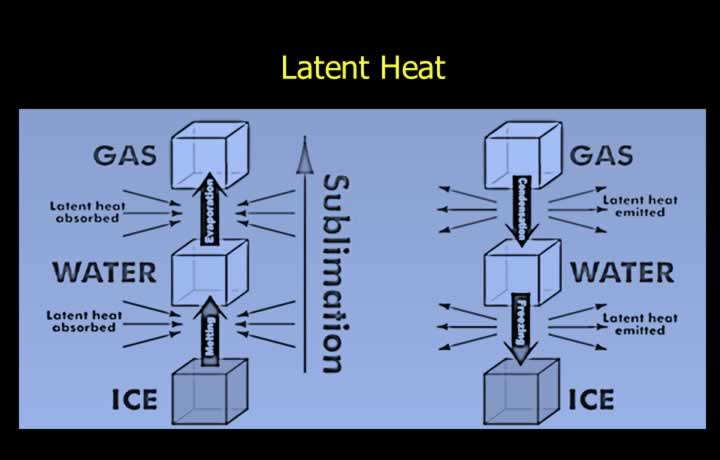
- Water exists in the atmosphere as solid, liquid and gas.
- Dry Air contains no water vapour.
- Latent Heat is the heat transferred when water changes its physical state.
- Latent heat is exchanged whenever water changes between solid, liquid and gaseous forms.
Evaporation, Melting and Sublimation
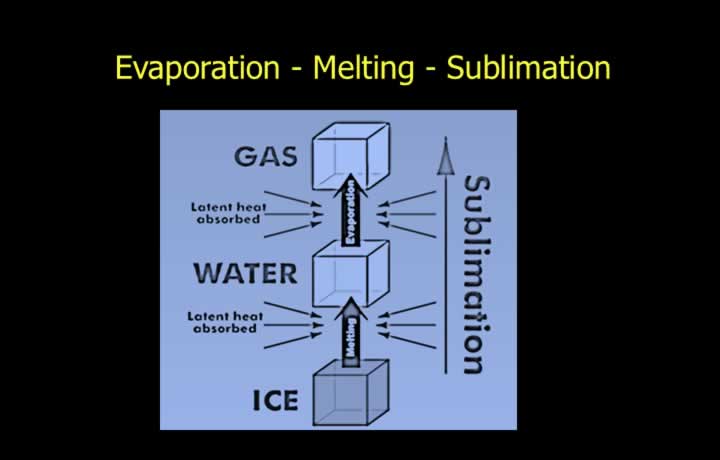
- Evaporation is the change of state from liquid to gas.
- Evaporation can occur at all temperatures above −273°C (Absolute Zero).
- Evaporation increases as temperature increases.
- Melting is the change of state from solid to liquid.
- Sublimation is the direct change from solid to gas.
- Latent heat is absorbed during evaporation, melting and sublimation.
Freezing, Condensation and Deposition
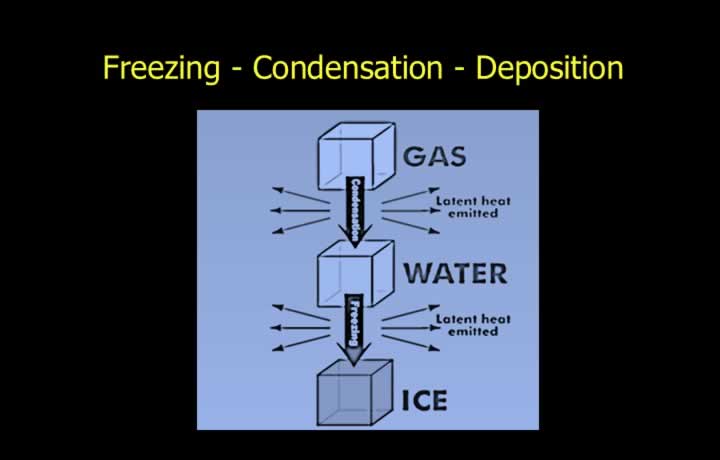
- Freezing is the change from liquid to solid.
- Freezing nuclei are required for water to freeze.
- Without freezing nuclei, water may remain as supercooled droplets.
- Condensation is the change from gas to liquid.
- Condensation nuclei are required for the formation of clouds, fog and dew.
- Without condensation nuclei, air becomes supersaturated.
- Deposition is the direct change from gas to solid.
- Latent heat is released during freezing, condensation and deposition.
Variation of Temperature with Altitude
Temperature Lapse Rate
- The atmosphere is heated from the Earth’s surface.
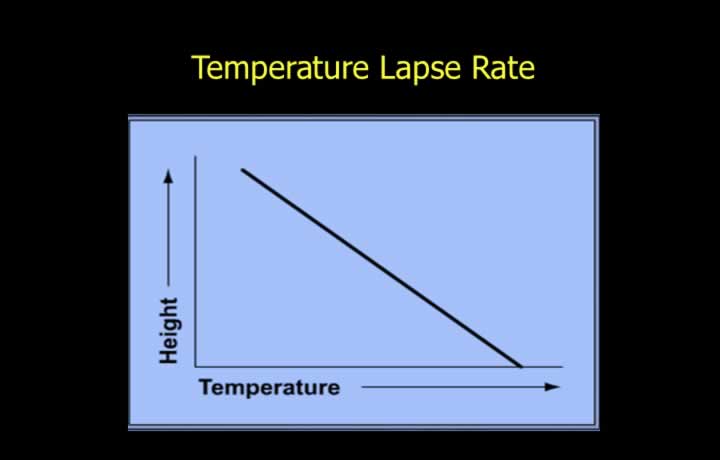
- Temperature generally decreases with increasing altitude.
- Lapse Rate is the rate of temperature change with height.
- Under ISA conditions, the lapse rate is 1.98°C per 1000 ft.
Isothermal and Inversion Layers
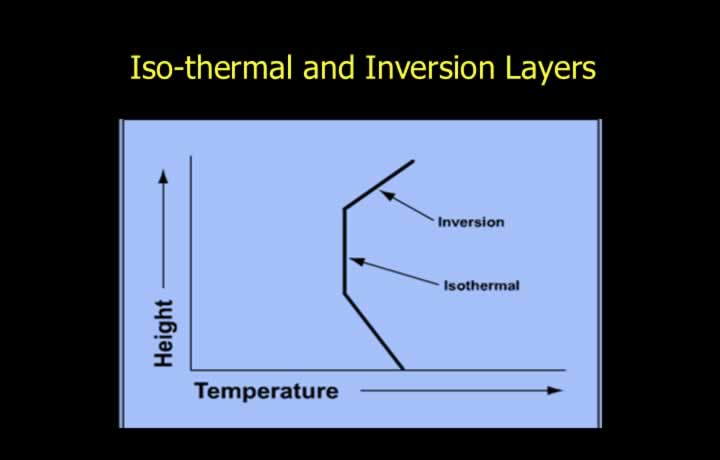
- Temperature does not always decrease with altitude.
- An Isothermal Layer has a constant temperature with height.
- An Inversion Layer has temperature increasing with height.
Types of Inversion
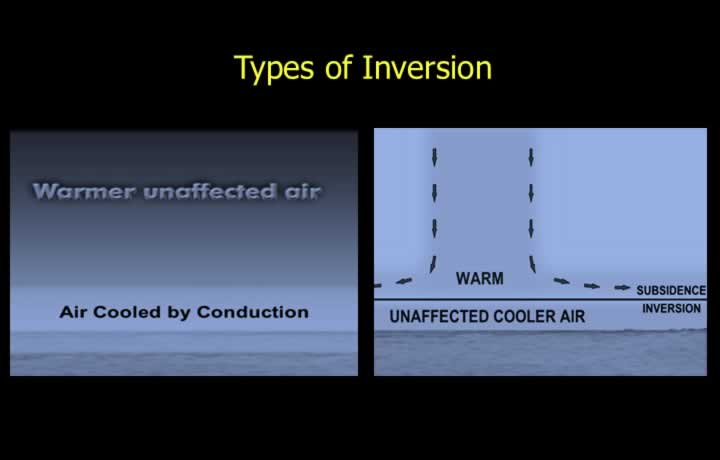
- Radiation Inversion occurs when surface air cools rapidly by conduction during the night while air above remains warmer.
- Subsidence Inversion occurs in high-pressure areas where descending air creates an inversion near the surface.
- Stratospheric Inversion occurs because ozone absorbs ultraviolet radiation, warming the upper stratosphere.
Effect of Weather and Time of day on Variation of Temperature
Diurnal Variation of Temperature
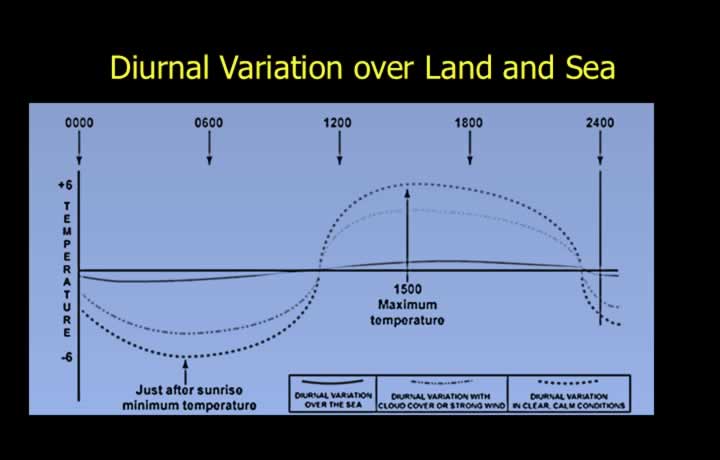
- Diurnal variation is the change in temperature during a 24-hour period.
- Maximum solar radiation occurs around noon.
- The highest air temperature usually occurs about 2–3 hours after noon.
- The minimum temperature generally occurs about 30 minutes to 1 hour after sunrise.
Effect of Clouds on Temperature
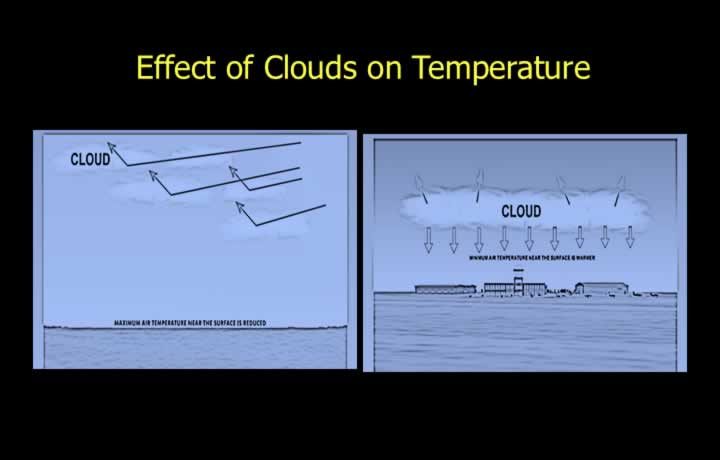
- During the day, clouds reduce incoming solar radiation, lowering daytime temperatures.
- At night, clouds reduce heat loss by trapping terrestrial radiation, resulting in warmer nights.
Diurnal Variation in Cloudy Weather
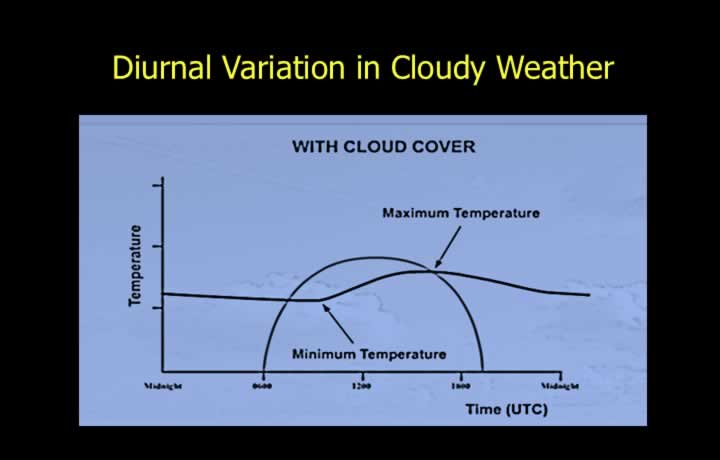
- Cloud cover reduces both daytime heating and nighttime cooling.
- As a result, cloudy weather produces a smaller daily temperature range.
Diurnal Variation Due to Winds
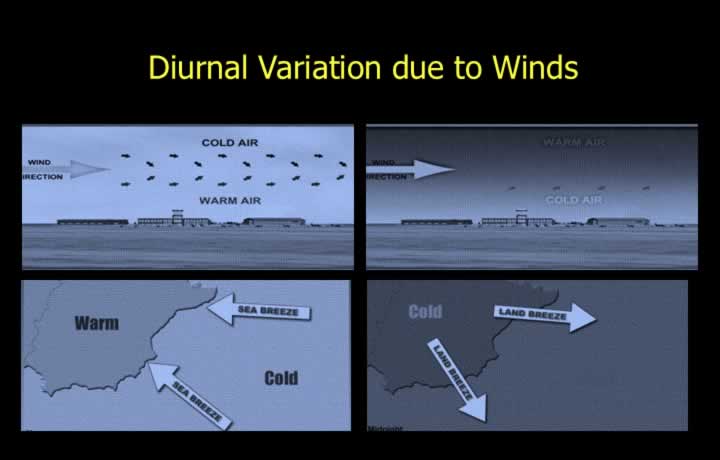
- Wind reduces the daily temperature range by mixing air.
- During the day, warm surface air mixes with cooler air above.
- At night, cold surface air mixes with warmer air aloft.
- Coastal areas have a smaller diurnal variation because of land and sea breezes.
Diurnal Variation over Land and Sea
- The sea has a smaller daily temperature variation than land.
- Sea water heats and cools more slowly because of its higher specific heat.
Effect of Latitude on Temperature
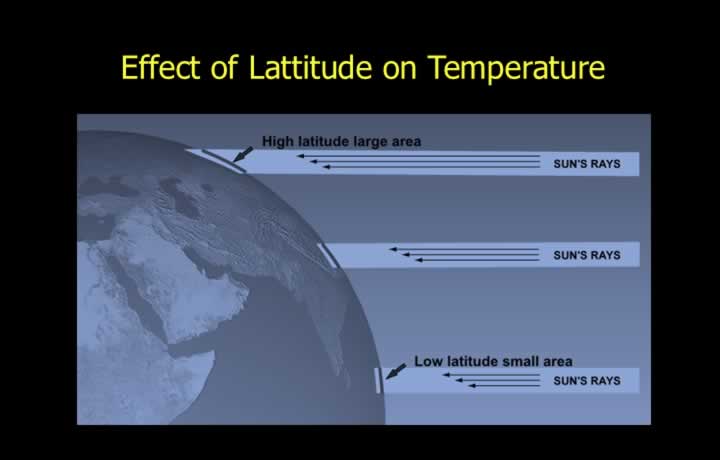
- All parts of the Earth receive approximately the same amount of solar energy.
- At higher latitudes, the Sun’s rays spread over a larger area, reducing heating per unit area.
- Therefore, temperatures decrease with increasing latitude.
- The Earth’s varying distance from the Sun has only a negligible effect on temperature.
Seasonal Variation in Temperature
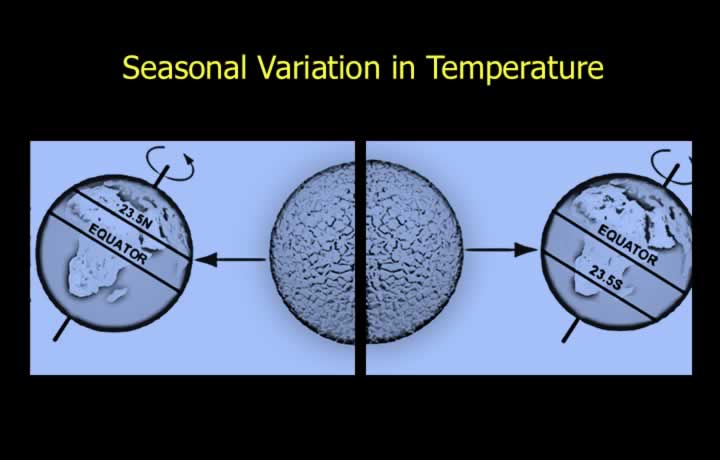
- The Earth’s axis is tilted by 23.5° to its orbital plane.
- This causes the Sun’s overhead position to shift during the year.
- On 21 June, the Sun is overhead at the Tropic of Cancer, producing summer in the Northern Hemisphere.
- On 21 December, the Sun is overhead at the Tropic of Capricorn, producing summer in the Southern Hemisphere.
Effect of Winds on Temperature
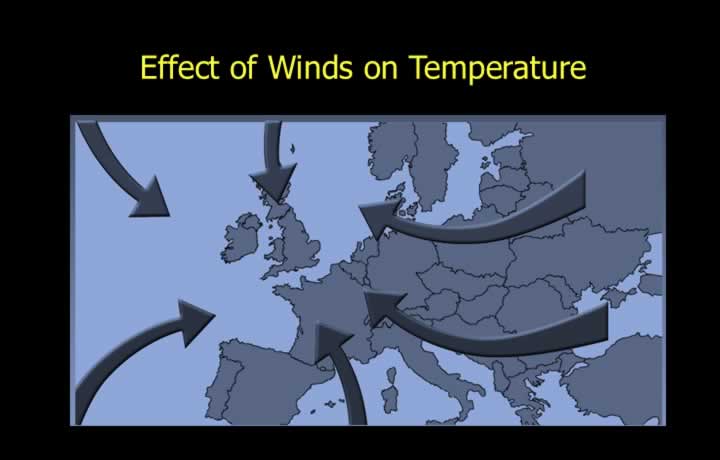
- Winds from warm tropical regions increase local temperatures.
- Winds from cold polar regions reduce temperatures.
- At night, downslope winds from hills cool valley floors and may produce valley fog.
- Hilltops are generally cooler than foothills because the air reaching higher elevations has less contact with the warm ground.