Introduction to Layers of the Atmosphere
The atmosphere is the blanket of gases that surrounds the Earth and supports life. It is divided into different layers based on changes in temperature and altitude. The atmosphere is divided into five main layers: the troposphere, stratosphere, mesosphere, thermosphere, and exosphere. Each layer has unique characteristics and plays an important role in protecting our planet.
Earth’s Atmosphere
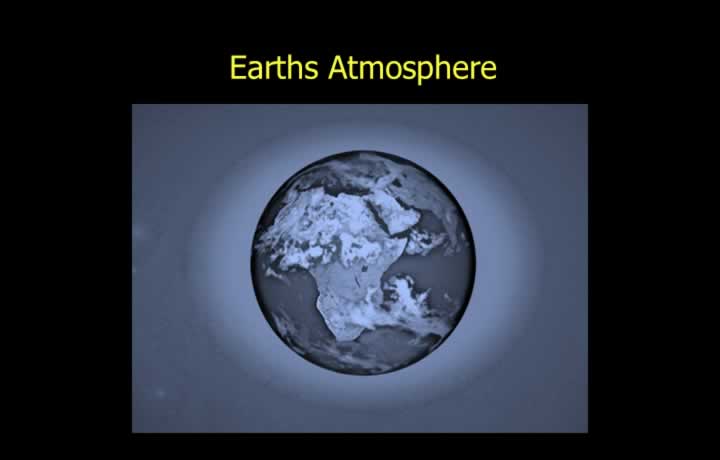
The Earth is surrounded by a gaseous envelope known as the atmosphere, which extends up to approximately 800 km above the Earth’s surface.
This atmosphere remains attached to the Earth due to gravitational force and rotates at the same speed as the planet.
Composition of Atmosphere
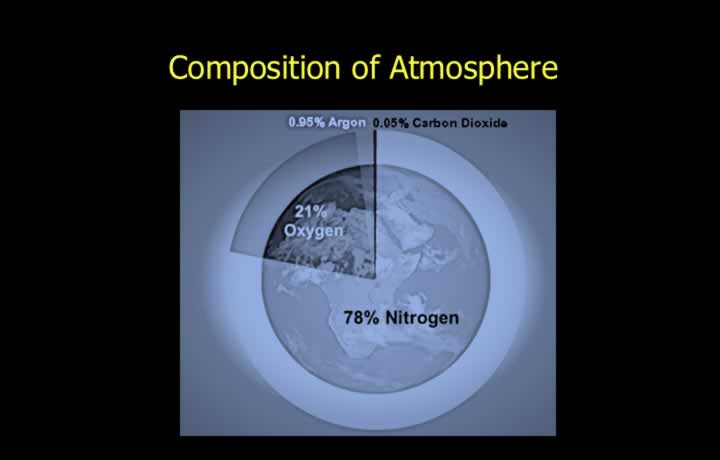
The atmosphere is primarily composed of:
- 78% Nitrogen
- 21% Oxygen
- 1% Trace Gases
The ratio of Nitrogen to Oxygen is:
- 4:1 by volume
- 3:1 by weight
As altitude increases, the concentration of oxygen decreases. Supplemental oxygen is therefore required for humans at altitudes above 10,000 feet.
Homosphere and Heterosphere
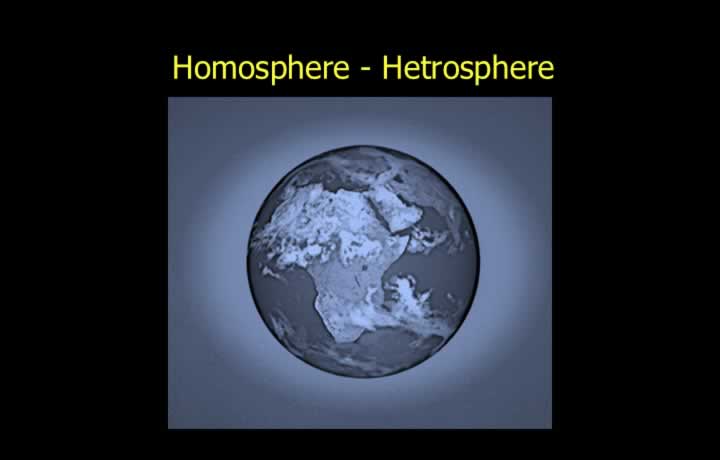
The atmosphere is divided into two major regions:
- Homosphere: Extends up to about 80 km, where the composition of gases remains relatively constant.
- Heterosphere: Exists above 80 km, where the composition of gases varies with altitude.
Density of Air in the Atmosphere
Air density is highest at the Earth’s surface and gradually becomes thinner at higher altitudes.
The distribution of atmospheric air mass is as follows:
- 50% of the atmosphere lies below 6 km
- 75% lies below 10 km
- 99% lies below 35 km
The atmosphere contains a small percentage of water vapour that plays an important role in weather, climate, and environmental processes.
Trace Gases in the Atmosphere
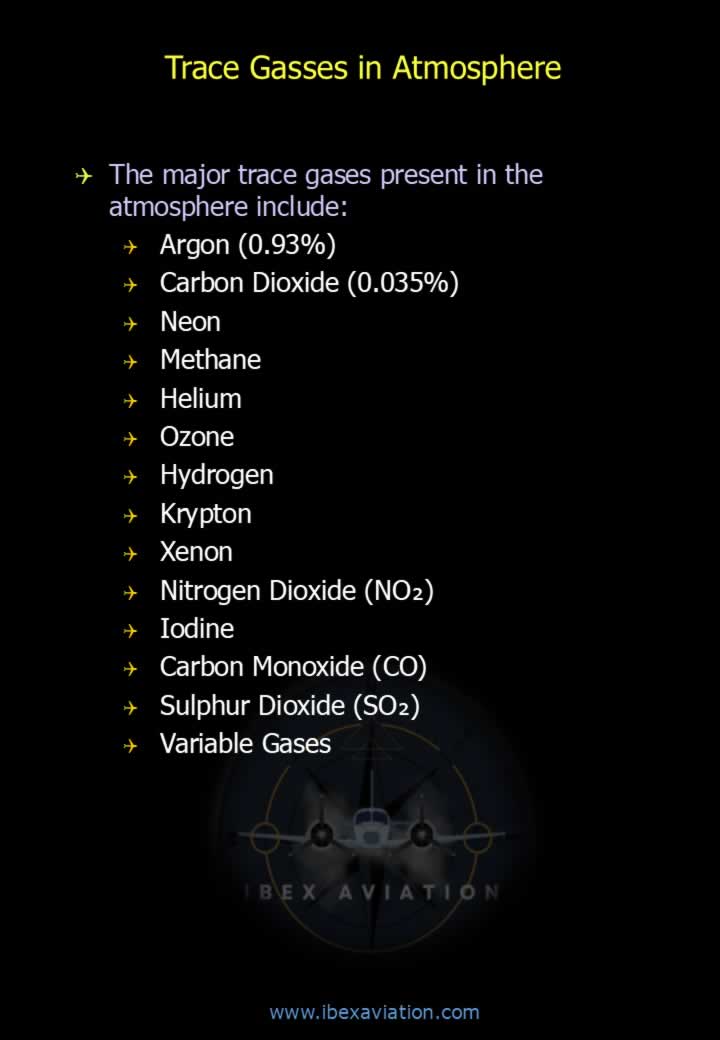
The major trace gases present in the atmosphere include:
- Argon (0.93%)
- Carbon Dioxide (0.035%)
- Neon
- Methane
- Helium
- Ozone
- Hydrogen
- Krypton
- Xenon
- Nitrogen Dioxide (NO₂)
- Iodine
- Carbon Monoxide (CO)
- Sulphur Dioxide (SO₂)
- Variable Gases
Variable Gases in the Atmosphere
Certain gases in the atmosphere vary in concentration depending on location, weather conditions, and human activities. These include:
- Water Vapour
- Carbon Monoxide (CO)
- Sulphur Dioxide (SO₂)
- Nitrogen Dioxide (NO₂)
- Methane
Greenhouse gases partially absorb long-wave radiation emitted by the Earth, helping to maintain the planet’s temperature. However, an excess concentration of greenhouse gases leads to global warming.
Carbon Dioxide and Solid Particles
Solid particles such as sea salt, dust, and smoke are found in the atmosphere.
These particles can contribute to the formation of smog and affect air quality and visibility.
Carbon dioxide (CO₂) is mainly produced by the burning of fuels.
- Plants help reduce atmospheric CO₂ by absorbing it during photosynthesis.
Ozone Layer
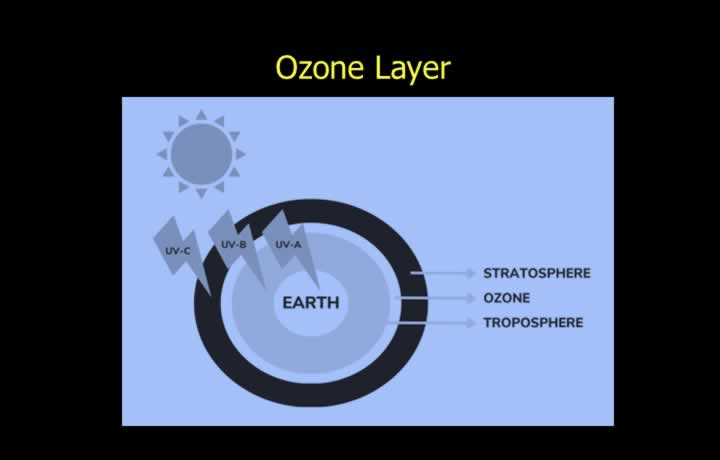
The ozone layer is found in the upper atmosphere between 10 km and 50 km, with maximum concentration occurring between 20 km and 25 km.
The ozone layer plays a crucial role by absorbing harmful ultraviolet (UV) radiation from the Sun, thereby protecting life on Earth.
Thermal Structure of the Atmosphere
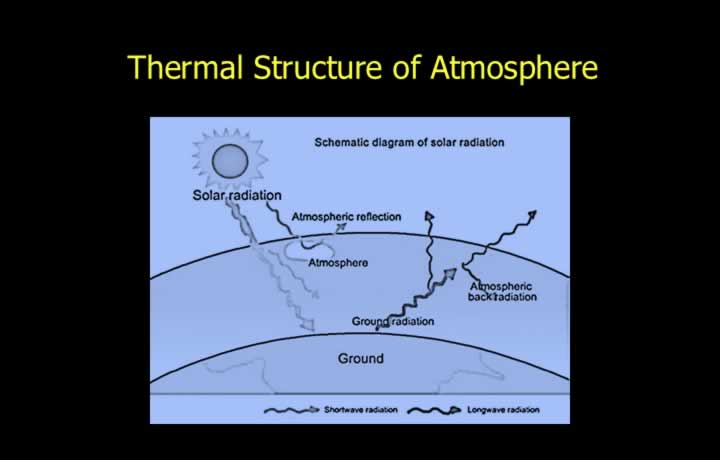
- Short-wave solar radiation reaches the Earth’s surface by passing through the atmosphere.
- The atmosphere is heated by re-radiation from the Earth, known as terrestrial radiation.
- Sensible heat is transferred by conduction, convection, and radiation.
- Latent heat is transferred through evaporation, condensation, and sublimation.
Saturation of Air
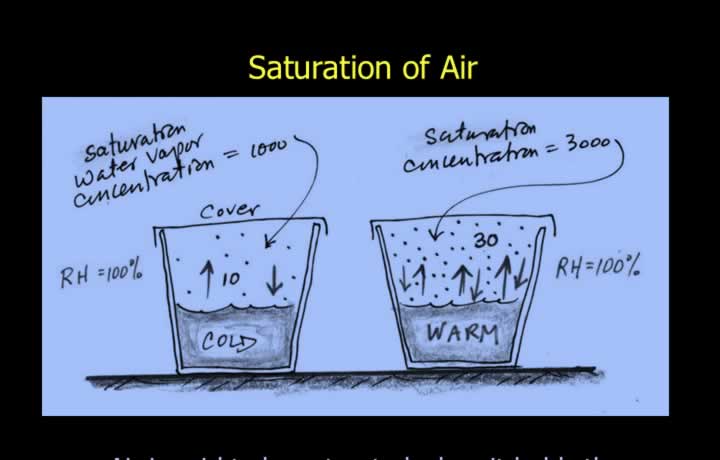
- Air is saturated when it holds the maximum possible water vapour at a given temperature.
- Saturation requires approximately 4% water vapour.
- Relative Humidity (RH) is 100% in saturated air.
- Unsaturated air contains less than 4% water vapour.
- Relative Humidity is less than 100% in unsaturated air.
- Higher temperatures require more water vapour for saturation.
- In tropical regions about 4% water vapour is required for saturation.
- Near the poles, only negligible water vapour is sufficient for saturation.
Troposphere and Tropopause have the maximum effect on Civil Aviation
Troposphere
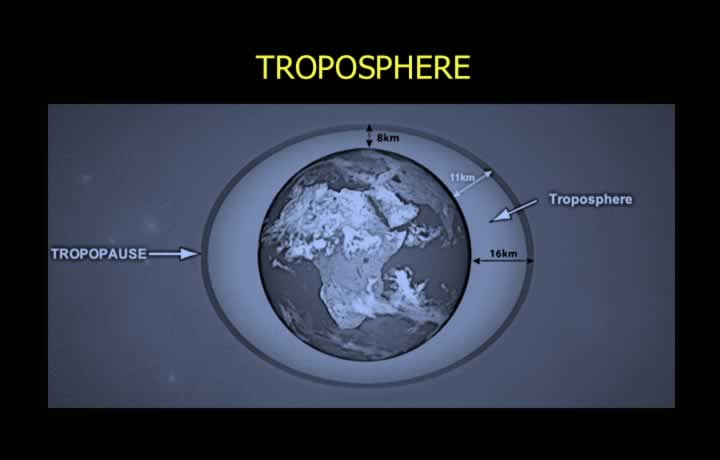
- The troposphere is the lowest layer of the atmosphere.
- Most weather phenomena occur here due to the presence of water vapour.
- Commercial flying and atmospheric disturbances are mainly confined to this region.
- Temperature generally decreases with height.
- Average lapse rate is 6.5°C per km.
- Temperature increases with height in an inversion layer.
- In an isothermal layer, temperature remains constant with height.
Tropopause
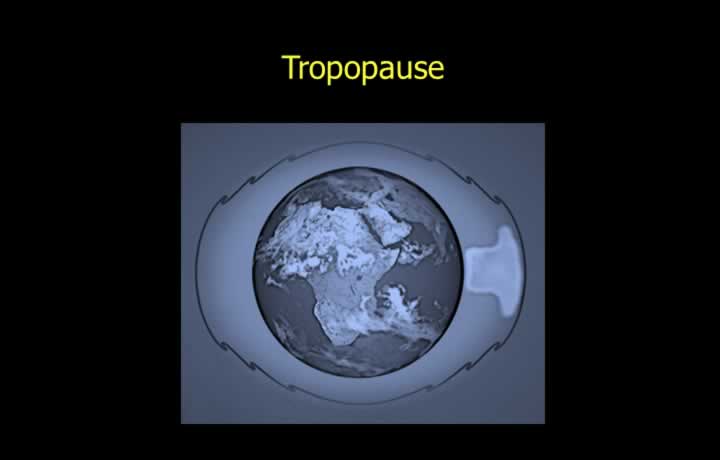
- The tropopause is the upper boundary of the troposphere.
- Average height: 11 km.
- Nearly an isothermal layer.
- Equatorial Tropopause: 16–18 km, temperature around −70°C.
- Polar Tropopause: 8–10 km, temperature around −50°C.
Variation in Tropopause with Latitude
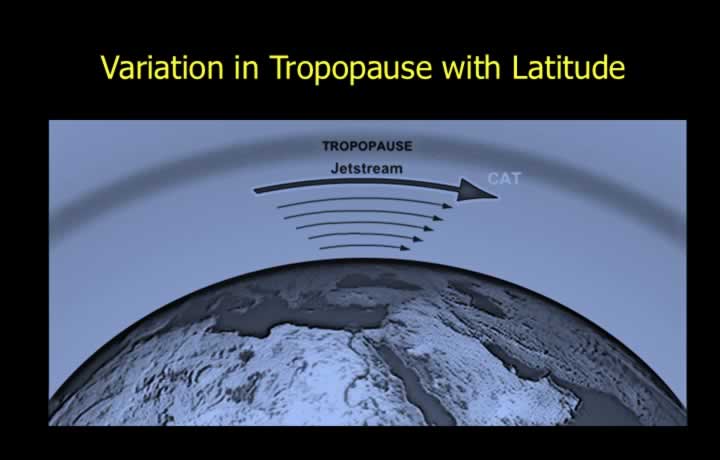
- Tropopause height decreases with increasing latitude.
- Tropopause temperature increases with latitude.
- Jet streams and Clear Air Turbulence (CAT) are commonly found near the tropopause.
- Temperature inversion or isothermal conditions may occur near the tropopause.
- Tropopause temperature is lower at the equator than at the poles.
Factors Affecting Tropopause Height
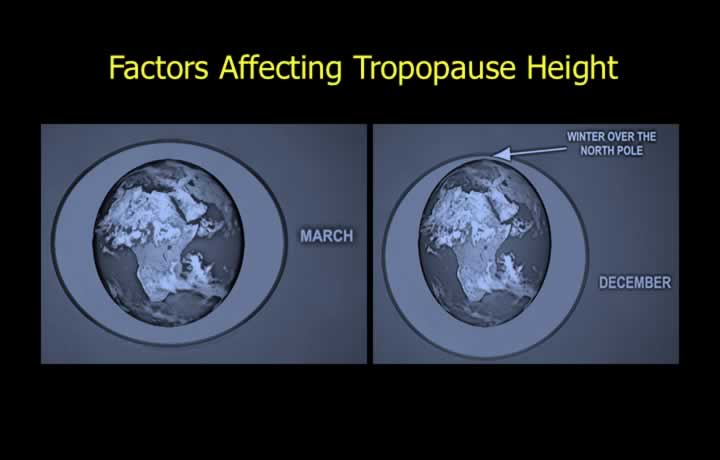
Height and temperature of the tropopause depend on:
- Surface temperature
- Latitude
- Season
- Land–sea distribution
- Synoptic weather conditions
Seasonal variations:
- Tropopause is generally lower during winter than during summer.
- Near the poles, temperature and density reversal occur above 8 km, causing temperature to increase with height.
Breaks in the Tropopause
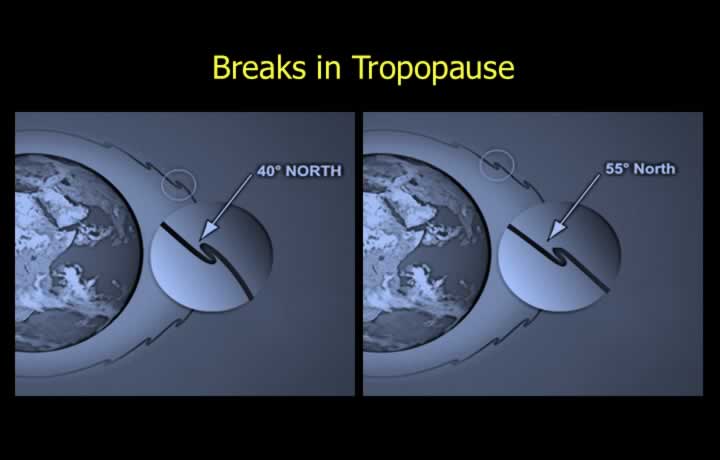
Distinct breaks in temperature and thickness occur around:
- 40° Latitude
- 60° Latitude (mainly during winter)
These are associated with:
- Hadley Cell
- Ferrel Cell
- Polar Cell
Jet streams are commonly found near these breaks.
Types of Tropopause
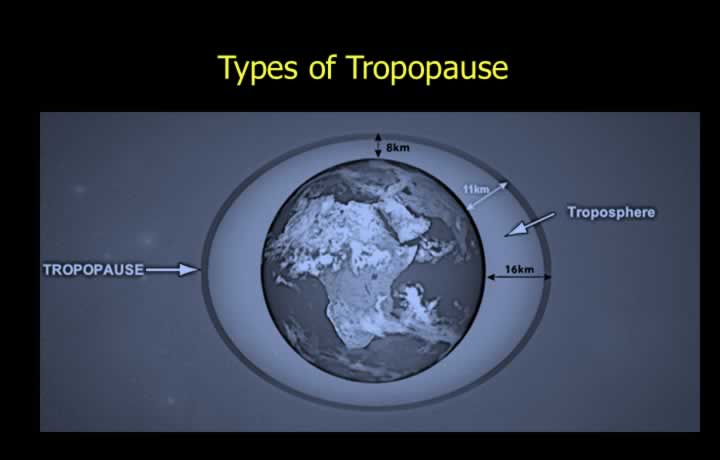
Tropical Tropopause
- Extends from the Equator to about 35°–40° latitude.
- Pressure level: 100 hPa.
- Height: Approximately 16 km.
- Dominates over India up to 35°N.
Subtropical Tropopause
- Occurs between 40°–60° latitude.
- Pressure level: 200 hPa.
- Height: Approximately 12 km.
- Subtropical Jet Stream occurs near its southern boundary.
Polar Tropopause
- Extends from 60° latitude to the poles.
- Pressure level: 300 hPa.
Layers above Tropopause that have limited impact on Civil Aviation
Stratosphere and Stratopause
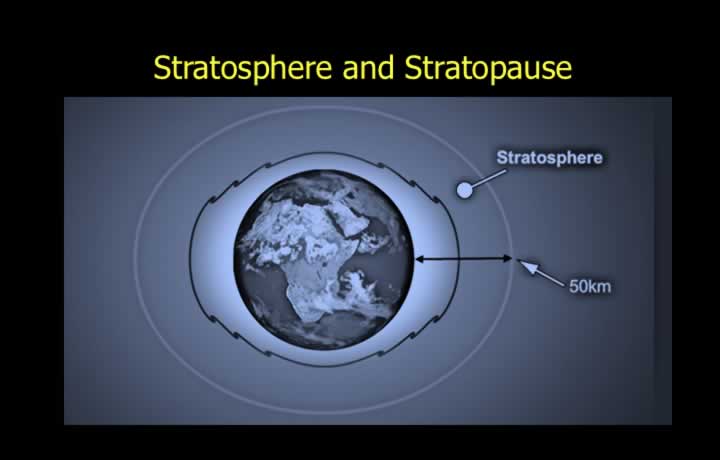
- Extends from the tropopause to about 50 km.
- Contains a high concentration of ozone.
- Temperature increases with height due to ozone absorption of solar radiation.
- Stable atmospheric layer with little humidity or weather activity.
- Nacreous (Mother-of-Pearl) clouds may occur.
- The upper boundary is called the Stratopause.
Mesosphere and Mesopause
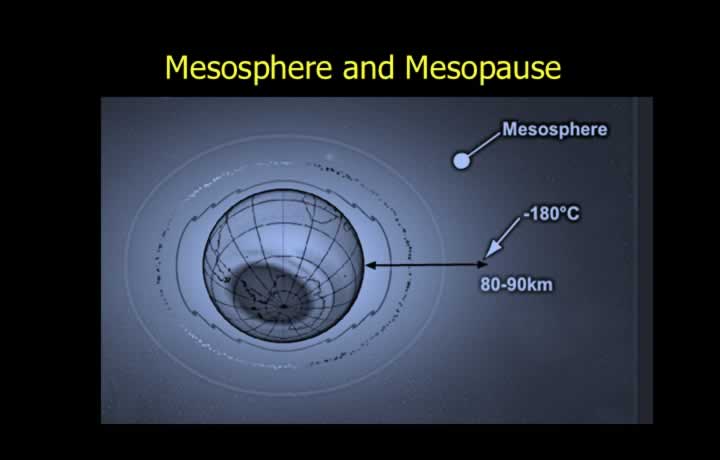
- Extends from the stratopause to 80–90 km.
- Temperature decreases with height.
- Noctilucent clouds occur near the poles.
- Mesopause temperature is approximately −90°C to −100°C.
Thermosphere
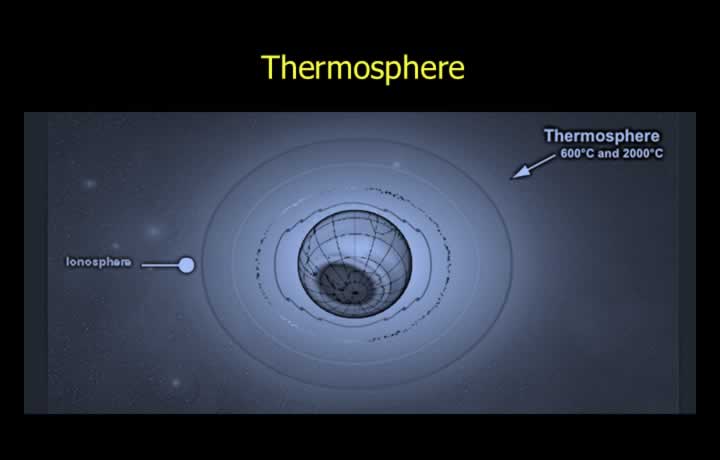
- Begins above the mesosphere.
- Temperature increases rapidly with height.
- Typical temperatures range from 600°C to 2000°C.
Ionosphere
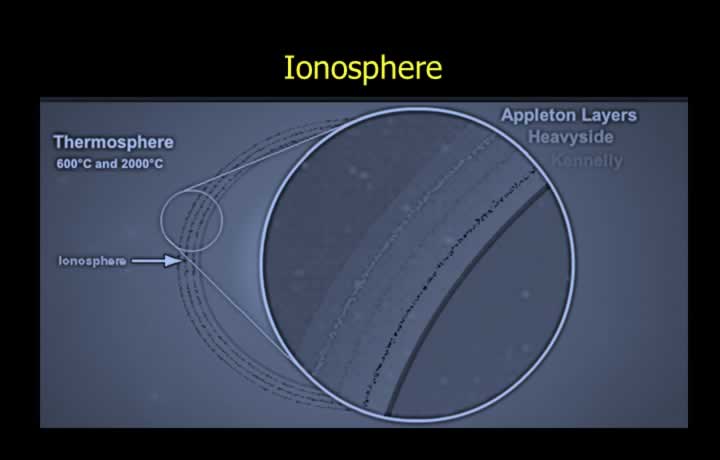
The ionosphere extends upward from around 60 km and is essential for radio communication.
It contains free electrons and is divided into:
- D Layer – Kennelly Layer (~110 km)
- E Layer – Heaviside Layer (~160 km)
- F Layer – Appleton Layer (~250 km)
Exosphere
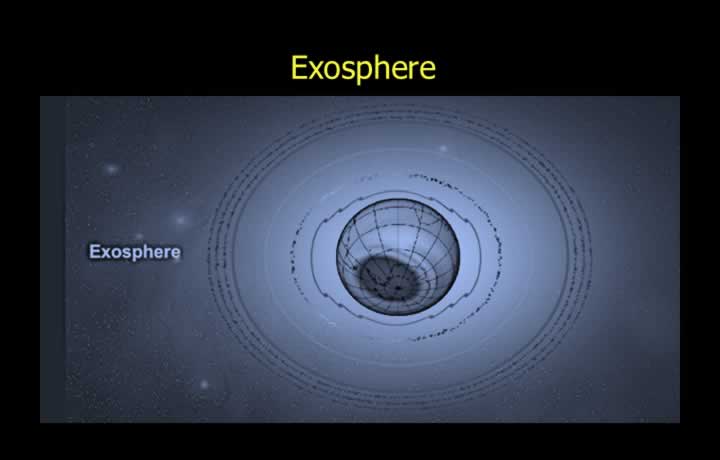
- Begins above approximately 700 km.
- Extremely low air density.
- Gradually merges into outer space.
Definition and need for ISA Conditions
International Standard Atmosphere (ISA)
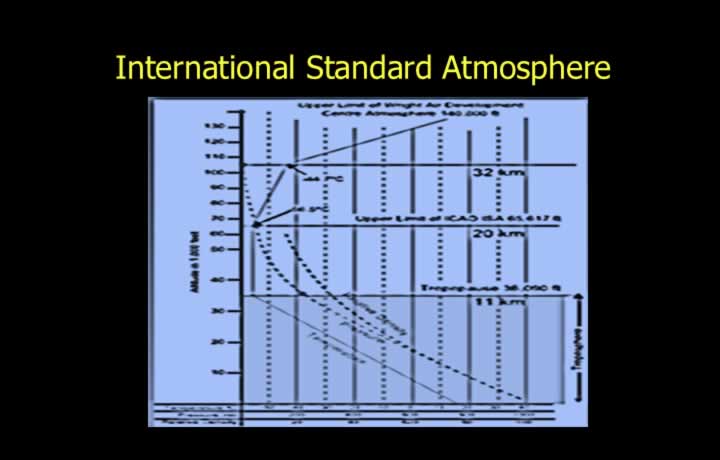
The International Standard Atmosphere (ISA) was defined by the International Civil Aviation Organisation (ICAO).
Applications:
- Standard reference for aviation below 30,000 ft.
- Aircraft design and testing.
- Calibration of aircraft instruments.
Mean Sea Level ISA Conditions
- Temperature: +15°C
- Pressure: 1013.25 hPa
- Density: 1225 g/m³
- Gravity: 9.80665 m/s²
ISA is defined up to 146,000 ft (42.6 km).
ISA Lapse Rate
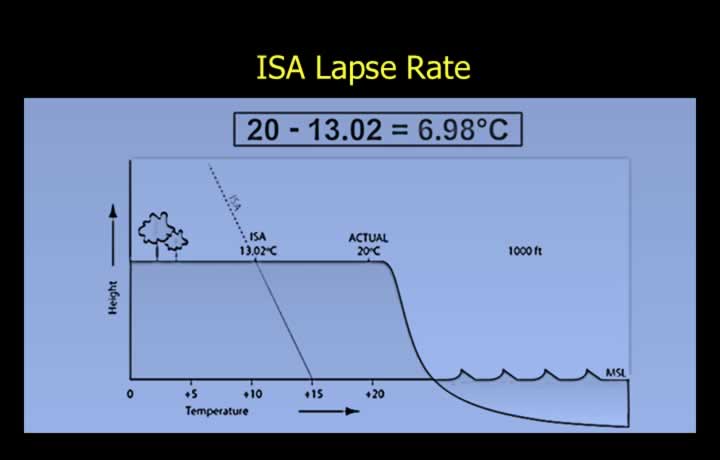
- Decreases by 1.98°C per 1000 ft up to 11 km (36,090 ft).
- Constant at −56.5°C up to 20 km (65,617 ft).
- Increases by 1°C per km thereafter.
- Constant at −44.5°C around 32 km (104,987 ft).
ISA Deviation = Actual Temperature − ISA Temperature
Jet Standard Atmosphere (JSA)
The Jet Standard Atmosphere (JSA) is defined for high-level flight operations and spacecraft testing.
Mean Sea Level JSA Conditions
- Temperature: +15°C
- Pressure: 1013.25 hPa
- Density: 1225 g/m³
- Gravity: 9.80665 m/s²
JSA Lapse Rate
- Temperature decreases at 2°C per 1000 ft.
- Tropopause is absent in the JSA model.