Aviation Hazards of Thunderstorms
Severe Turbulence
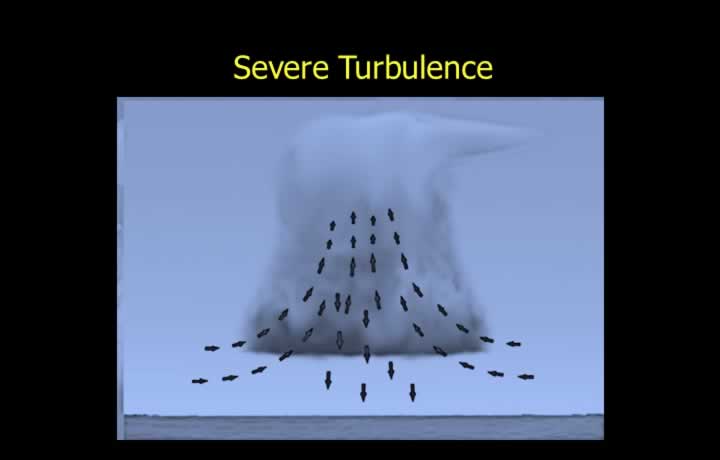
- Turbulence is caused by gusts, eddies, and strong updrafts and down-drafts within and around thunderstorms.
- As air is drawn into a thunderstorm, strong updrafts may be encountered in clear air up to 10–20 km around the storm and as far as 25–30 km downwind.
- Severe turbulence can occur inside Cumulonimbus (Cb) clouds as well as between adjacent Cb clouds.
- Turbulence may also extend several thousand feet above and below the cloud.
- If turbulence exceeds the aircraft’s gust load limits, it may result in loss of control, difficult landings, or structural damage.
Static Electricity and Lightning Strike
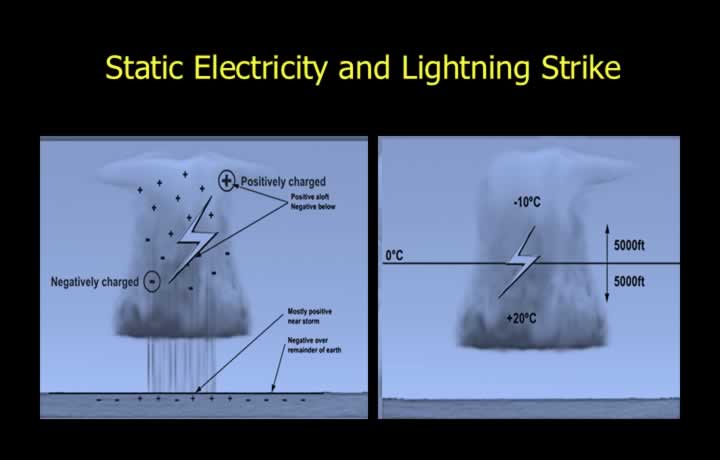
- Static electricity develops inside Cumulonimbus clouds due to the continuous movement of water droplets and ice particles.
- Lightning is most likely to occur when the ambient temperature is between +10°C and –10°C.
- Lightning strikes can puncture the aircraft skin and interfere with navigation and communication systems.
- Possible effects include a burning smell, loud explosive noise, temporary blindness or flash blindness, and inaccurate navigation indications.
Air Pockets, Gusts and Squalls
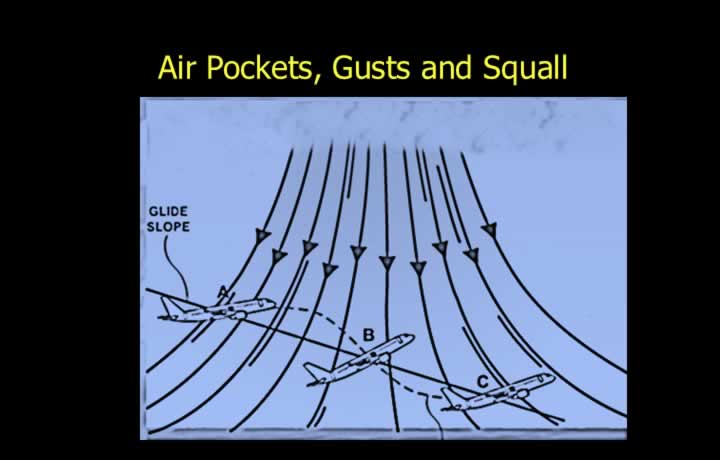
- Strong updrafts may produce negative G forces, while strong down-drafts may produce positive G forces from middle levels down to the surface.
- These vertical currents can cause sudden altitude changes up to approximately 1 km from the thunderstorm.
- Down-drafts spreading across the ground generate squall winds with speeds ranging from 40 to 100 knots.
- Strong gusts occur in the transition zone between updrafts and down-drafts and may cause structural damage or loss of aircraft control.
- Air pockets are localized regions of rapidly changing pressure and temperature associated with strong vertical air currents.
Wind Shear
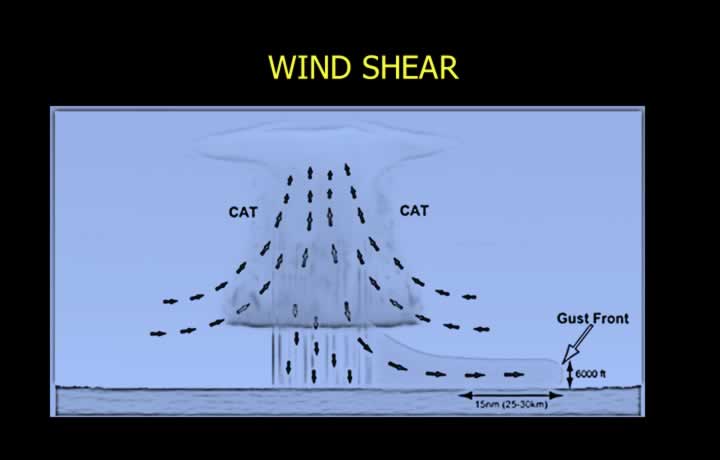
- Thunderstorm wind shear is produced when powerful down-drafts strike the ground and spread outward to heights of approximately 2,000 feet.
- During landing, an aircraft may initially encounter a headwind followed suddenly by a tailwind, resulting in a rapid loss of airspeed and possible stall warning.
Icing
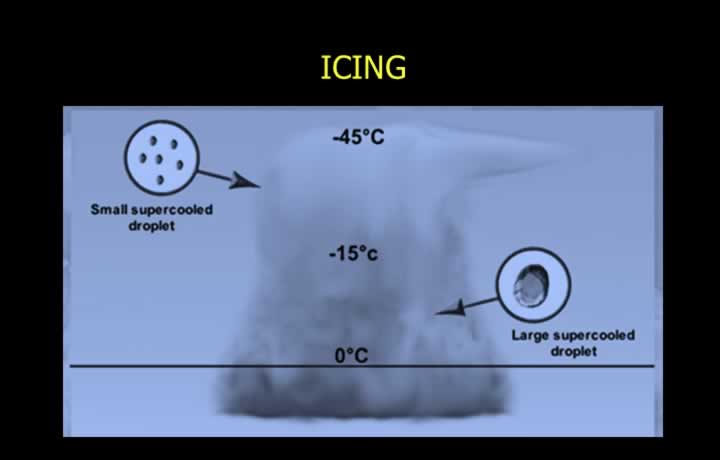
- Clear Ice (Glaze Ice or Translucent Rime) may form between the freezing level and approximately 10,000 feet above the freezing level.
- If aircraft icing protection systems are not activated, severe ice accumulation may lead to engine flameout and degraded aircraft performance.
Heavy Showers and Hail
- Heavy rain significantly reduces flight visibility.
- Heavy showers can cause water accumulation on runways, increasing the risk of aquaplaning (hydroplaning) during landing.
- Water ingestion into aircraft engines during heavy rainfall may result in loss of engine power.
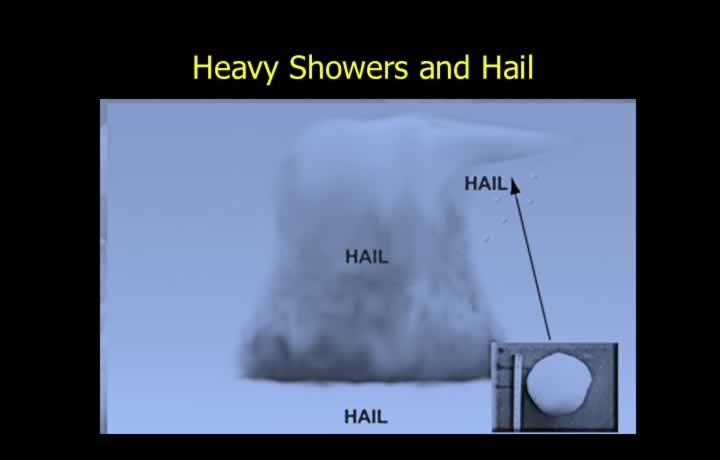
- Hail is commonly encountered between the freezing level and approximately 25,000 feet above the freezing level and can cause severe structural damage to the aircraft.
Noise, Darkness and Disorientation
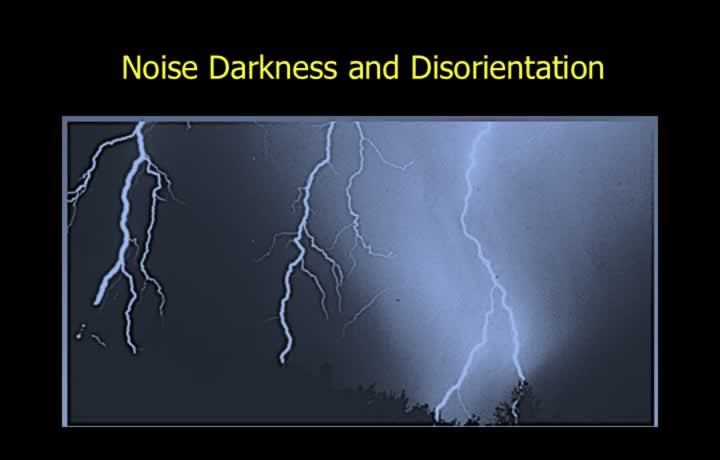
- Hail striking the aircraft or windshield produces loud noise and is usually accompanied by severe turbulence.
- Darkness and loss of outside visual references near thunderstorms can lead to spatial disorientation.
- Pilots should rely primarily on flight instruments, especially the Artificial Horizon (Attitude Indicator), to maintain aircraft attitude.
Instrument Error
- Rapid pressure changes associated with thunderstorms can produce errors in pressure-sensitive flight instruments.
- The altimeter may over-read in the vicinity of thunderstorms.
- Low-Level Significant Weather (SIGWX) charts help identify areas of Cumulonimbus development and associated hazards.
Micro-bursts and Macro-bursts
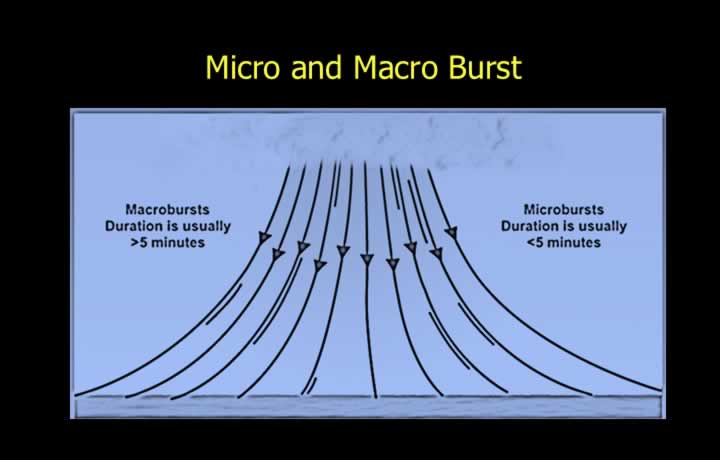
- Micro-bursts and Macro-bursts are intense down-drafts that create severe wind shear and violent vertical air currents, typically lasting 1–5 minutes.
- Wind speeds may exceed 75 km/h and are often associated with heavy rain or virga.
- During approach, pilots may encounter a headwind, followed by a strong down-draft, and then a tailwind, creating a highly hazardous situation.
- A Micro-burst affects an area less than 4 km in diameter, whereas a Macro-burst extends over an area greater than 4 km.
- Micro-bursts and macro-bursts can cause rapid changes in angle of attack, roll, yaw, turbulence, visibility, aircraft attitude, noise levels, and may result in undershooting or overshooting the runway during approach.