
High Pressure Systems
Isobaric High
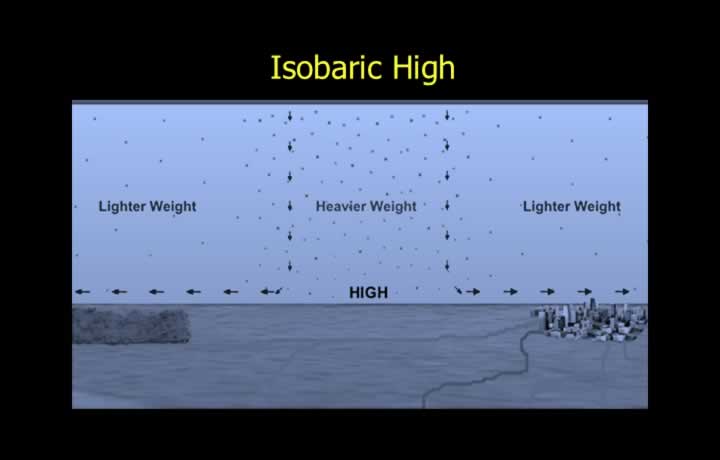
- High-pressure systems are caused by the greater weight of air molecules.
- If there is a net gain of air in the upper atmosphere, the air tends to sink toward the surface.
- The sinking air causes subsidence.
- As the air descends to lower levels, its temperature increases due to adiabatic warming.
- Intense high-pressure systems are known as anticyclones.
High Pressure System Weather
- A high-pressure ridge is an elongated area of high pressure.
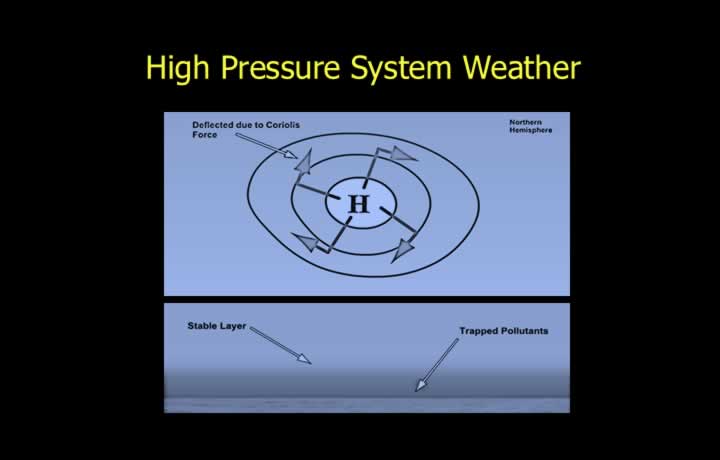
- Clear weather is generally associated with high-pressure areas because air diverges outward.
- Poor visibility is the main aviation hazard in high-pressure systems, as pollutants such as smoke remain trapped near the surface beneath an inversion layer.
- According to Buys Ballot’s Law, winds circulate clockwise around a high in the Northern Hemisphere and anticlockwise in the Southern Hemisphere due to the Coriolis effect.
- Radiation fog commonly forms during the night and early morning hours.
Subtropical High-Pressure Belt
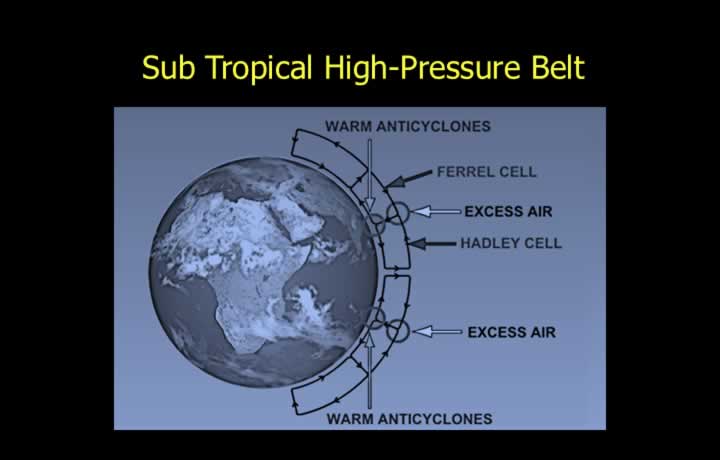
- Globally, subtropical high-pressure belts are located between approximately 20° and 45° latitude, at the boundary between the Hadley and Ferrel Cells.
- A net gain of descending air creates the subtropical oceanic high-pressure belt.
- The high-pressure belt shifts toward higher latitudes during summer and toward lower latitudes during winter as the Hadley–Ferrel Cell boundary migrates.
Cold Anticyclone (Polar High-Pressure Belt)
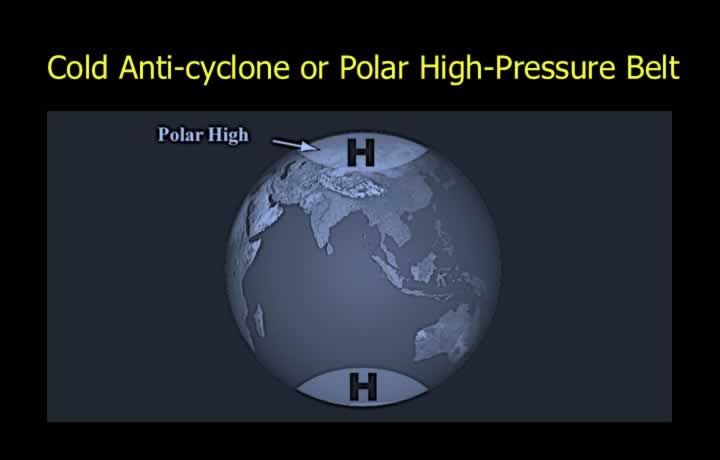
- Cold anticyclones, or Polar High-Pressure Belts, develop due to the extremely cold land surfaces in the polar regions.
- Large and widespread high-pressure belts are found near the poles because land cools more rapidly than the surrounding sea.
Temporary Anticyclone
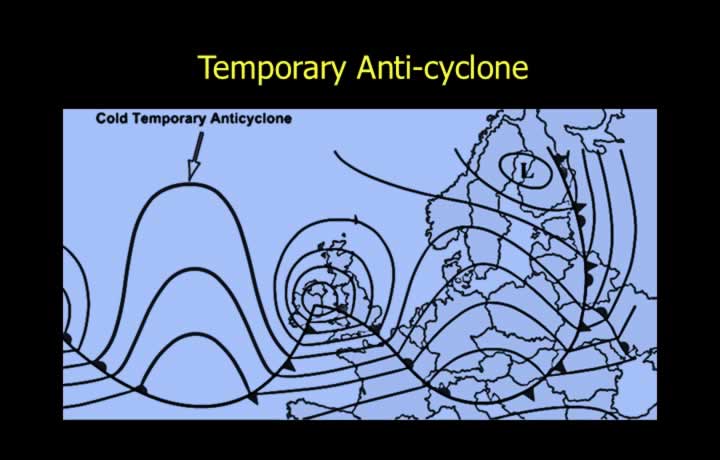
- Temporary anticyclones develop due to relatively higher pressure between two polar frontal depressions (low-pressure systems).
- Negligible cloud, precipitation, icing, and turbulence are generally experienced within a temporary anticyclone.
- Blocking Anticyclone: A stationary high-pressure system that blocks the movement of approaching cyclonic circulations.