Measurement of Rate of Climb or Descent using Vertical Speed Indicator (VSI)
A Vertical Speed Indicator (VSI) shows the aircraft’s rate of climb or descent, usually in feet per minute (ft/min). It helps pilots maintain the desired climb or descent rate for safe and accurate flight.
Principle of Vertical Speed Indicator
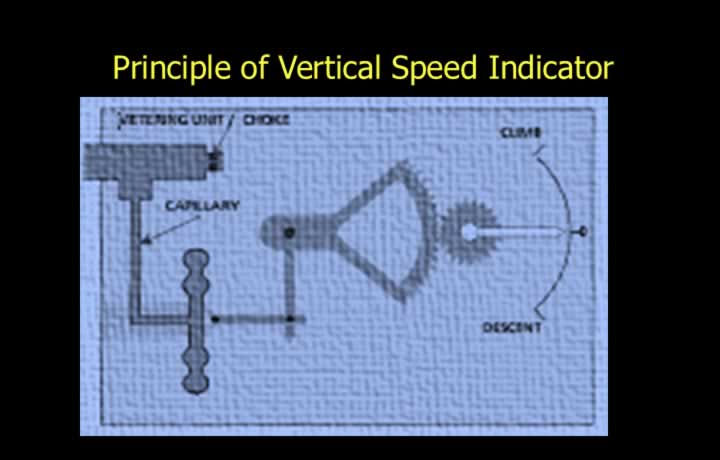
- Vertical Speed Indicator (VSI) is also called the Rate of Climb or Descent Indicator (RCDI).
- It indicates the rate of climb or descent by measuring the rate of change of static pressure.
- The instrument compares the current static pressure with the static pressure from approximately 4–6 seconds earlier.
Construction of Vertical Speed Indicator
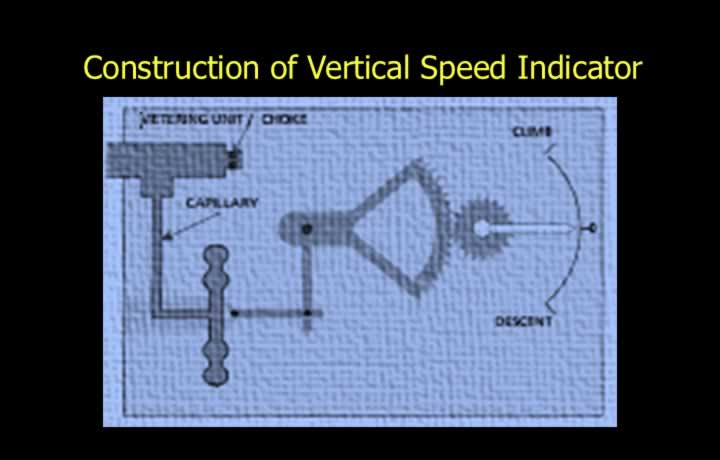
- An airtight container with a metering unit retains the previous static pressure.
- A pressure-sensing capsule detects the current static pressure.
- The pressure difference between the capsule and the container indicates the aircraft’s vertical speed.
Metering Unit of VSI
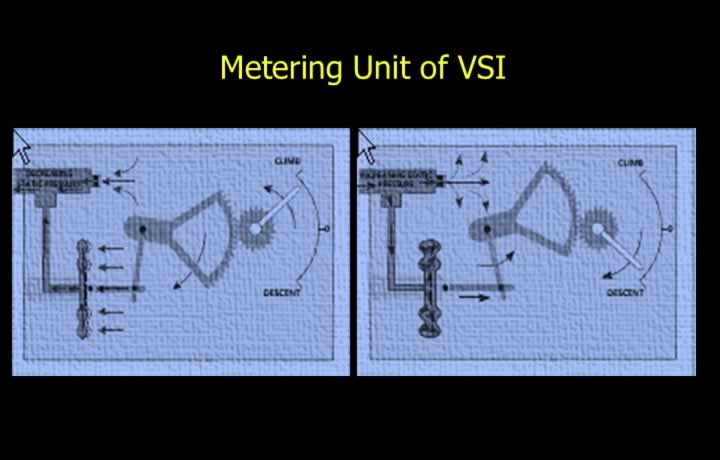
- The metering unit is a restrictive choke that allows delayed pressure transfer.
- It automatically compensates for the slower rate of static pressure change at higher altitudes.
- This provides a consistent indication at all altitudes and temperatures.
VSI During Climb and Descent
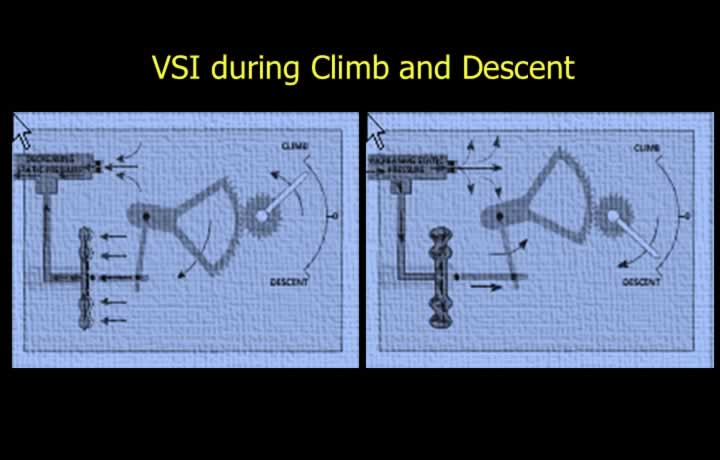
- During climb: Pressure inside the capsule becomes lower than the case.
- The capsule compresses, causing the pointer to indicate a climb.
- During descent: Pressure inside the capsule becomes higher than the case.
- The capsule expands, causing the pointer to indicate a descent.
Errors in Vertical Speed Indicator
Instrument Error in VSI
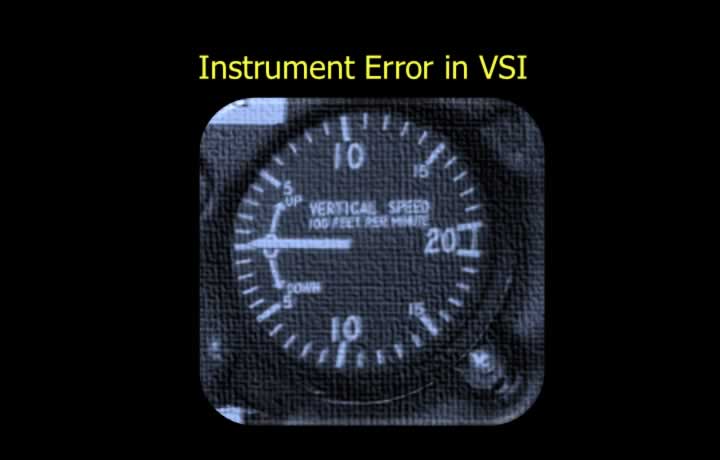
- Instrument errors are unavoidable due to manufacturing imperfections.
- Pressure changes become smaller at higher altitudes.
- Instrument error increases with altitude.
Position or Pressure Error in VSI
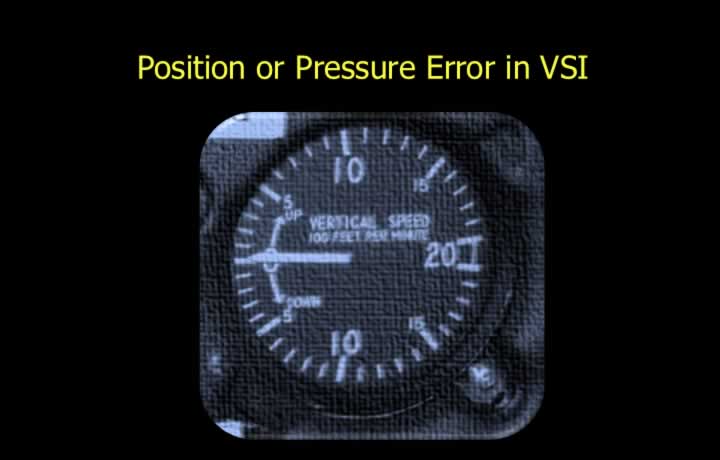
- Position (pressure) error is caused by turbulence creating suction around the static source.
- The error is minimised by using separate static vents.
- High-speed aircraft use advanced pitot-static systems to reduce this error.
- Position error is most noticeable while accelerating for take-off.
Manoeuvre and Time Lag Errors of VSI
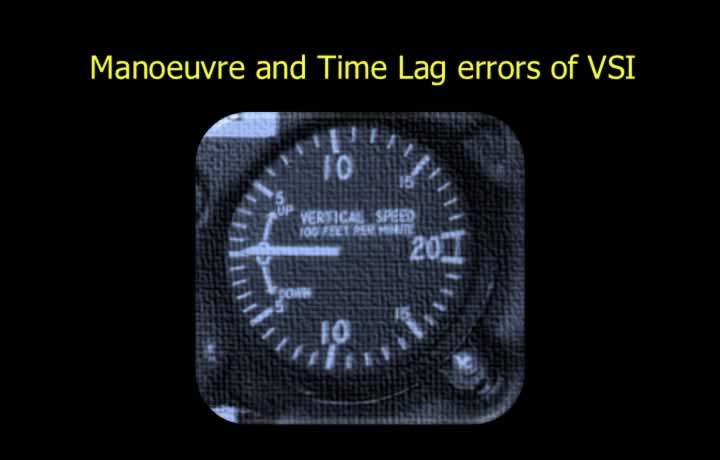
- Temporary fluctuations occur during manoeuvres, particularly changes in pitch or yaw.
- This may produce false indications of climb or descent.
- Time lag error occurs because the capsule responds slowly to rapid or prolonged altitude changes.
- This error is especially noticeable while levelling off.
Static Blockage in VSI
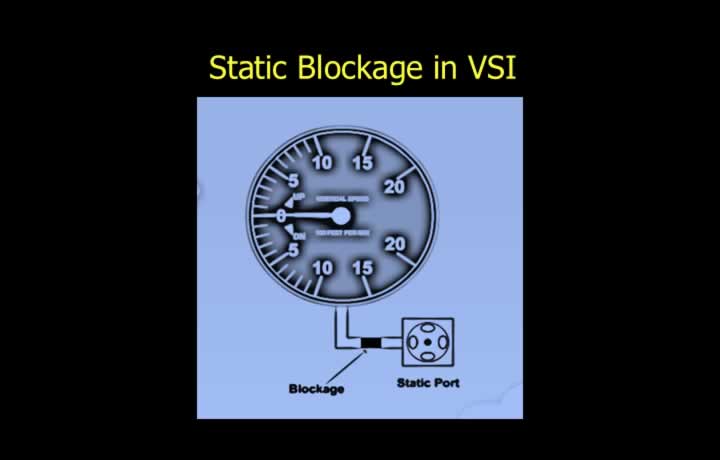
- A blockage in the static system causes the VSI to indicate zero.
- If blockage occurs during a climb or descent, the indication gradually returns to zero as the pressure differential equalizes.
Leaks in Static Vent (Outside Pressurised Cabin)
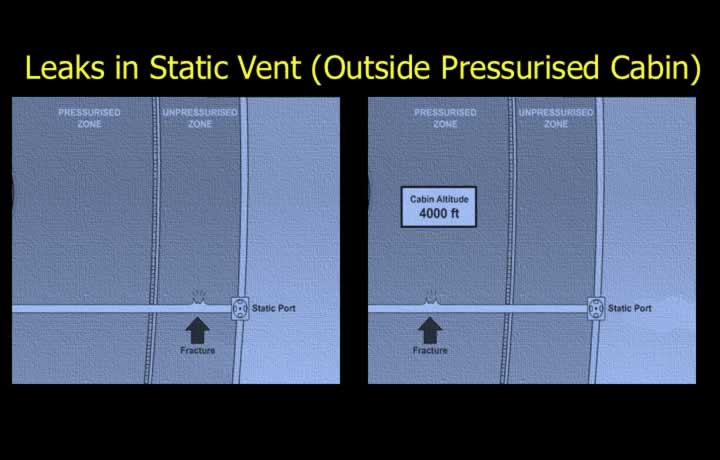
- A leak in the static line outside the pressurised cabin causes no significant error because the instrument continues to sense the correct outside static pressure.
Leaks in Static Vent (Inside Pressurised Cabin)
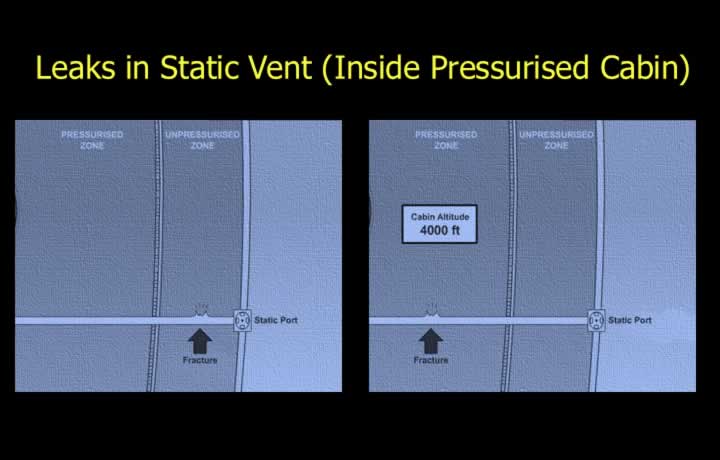
- A leak in the static line inside the pressurised cabin causes the VSI to sense the rate of change of cabin altitude instead of the aircraft’s actual altitude.
- The instrument responds to cabin pressure changes rather than true atmospheric static pressure.
Display of VSI
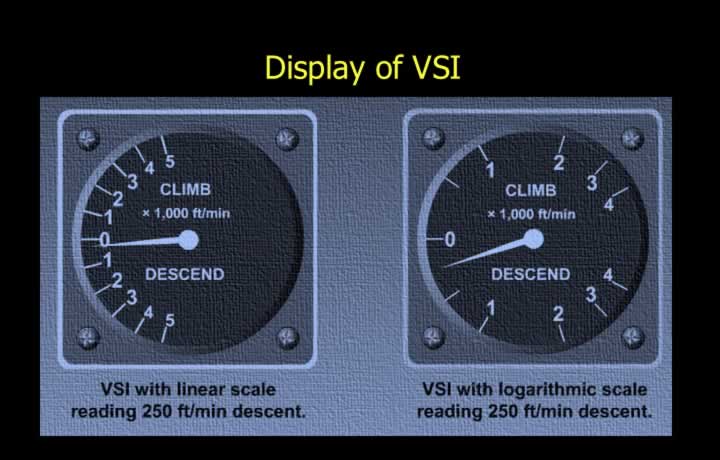
- The Vertical Speed Indicator display may be of two types:
- Linear Display: Equal scale increments for all rates of climb or descent (ft/min).
- Logarithmic Display: Increased sensitivity at lower rates of climb and descent.
Instantaneous Vertical Speed Indicator
Principle of an Instantaneous VSI (IVSI)
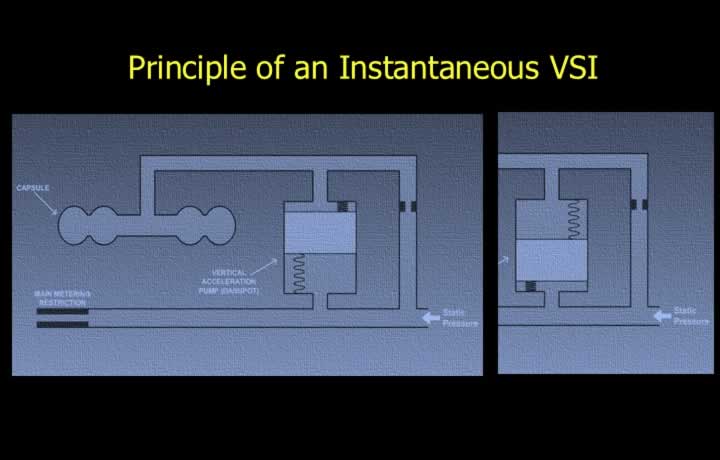
- An Instantaneous VSI (IVSI) incorporates a Vertical Acceleration Pump (Dashpot) in the static line leading to the capsule.
- During a climb or descent, the piston is displaced, creating an immediate pressure differential.
- Once the aircraft settles into a steady climb or descent, the piston returns to its original position.
Errors in Instantaneous VSI (IVSI)
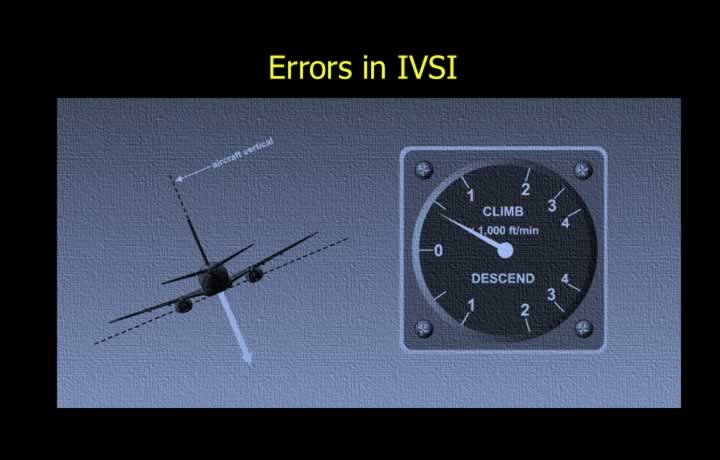
- The IVSI is highly sensitive because it also senses vertical acceleration.
- It may produce false climb or descent indications during turbulence or steep level turns.
- Short-term fluctuations should be ignored during flight.