
Using Earth’s Magnetism to find Directions during Flight
Earth’s magnetic field is the invisible magnetic force surrounding the Earth, generated by the movement of molten iron in its outer core. It helps aircraft and navigation systems determine direction by providing a reference for magnetic north.
Magnetism
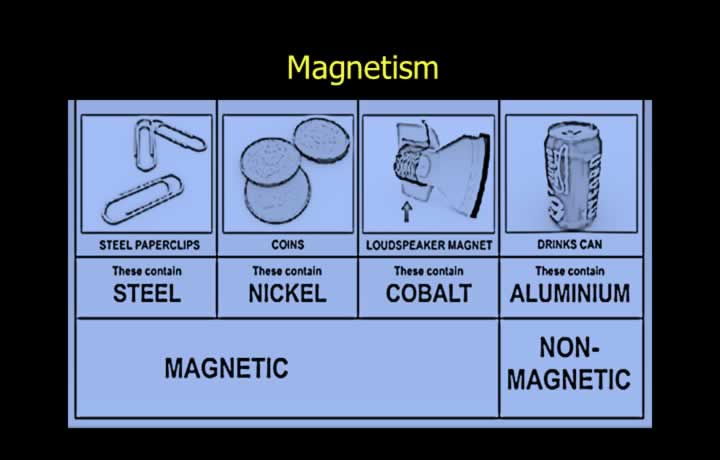
- Magnetism is the property of certain materials to produce a magnetic force.
- Magnetic force can attract or repel magnetic materials.
- Ferrous metals such as steel, nickel, and cobalt can be magnetised.
- Non-ferrous metals such as aluminium cannot be magnetised.
Magnetic Field
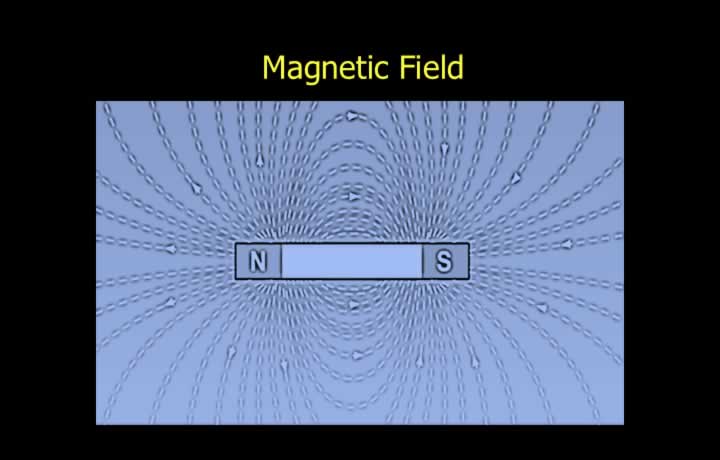
- A magnetic field is the region around a magnet where magnetic influence is experienced.
- Magnetic lines of force represent the pattern of the magnetic field.
- The pattern depends on the shape and strength of the magnet.
- The red end is the north-seeking pole, which points toward Magnetic North.
- The blue end is the south-seeking pole, which points toward Magnetic South.
- Like poles repel each other, while unlike poles attract.
Magnetisation and De-magnetisation of Hard and Soft Iron
Magnetisation
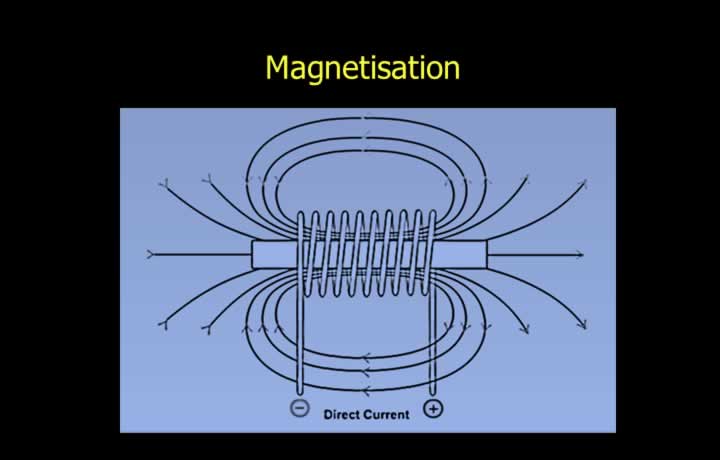
- A metal can be magnetised by three methods:
- Repeatedly stroking the metal with a magnet.
- Hammering the magnetic material while using a magnet.
- Passing direct current through a coil wound around the magnetic material.
De-Magnetisation
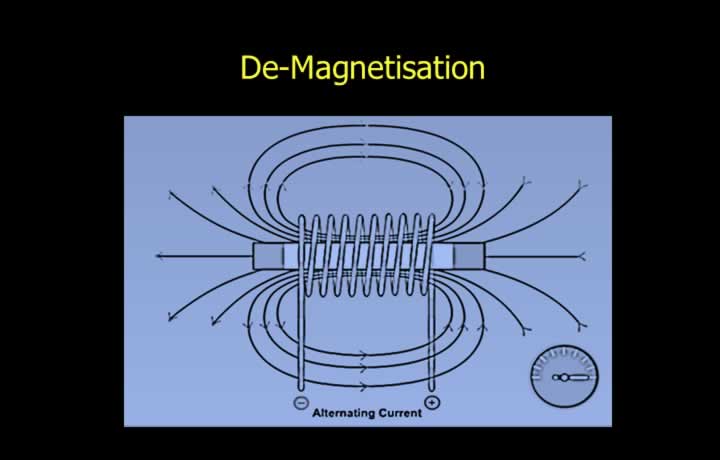
- A magnetised material can be demagnetised by:
- Hammering it while positioned at right angles to the Earth’s magnetic field.
- Heating it above approximately 900°C.
- Applying alternating current and gradually reducing the current.
- Repeated polarity reversal removes magnetism.
Hard and Soft Iron
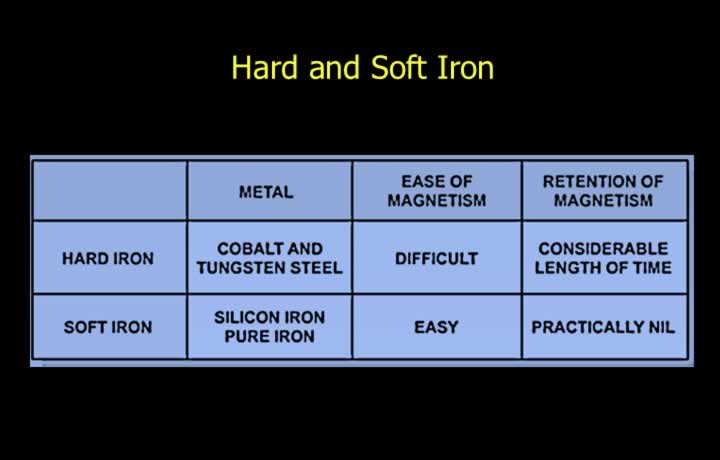
- Hard Iron:
- Examples include cobalt and tungsten steel.
- Difficult to magnetise but retains magnetism for a long time.
- Used as permanent magnets.
- Soft Iron:
- Examples include silicon steel and pure iron.
- Easy to magnetise but loses magnetism quickly.
- Remains magnetised only while current flows through the solenoid.
Earth’s Magnetic Field
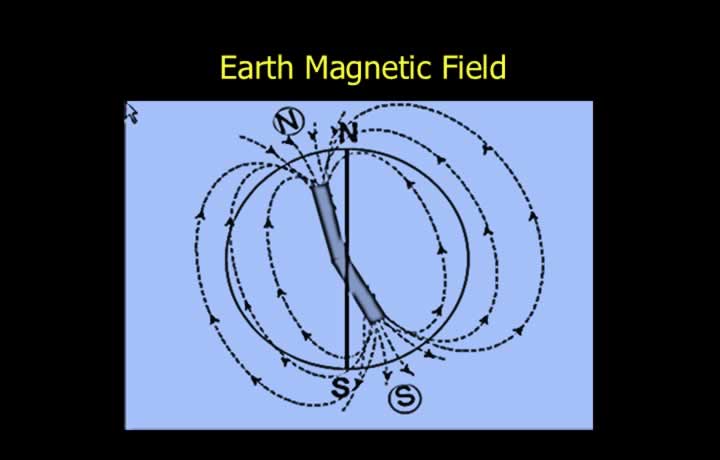
- The magnetic compass is the primary direction-finding instrument in an aircraft.
- The Earth’s magnetic field is not aligned exactly with its rotational (polar) axis.
- Magnetic North and True North are not at the same location.
- Magnetic North is approximately 400 NM from True North.
- Magnetic North moves approximately 22 NM per year.
- Magnetic North and Magnetic South are not diametrically opposite.
- The aircraft magnetic compass uses only the north-seeking end of the magnet.
Effect of Magnetic Variation on an aircraft compass at different parts of the globe
Magnetic variation exists because magnetic north is not in the same place as the Earth’s geographic (true) north pole. It results in a slightly different direction of Magnetic North as compared to True North
Magnetic Variation
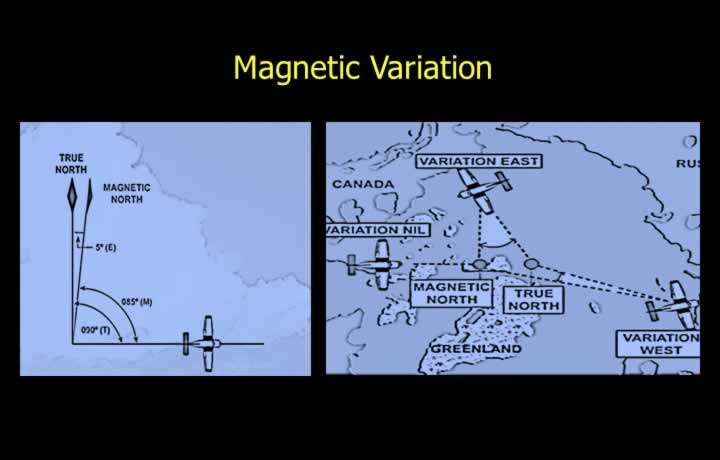
- Variation is the angular difference between True North and Magnetic North.
- It is expressed as Magnetic North being east or west of True North.
- Variation depends on the aircraft’s location relative to Magnetic North.
- The maximum theoretical variation is 180° East or West.
- Isogonals are lines joining places of equal magnetic variation.
- Isogonals converge toward both the True and Magnetic Poles.
- Agonic lines join places where variation is zero.
Calculating Magnetic Variation
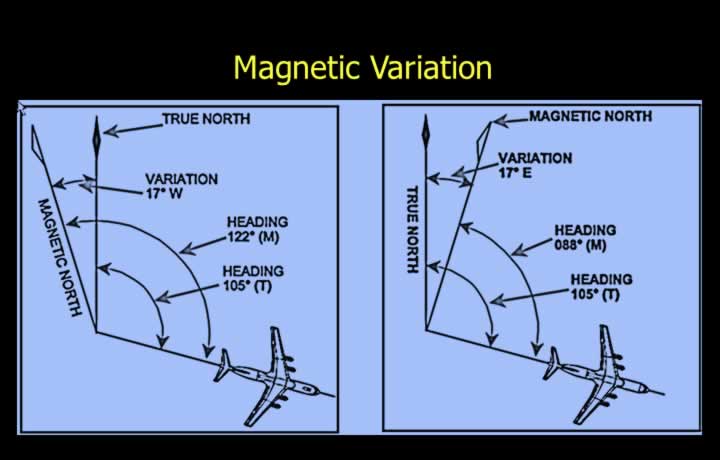
- Variation is applied to Magnetic Heading to obtain True Heading.
- Memory aid:
- Variation West (-) → Magnetic Best
- Variation East (+) → Magnetic Least
Effect of Magnetic Dip Angle on an aircraft compass
Magnetic dip is the angle at which the Earth’s magnetic field tilts downward toward the Earth. It is zero at the magnetic equator and becomes larger as you move toward the magnetic poles.
Magnetic Dip
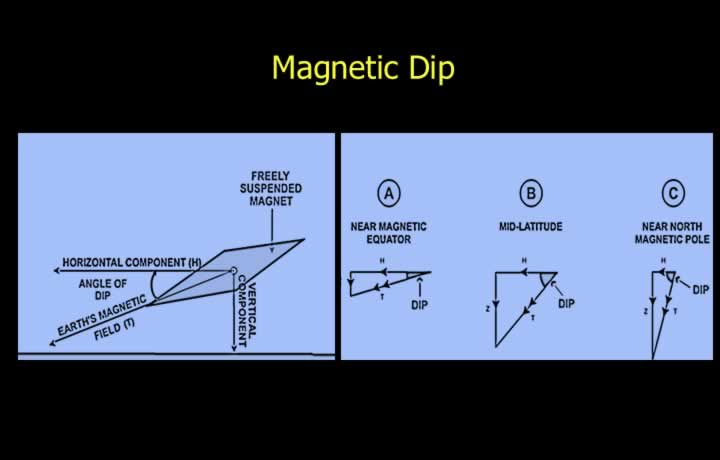
- The Earth’s magnetic field has both horizontal and vertical components.
- The horizontal component provides the directive force for a magnetic compass.
- Magnetic Dip is the angle between the Earth’s magnetic field and the horizontal plane.
- Dip is 0° at the magnetic equator, where the magnetic field is horizontal.
- Dip is 90° at the magnetic poles, where the magnetic field is vertical.
Effects of Magnetic Dip
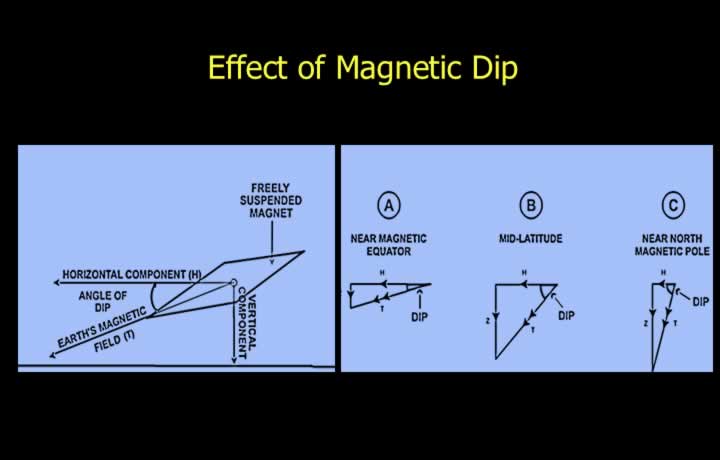
- Lines of Inclination join places of equal magnetic dip.
- The Aclinic Line joins places where magnetic dip is zero (Magnetic Equator).
- Field strength is measured in microtesla (µT).
- A magnetic compass requires a minimum magnetic field strength of approximately 6 µT to operate correctly.
Compass Deviation
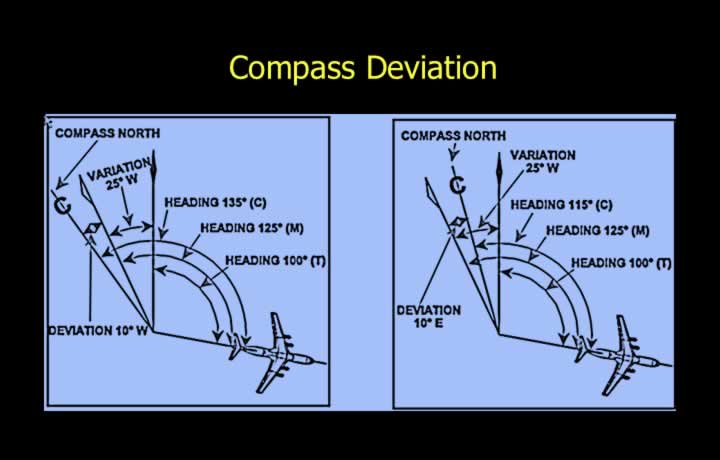
- Electrical equipment and nearby metallic objects create compass error known as Deviation.
- Deviation is the difference between Magnetic North and Compass North.
- Deviation is expressed in degrees East or West of Magnetic North.
Calculation of Compass Deviation
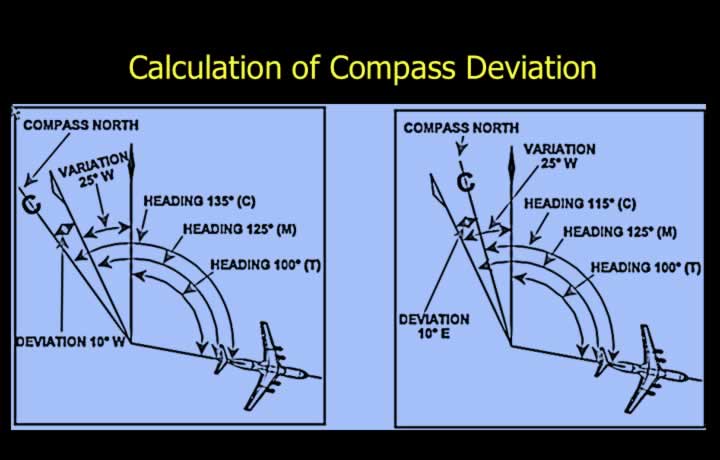
- A Compass Swing is carried out to prepare a compass deviation card.
- Deviation is applied to Compass Heading to obtain Magnetic Heading.
- Memory aid:
- Deviation West (-) → Compass Best
- Deviation East (+) → Compass Least