Speed Measurement using Air Speed Indicator (ASI)
An Airspeed Indicator (ASI) measures aircraft speed by comparing the pitot (total) pressure with the static pressure from the atmosphere. The difference, called dynamic pressure, is converted into the indicated airspeed.
Purpose of Air Speed Indicator
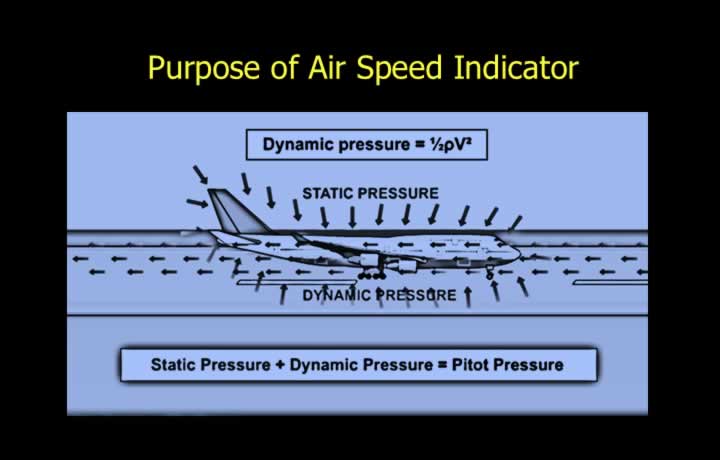
- The Air Speed Indicator (ASI) is designed to detect dynamic pressure.
- It measures dynamic pressure and displays it as aircraft airspeed.
- Airspeed is normally indicated in knots (kt) or kilometres per hour (km/h).
Principle of Air Speed Indicator
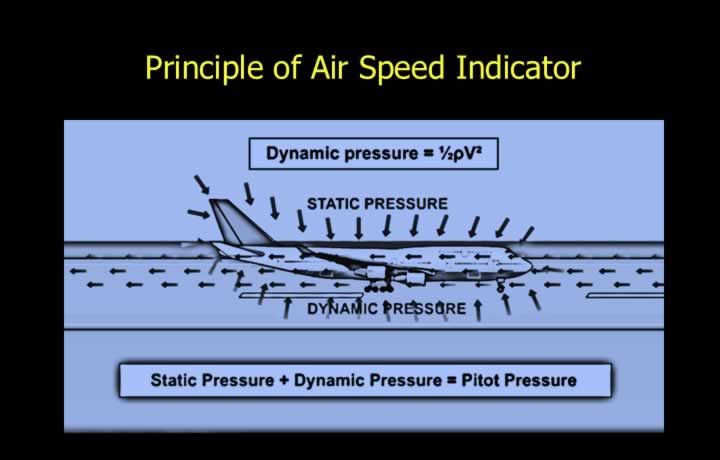
- The ASI senses both Pitot pressure and Static pressure.
- Pitot pressure is the sum of dynamic and static pressures.
- Dynamic pressure is obtained by subtracting static pressure from Pitot pressure.
- Dynamic Pressure = Pitot Pressure − Static Pressure
- Dynamic Pressure = ½ × Density × Velocity²
Construction of Air Speed Indicator
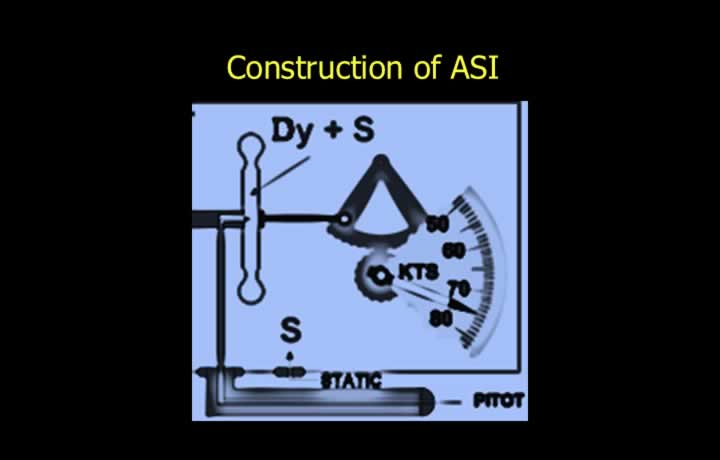
- Static pressure is supplied to the airtight instrument case from the static source.
- Pitot pressure enters an expandable, thin-walled capsule.
- Pitot pressure changes with aircraft airspeed.
- Static pressure acts equally inside and outside the capsule, leaving only dynamic pressure to act on it.
- The capsule expands in proportion to the dynamic pressure.
- A temperature-compensated magnifying linkage transfers capsule movement to the pointer, indicating aircraft airspeed.
Critical Speed Markings
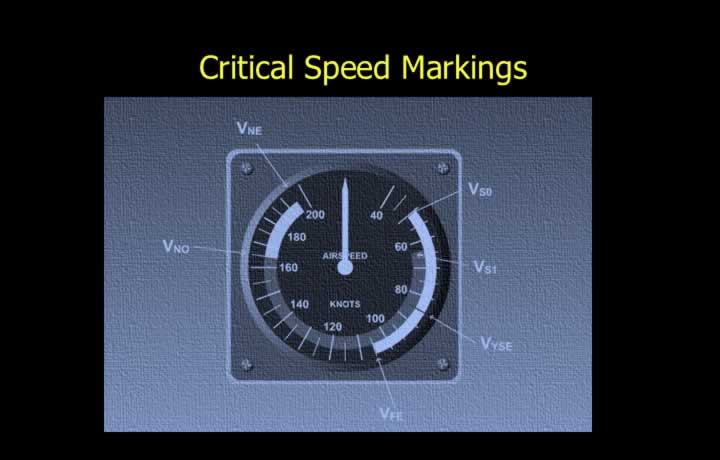
- VNO – Maximum Normal Operating Speed.
- VNE – Never Exceed Speed (Red Line).
- VYSE – Best Single-Engine Rate of Climb Speed (Blue Line).
- VLO – Maximum Landing Gear Operating Speed.
- VLE – Maximum Speed with Landing Gear Extended.
- VS0 – Stall Speed with flaps and landing gear down.
- VS1 – Stall Speed in a specified clean configuration.
Colour Codes for Speed Range
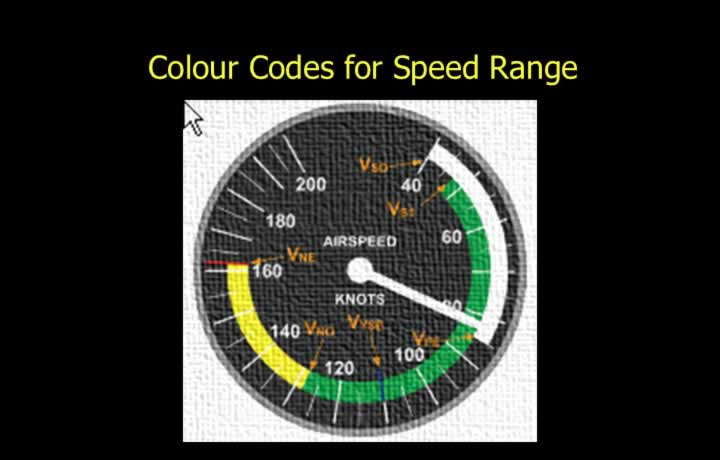
- White Arc – Flap Operating Range (VSO to VFE).
- Green Arc – Normal Operating Range (up to VNO).
- Yellow Arc – Caution Range (between VNO and VNE).
- Red Line – Never Exceed Speed (VNE).
Errors of Air Speed Indicator
Instrument and Position Errors
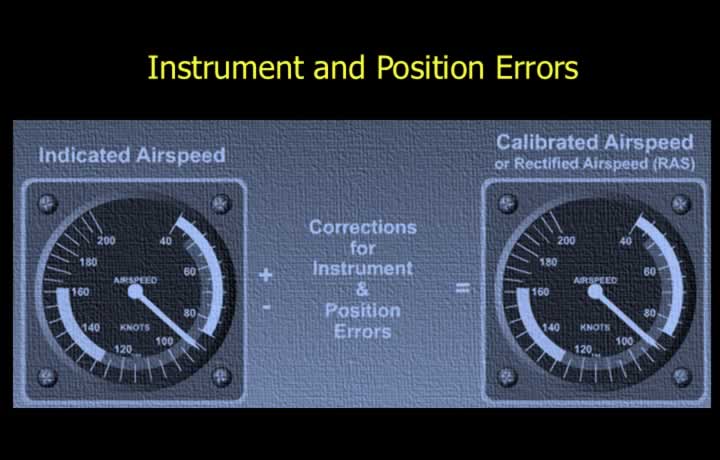
- Instrument errors are caused by manufacturing imperfections.
- Position errors result from suction caused by turbulent airflow around the static vent.
- Instrument and position corrections are provided in the aircraft correction card.
Manoeuvre-Induced Errors
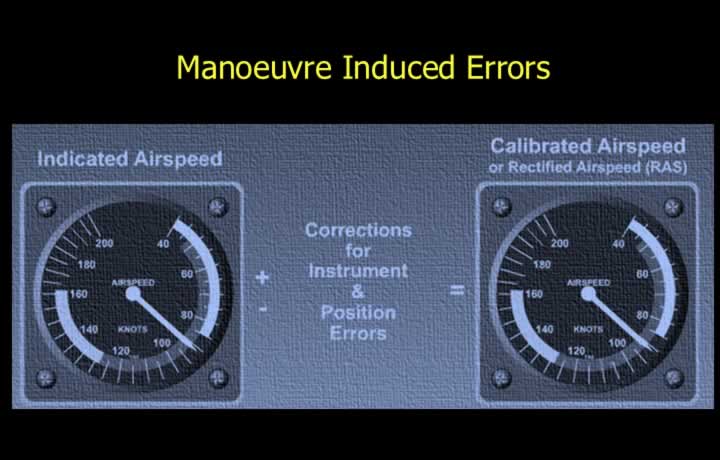
- Manoeuvre-induced errors occur because of changes in angle of attack.
- These errors cause a temporary time lag in airspeed indication.
Variation of Atmospheric Density
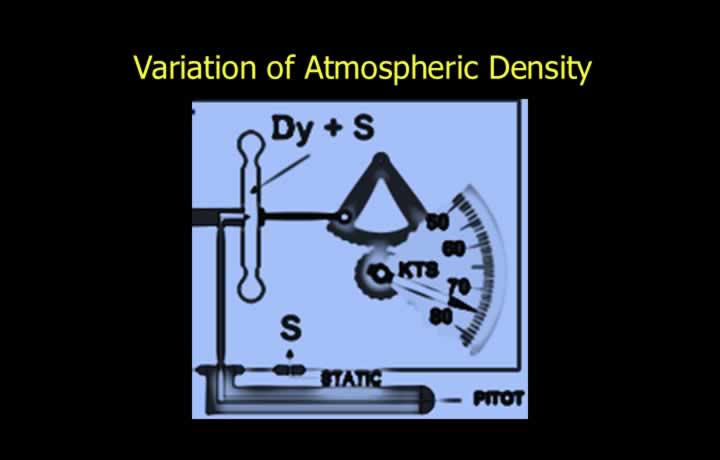
- Density error results from differences between actual air density and calibrated air density.
- Dynamic pressure depends on both aircraft speed and air density.
- Air density varies with temperature, pressure, and altitude.
Density Error
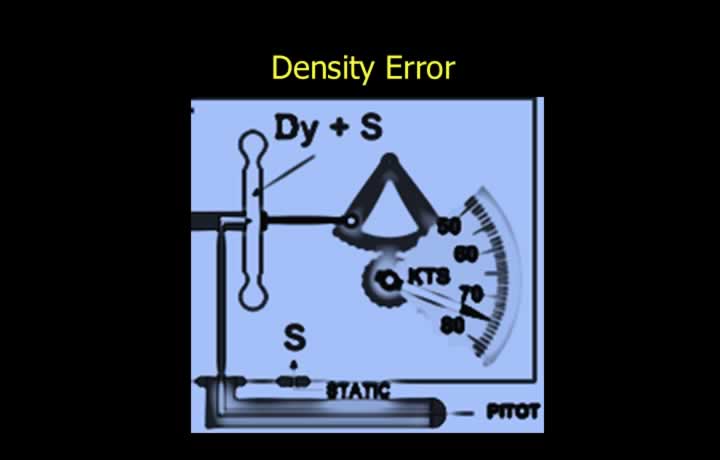
- The ASI is calibrated for a standard air density of 1.225 kg/m³ (1225 g/m³).
- This density exists only under ISA conditions:
- Dry air (0% humidity).
- Mean Sea Level Pressure = 1013.25 hPa.
- Mean Sea Level Temperature = 15°C.
- Under all other atmospheric conditions, the ASI experiences density error.
Compressibility Error
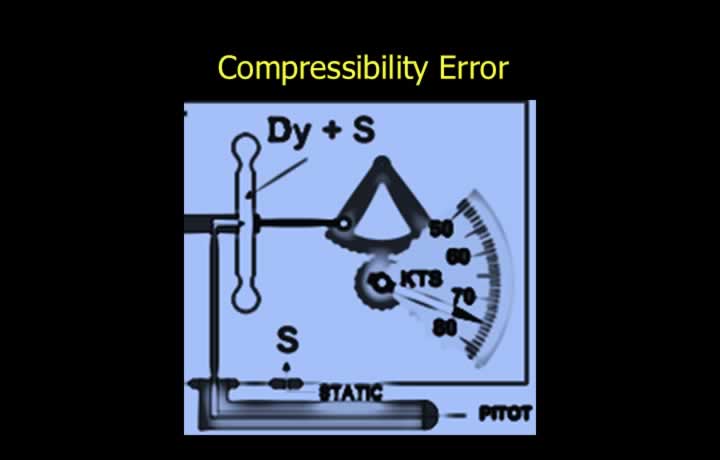
- Compressibility error occurs because air compresses at high speeds.
- Air is a compressible fluid, and compression becomes significant at high airspeeds.
- The ASI is calibrated for uncompressed air.
- Compressibility errors become significant above approximately 300 knots.
- These errors must be corrected for accurate airspeed measurement.
IAS – CAS – EAS – TAS
Indicated and Calibrated Airspeed
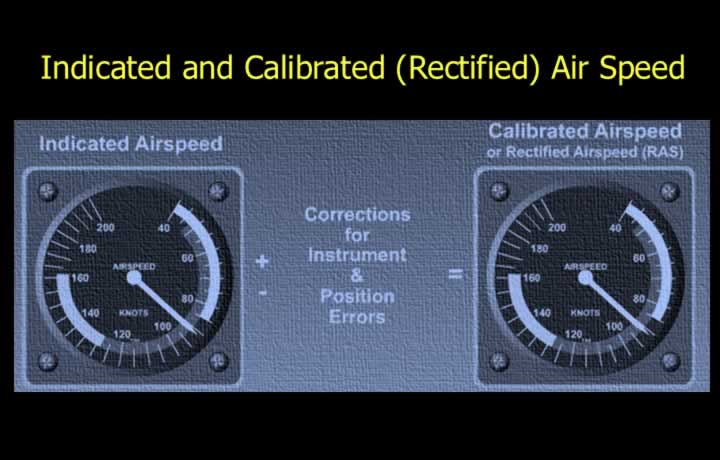
- Indicated Airspeed (IAS) is the airspeed displayed by the ASI.
- IAS depends on the measured dynamic pressure.
- Calibrated Airspeed (CAS) is IAS corrected for instrument and position errors.
- CAS is also known as Rectified Airspeed (RAS).
Calculating Calibrated Airspeed (CAS)
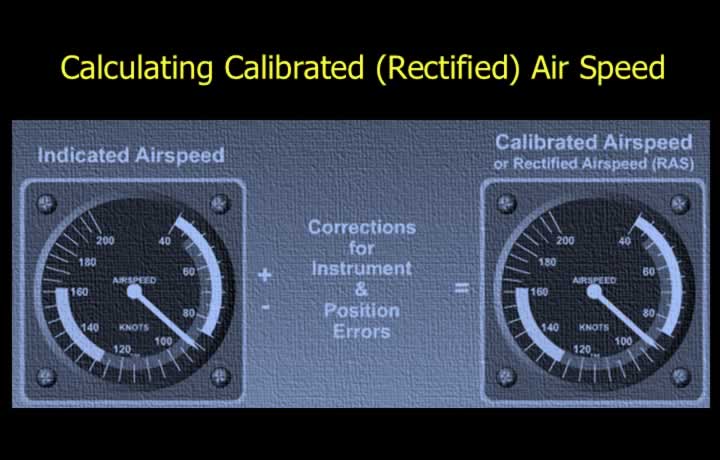
- IAS is corrected using the aircraft correction card.
- Corrections account for instrument and position errors.
- Corrections may be applied manually or automatically by the Air Data Computer (ADC).
Equivalent Airspeed (EAS)
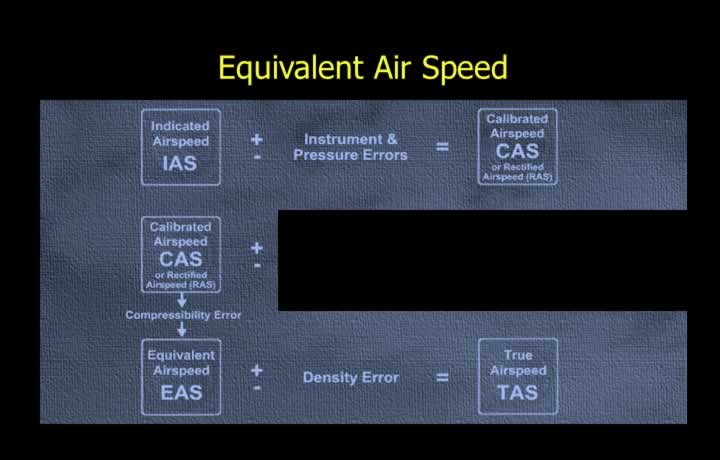
- Equivalent Airspeed is obtained from Calibrated Airspeed.
- CAS corrected for compressibility error gives EAS.
- Compressibility correction is essential above 300 knots.
- EAS = CAS + Compressibility Correction
True Airspeed (TAS)
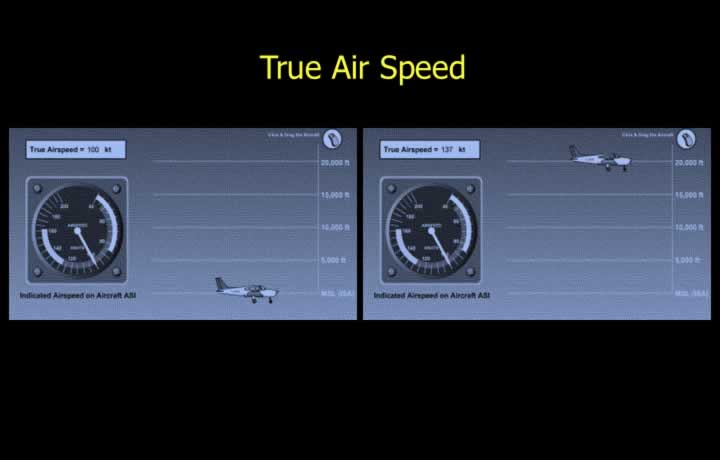
- True Airspeed is obtained from Equivalent Airspeed.
- EAS corrected for density error gives TAS.
- Air density decreases as altitude increases.
Variation of True Airspeed
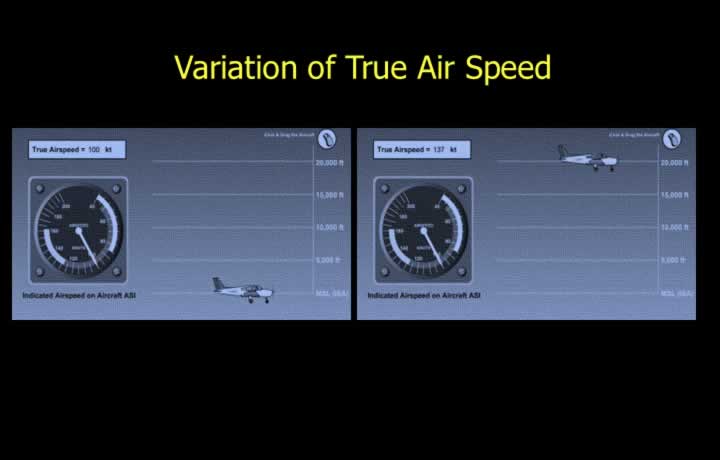
- Density error increases with altitude.
- For a constant IAS, TAS increases as altitude increases.
- For a constant TAS, IAS decreases as altitude increases.
- Under ISA conditions at Mean Sea Level, IAS equals TAS.
Summary of Airspeeds
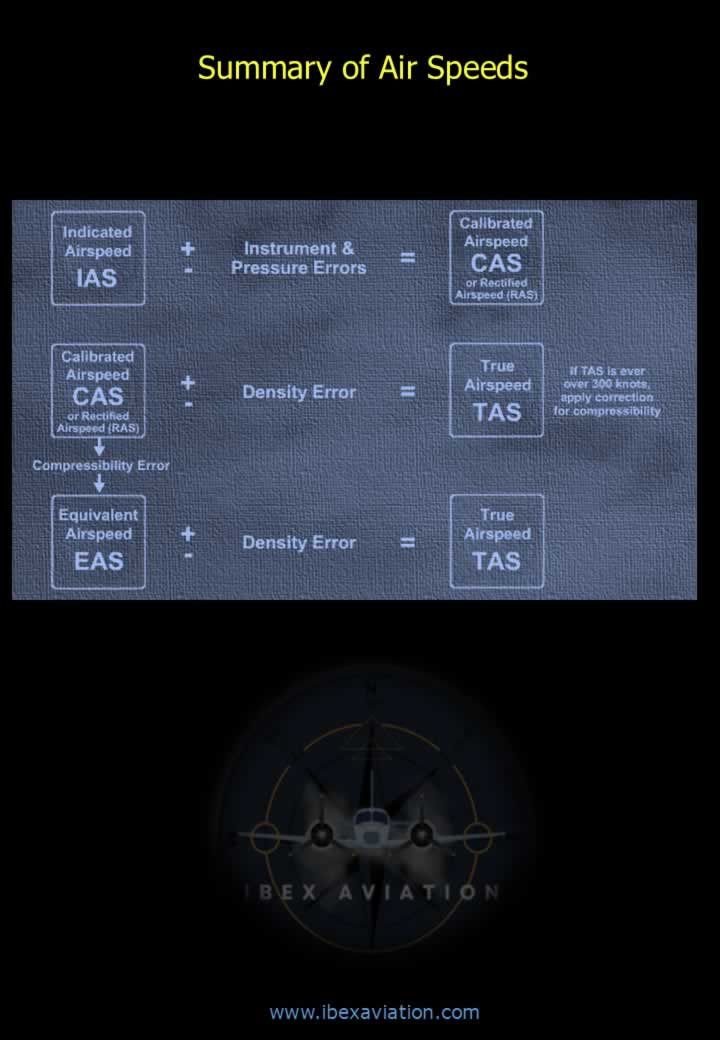
- IAS – Instrument indication.
- CAS (RAS) – IAS corrected for instrument and position errors.
- EAS – CAS corrected for compressibility error.
- TAS – EAS corrected for density error.
Effect of Blockage and Leaks in an ASI
Effect of Pitot Line Blockage in Level Flight
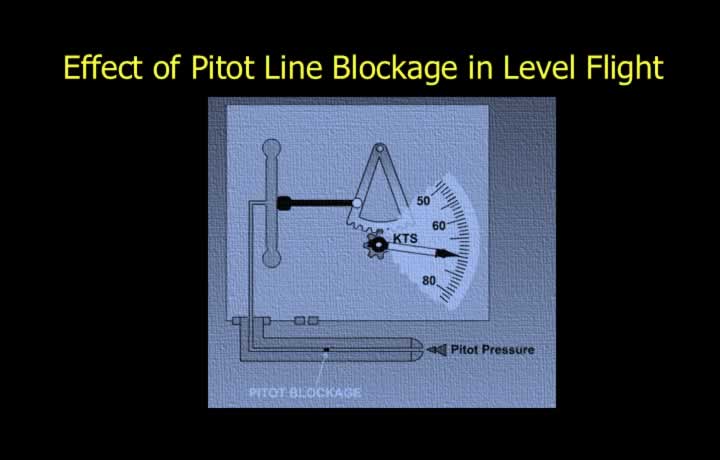
- A blocked Pitot line prevents changes in Pitot pressure from reaching the instrument.
- The ASI initially maintains its previous indication.
- Eventually, the indication slowly decreases toward zero.
Effect of Pitot Line Blockage During Climb and Descent
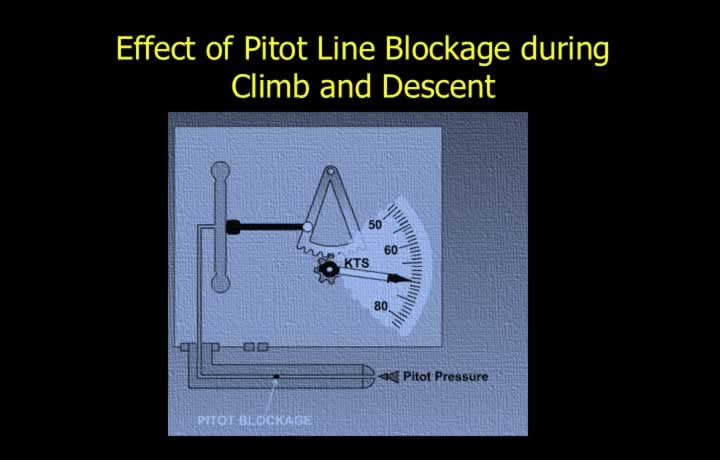
- Assuming constant aircraft speed:
- During descent, the ASI under-reads because static pressure increases.
- During climb, the ASI over-reads because static pressure decreases.
Blockage in Static Line During Level Flight
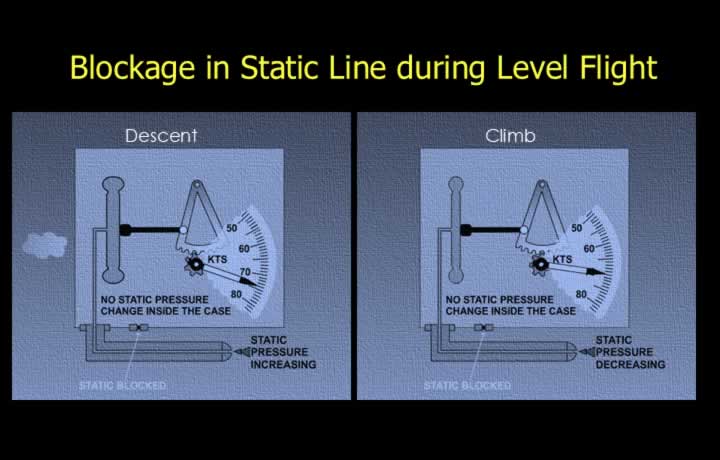
- If the static line is blocked, changes in static pressure are not sensed.
- The static pressure inside the instrument remains constant.
- If altitude remains constant, the ASI continues to indicate correctly.
Blockage in Static Line During Climb and Descent
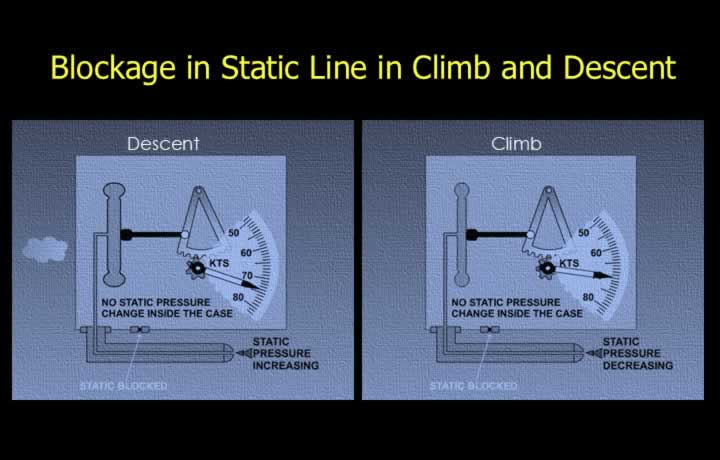
- Assuming constant aircraft speed:
- During descent, the ASI over-reads because the trapped static pressure is lower than actual.
- During climb, the ASI under-reads because the trapped static pressure is higher than actual.
Leaks in Pitot System
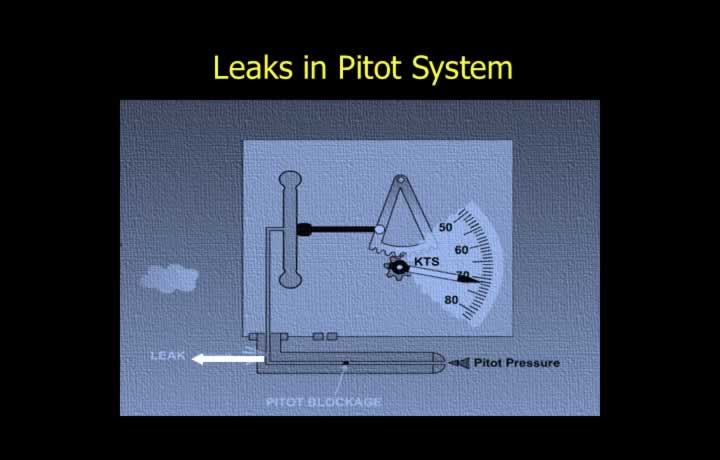
- A leak in the Pitot system reduces the sensed Pitot pressure.
- The Air Speed Indicator therefore under-reads.
Leaks in Static System
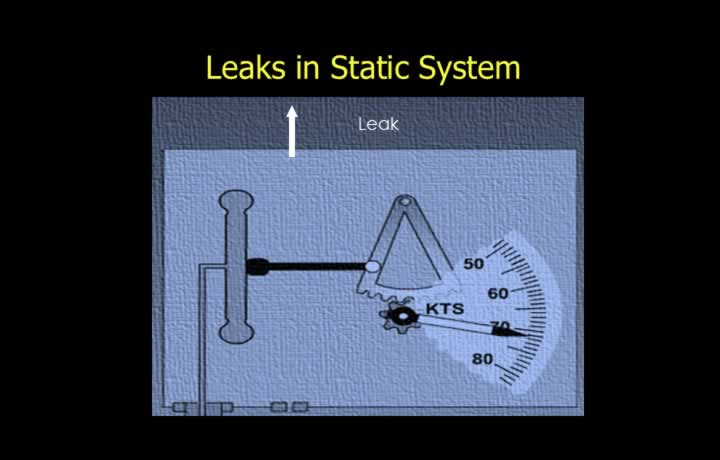
- Leaks outside the pressurised fuselage generally do not affect static pressure measurement.
- The instrument continues to sense correct atmospheric pressure.
- Leaks inside the pressurised fuselage expose the system to cabin pressure.
- Cabin pressure is normally higher than the actual outside static pressure.
- The ASI under-reads because of reduced capsule expansion.
Summary of Blockage and Leaks
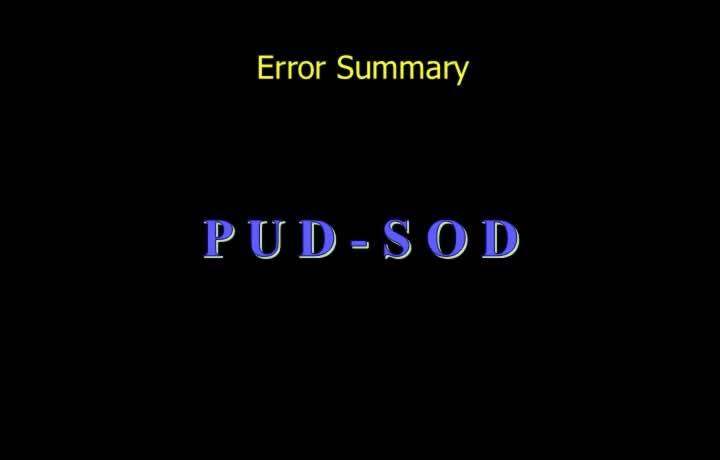
- Assuming constant aircraft speed:
- If the Pitot line is blocked, the ASI under-reads during descent.
- If the Static line is blocked, the ASI over-reads during descent.
- These indications result from incorrect pressure being supplied to the instrument.