
Design Considerations for Aircraft Instruments
Cockpit instruments are designed to be clear, reliable, and easy to read, allowing pilots to interpret critical flight information quickly. They are arranged in a standardised layout with ergonomic controls to reduce workload and minimise errors. Modern cockpits use electronic displays that integrate multiple flight and engine parameters into a single interface.
Importance of Flight Instruments in the cockpit
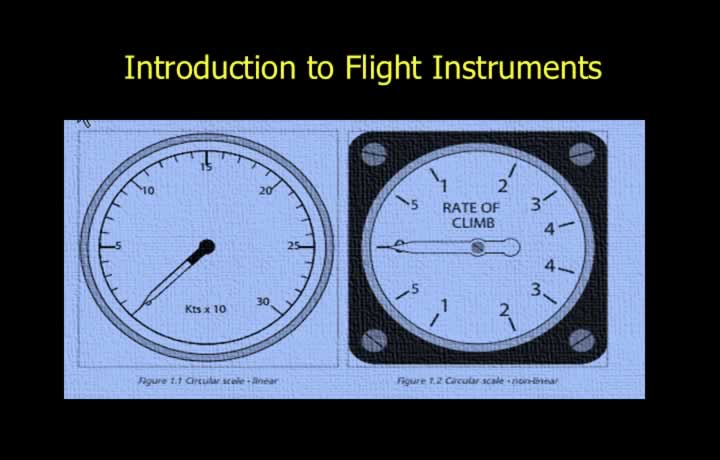
- Cockpit instruments and displays provide the aircraft’s vital parameters.
- Parameters could include airspeed, altitude, position, or attitude.
- Displays range from simple analogue dials to Liquid Crystal Display (LCD) screens.
- The design of displays is a compromise between measuring range and accuracy.
- A linear scale is preferred in certain instruments, such as the Air Speed Indicator.
- A non-linear scale is preferred in instruments such as the Vertical Speed Indicator.
Ergonomics in Layout of Instruments
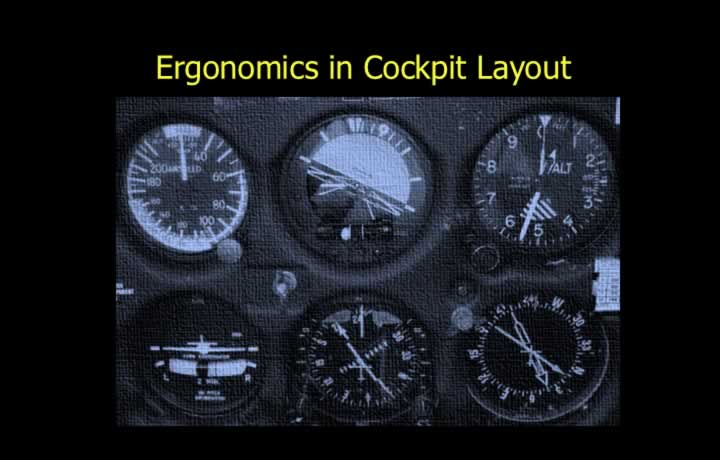
- Ergonomics, also called human engineering, is vital to a well-designed cockpit layout.
- The layout should be easy to scan and understand.
- For example, the “T” layout comprises some of the basic flight instruments.
- Displays may be analogue, digital, or hybrid dials.
- The eye reference point is an important consideration to avoid parallax errors.
Types of Cockpit Instrument Displays
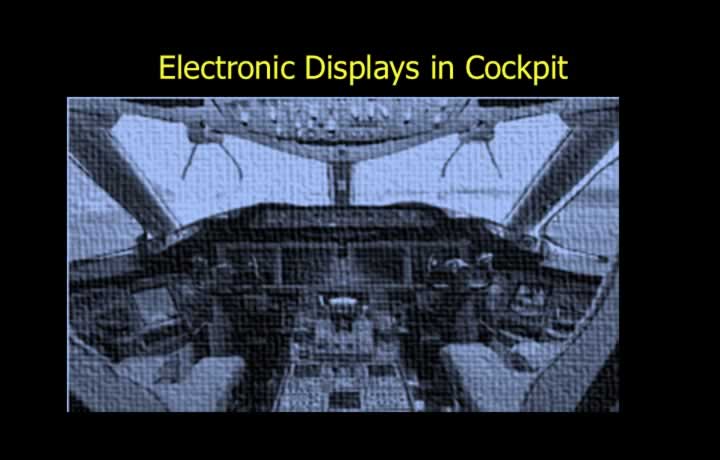
- Vintage aircraft had simple and lightweight instruments in the cockpit.
- Modern aircraft have complex and heavier instruments located remotely.
- The Avionics Bay, also known as the Electrics and Electronics (E&E) Bay, houses many electronic instruments.
- An aircraft with fully electronic displays in the flight deck is known as a Glass Cockpit.
Standard Colour Codes in Flight Instruments
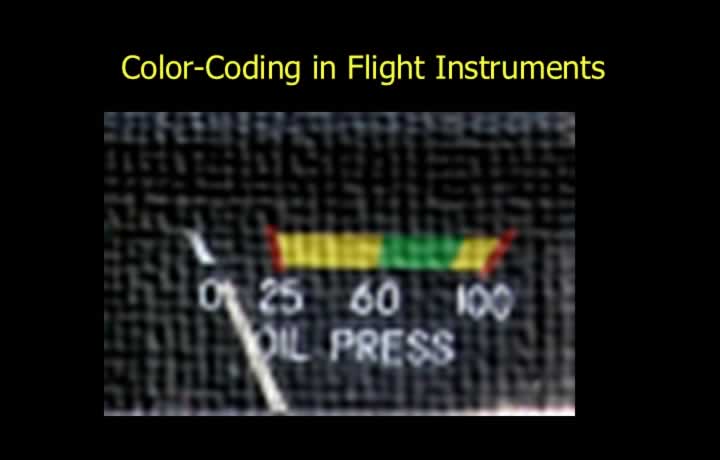
Standard colour coding is used in most aircraft for easy identification.
- Green – Normal operating range.
- Yellow (Amber) – Cautionary range.
- Red – Warning or unsafe range.
- Blue – Temporary situation.
- White – Present status.