
Warning of Controlled Flight into Terrain by Ground Proximity Warning System (GPWS)
Introduction to GPWS
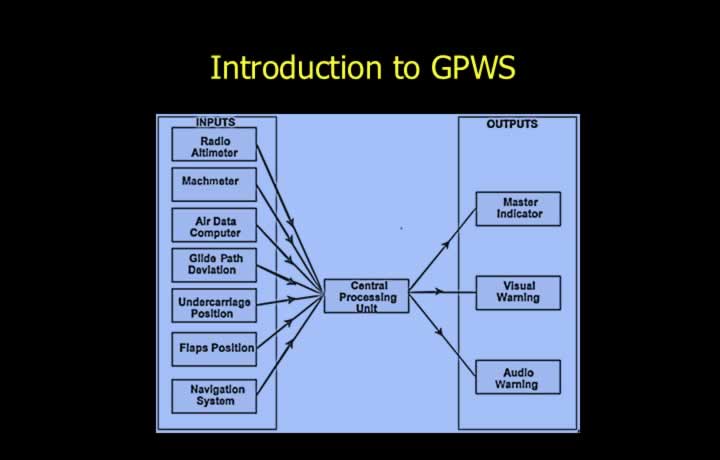
- The Ground Proximity Warning System (GPWS) helps prevent Controlled Flight Into Terrain (CFIT).
- It warns the flight crew when the aircraft is in unsafe proximity to terrain.
- The system typically operates between 50 ft and 2450 ft radio altitude, similar to the radio altimeter range.
- GPWS automatically selects operating modes based on flight conditions.
- It uses inputs from the radio altimeter, Mach meter, Air Data Computer (ADC), and glide slope receiver.
- Additional inputs include landing gear, flap position, and navigation systems.
Stages of GPWS Warnings
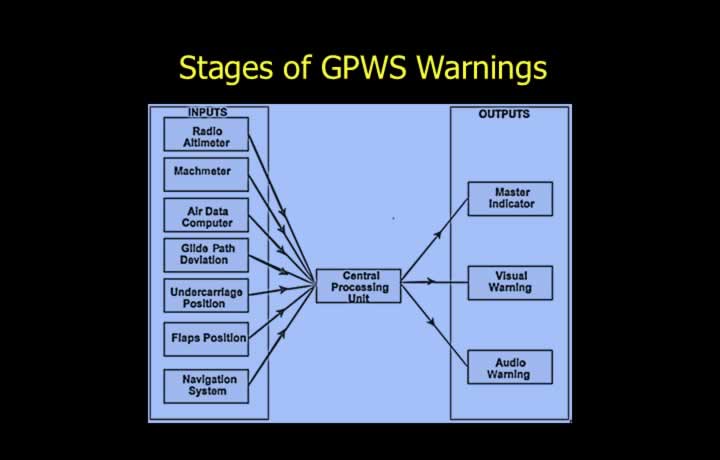
- GPWS warnings are categorised into two levels:
- Alerts – Cautionary warnings requiring pilot awareness and preparation.
- Warnings – Mandatory commands requiring immediate pilot action.
Operating Modes of GPWS
Mode 1 – Excessive Descent Rate (Sink Rate)
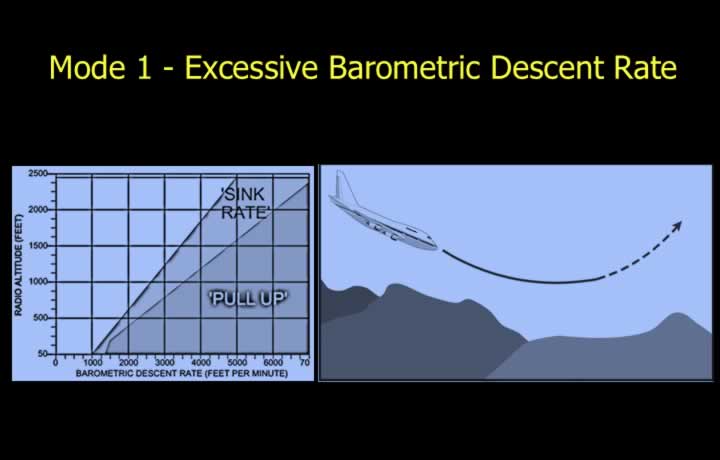
- Mode 1 operates independently of aircraft configuration.
- Active below approximately 2500 ft radio altitude.
- First threshold triggers the alert: “SINK RATE” (repeated every 1.5 seconds).
- Second threshold triggers urgent warning: “WHOOP WHOOP PULL UP”.
- A red PULL UP visual warning is also displayed.
Mode 2 – Excessive Terrain Closure Rate
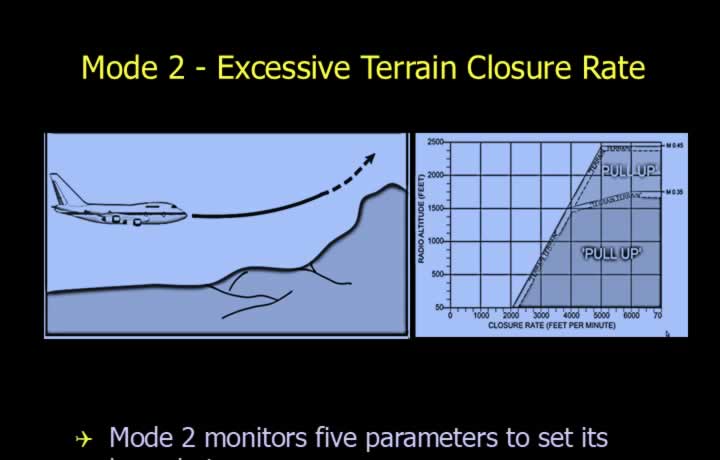
- Mode 2 monitors aircraft closure rate to terrain using multiple parameters:
- Mach number
- Radio altitude
- Rate of descent
- Barometric altitude
- Aircraft configuration
- Typically active below 1500 ft at Mach 0.35.
- At higher speeds or gear-up configuration, activation height increases up to 2450 ft.
- First alert: “TERRAIN, TERRAIN” (repeated every 1.5 seconds).
- Second warning: “WHOOP WHOOP PULL UP”.
- In landing configuration, only the “TERRAIN” alert may sound.
Mode 3 – Descent After Take-off or Go-Around
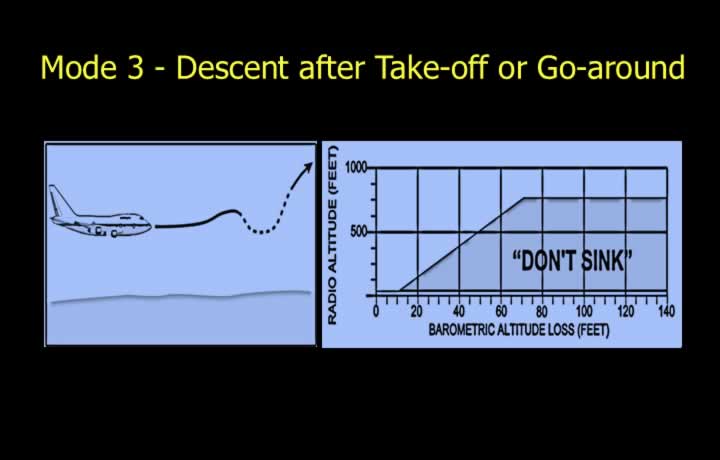
- Active during initial climb or go-around phases.
- Triggers when the aircraft loses more than ~10% of barometric altitude gain.
- Operates between 50 ft and 700 ft radio altitude.
- Audio alert: “DON’T SINK” repeated every 1.5 seconds.
Mode 4A – Unsafe Terrain Clearance (Gear Not Down)
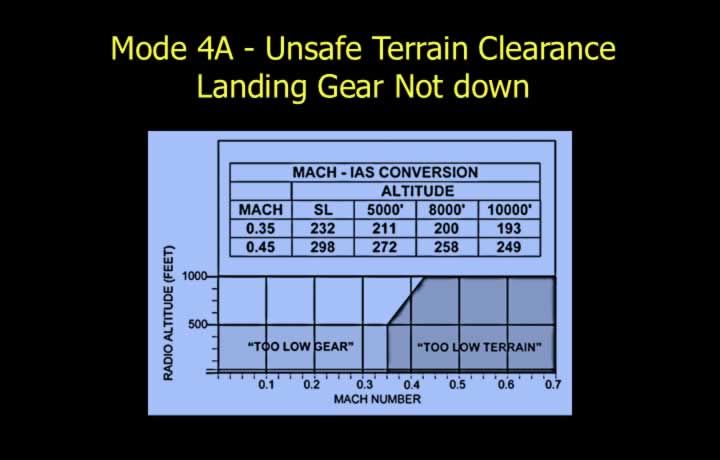
- Active below approximately 500 ft radio altitude.
- Warns when landing gear is not extended during descent.
- Upper limit increases up to 1000 ft under certain conditions.
- Below Mach 0.35: “TOO LOW GEAR”.
- Above Mach 0.35: “TOO LOW TERRAIN”.
Mode 4B – Unsafe Terrain Clearance (Flaps Not in Landing Configuration)
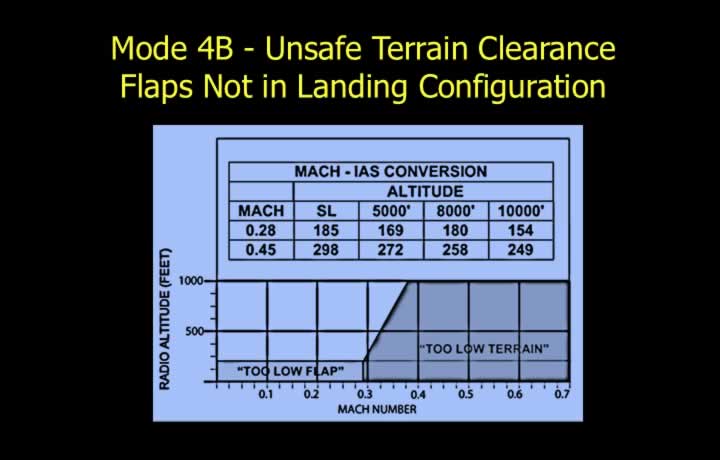
- Active when gear is down but flaps are not properly configured below ~300 ft.
- Below Mach 0.28: “TOO LOW FLAPS”.
- Above Mach 0.28: “TOO LOW TERRAIN”.
- Gear warning has higher priority than flap warning.
- This mode can be inhibited using the flap override switch.
Mode 5 – Glide slope Deviation Alert
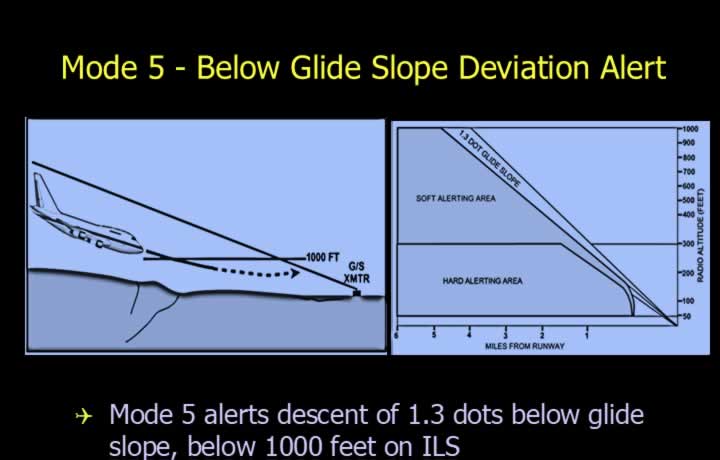
- Activates when aircraft deviates significantly below Glide slope (about 1.3 dots).
- Operates below 1000 ft during ILS approach.
- Requires active Glide slope receiver and landing configuration.
- Audio warning: “GLIDESLOPE” (hard or soft depending on deviation).
- Can be cancelled using the BELOW G/S switch.
Mode 6A – Minimums Alert
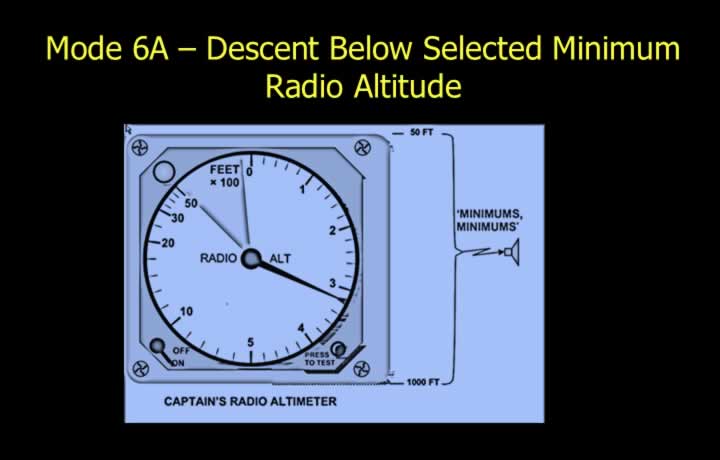
- Warns when aircraft descends below selected minimum decision altitude.
- Active between 50 ft and 1000 ft radio altitude.
- Audio call-out: “MINIMUMS, MINIMUMS” (single alert).
- Re-armed when aircraft climbs above selected minimum altitude.
Mode 6B – Altitude Callouts and Bank Angle Alert
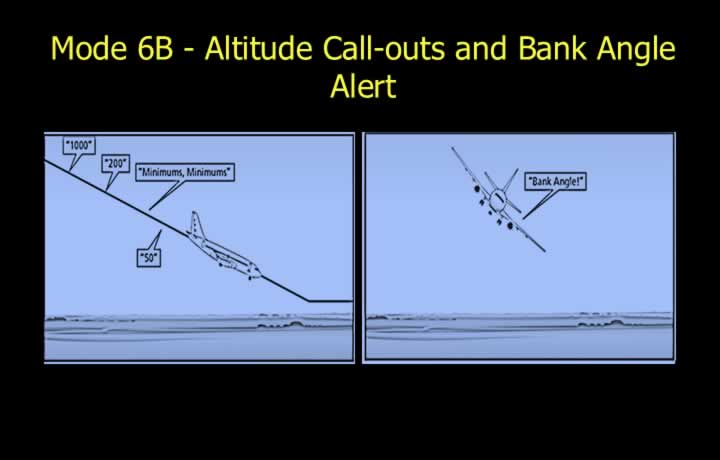
- Provides automatic altitude callouts at predefined heights (e.g., 200 ft, 100 ft).
- Also provides “BANK ANGLE” warnings during excessive roll.
- Bank angle limits reduce as aircraft gets closer to the ground.
Mode 7 – Wind Shear Alert
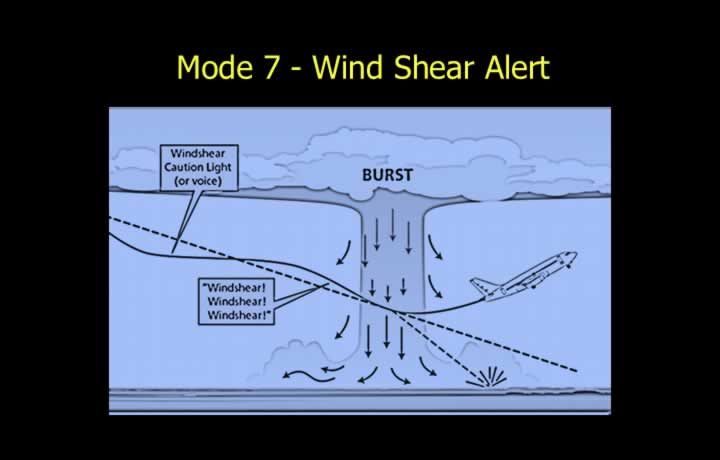
- Provides visual and aural warnings for wind shear conditions.
- Has highest priority over all other GPWS modes.
- Enables immediate go-around decision by pilot.
- Uses multiple inputs:
- Ground speed
- Airspeed
- Barometric altitude
- Rate of descent
- Radio altitude
Advancements in GPWS like EGPWS and RAWS
Enhanced Ground Proximity Warning System (EGPWS)
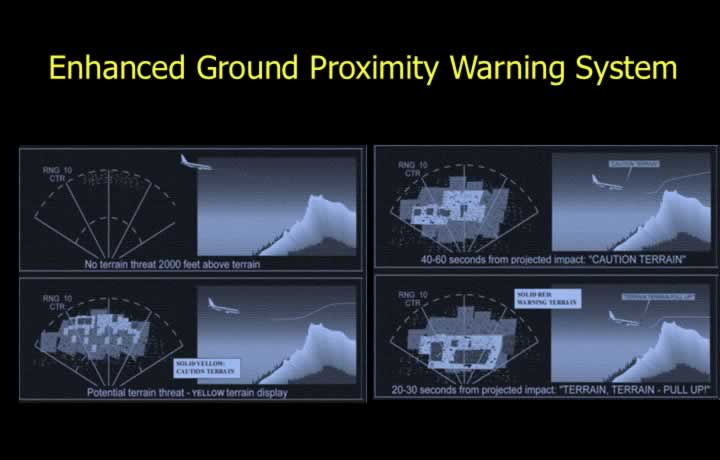
- EGPWS incorporates a terrain awareness database (TAWS).
- Provides predictive terrain warnings ahead of the aircraft.
- Displays terrain in colour-coded format:
- Green – safe terrain
- Yellow – caution
- Red – immediate danger
- Can be integrated with weather radar or navigation displays.
- Typical alerts include “TERRAIN AHEAD” and “PULL UP”.
Action on GPWS Warning
- Pilots must respond immediately and positively to GPWS warnings.
- Standard response: wings level and maximum climb rate.
- Climb to a safe altitude as quickly as possible.
- Verify aircraft position and identify cause of warning.
Pilot Override Conditions
- GPWS warnings should only be disregarded if:
- Cause of warning is positively identified.
- Warning has ceased.
- Daytime conditions with clear visibility exist.
- No immediate terrain, configuration, or manoeuvrer hazard is present.
Runway Awareness and Advisory System (RAAS)
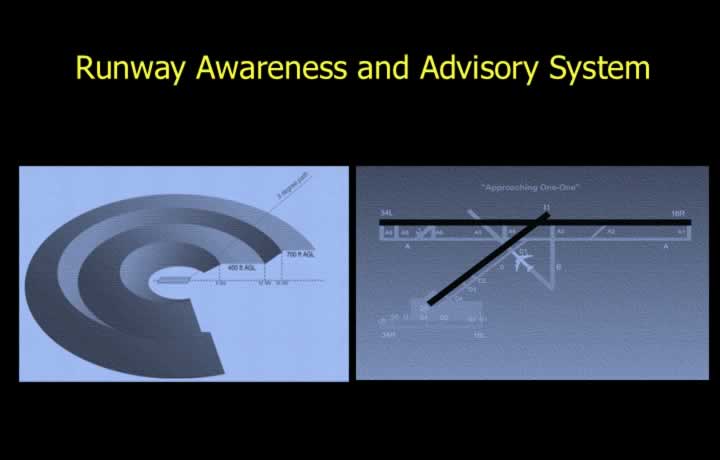
- RAAS improves situational awareness during taxi, take-off, approach, and landing.
- Reduces risk of runway incursions.
- Uses a Terrain Clearance Floor database around airports.
- Helps prevent premature descent during non-precision approaches.