Measurement of Static, Dynamic and Pitot Pressure

The main pressures measured in flight are static pressure, pitot (total) pressure, and dynamic pressure. These pressures are used by aircraft instruments to determine altitude, airspeed, and vertical speed.
Static Pressure
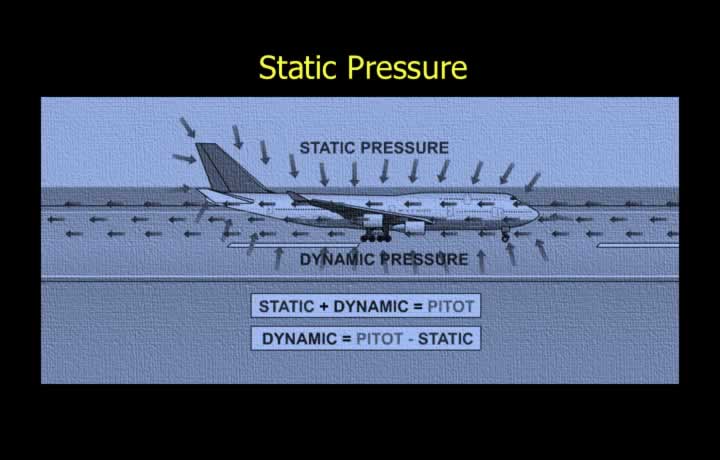
- Static pressure is the atmospheric pressure or ambient air pressure.
- It is caused by the weight of the air column above the aircraft.
- Static pressure decreases with increasing altitude as the air column above the aircraft becomes smaller.
Dynamic Pressure
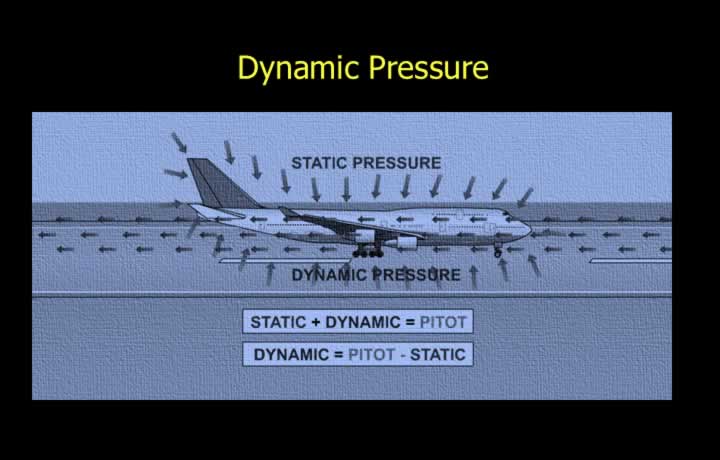
- Dynamic pressure is the force exerted when moving air is brought to rest.
- It is produced by the motion of a body such as an aircraft through the air.
Pitot Pressure
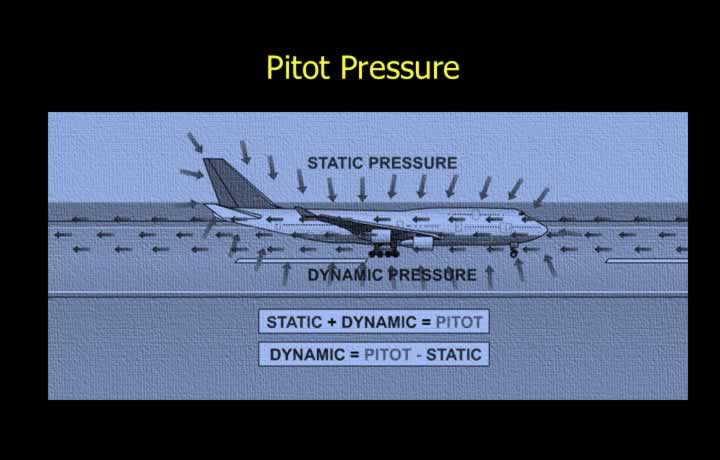
- An aircraft in flight is affected by both static and dynamic pressures.
- The combined pressure is called Pitot Pressure.
- Pitot Pressure is the sum of static pressure and dynamic pressure.
- It is sensed by the Pitot tube.
Pitot Static Tube
Principle of Pitot-Static Tube
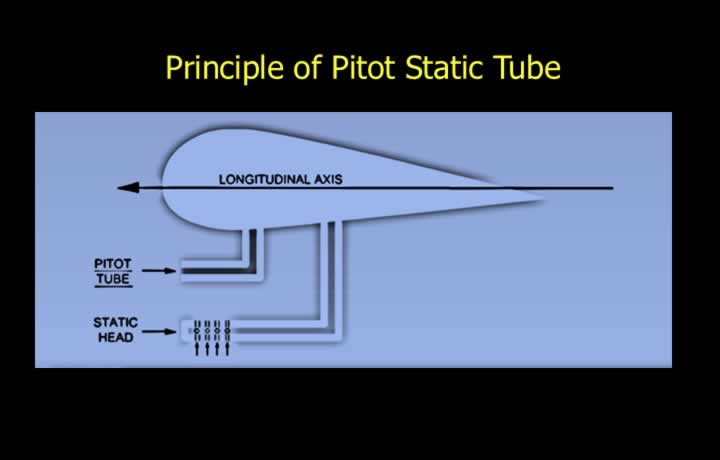
- The Pitot-Static tube consists of a Pitot head and Static head.
- The Pitot head senses the total pressure (Pitot Pressure).
- Pitot Pressure = Static Pressure + Dynamic Pressure
Position of Pitot-Static Tube
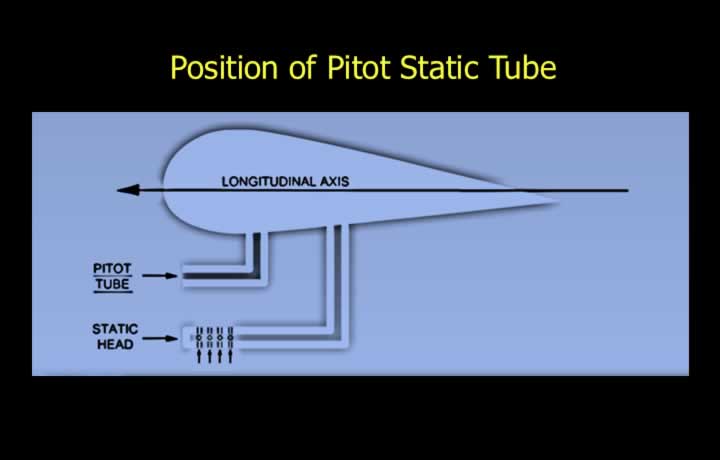
- The Pitot-Static tube consists of Pitot and Static heads.
- It is located outside the aircraft boundary layer.
- This minimises the effect of aircraft-induced airflow disturbances.
- It may be mounted on the nose, wing-tip, or side of the fuselage.
- It is aligned parallel to the aircraft’s longitudinal axis.
- This keeps the Pitot tube aligned with the airflow during normal flight.
Construction of Pitot-Static Tube
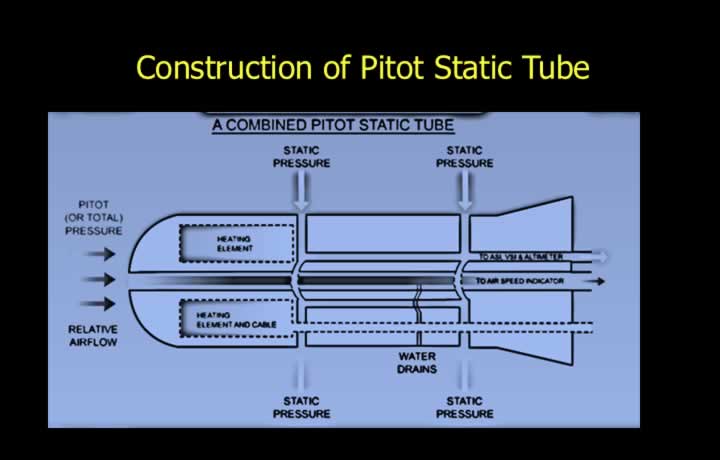
- The Pitot head is an open-ended tube that senses Pitot pressure.
- Moving air is brought to rest at the stagnation point inside the Pitot tube.
- The sensed pressure is the combination of static and dynamic pressures.
- The Static head consists of perforations with the forward end sealed.
- The sealed forward end prevents dynamic pressure from entering the static system.
Features of Pitot-Static Head
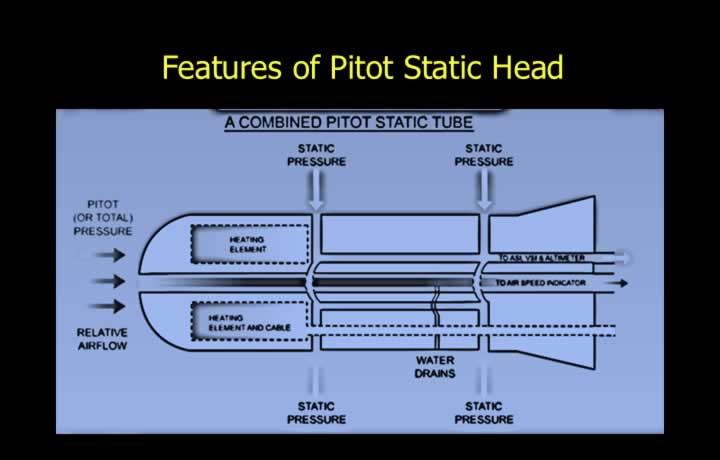
- Heating elements prevent ice accumulation.
- Drain holes remove moisture from the Pitot-Static tube.
- Moisture drainage causes a small pressure loss.
- Heating and drainage slightly change air density, producing minor measurement errors.
- These errors are corrected during instrument calibration.
Errors in Measurement of Pressure
Position, Pressure, or Static Error
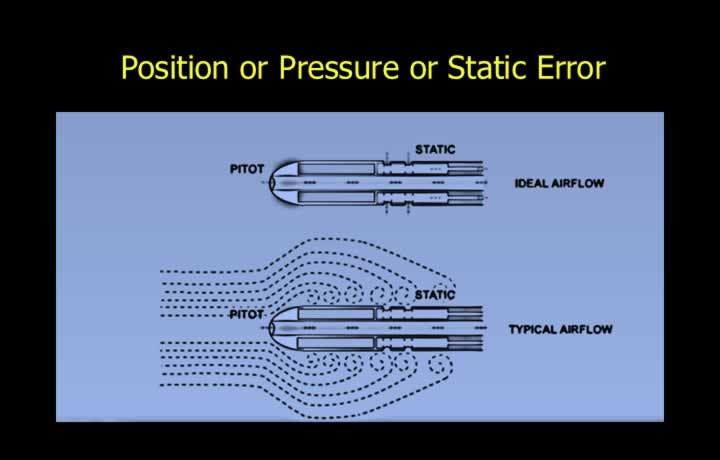
- Position Error is also known as Pressure Error or Static Error.
- The Static tube is designed to sense true atmospheric pressure.
- Position Error is caused by turbulent airflow around the static ports.
- Turbulence creates a suction effect that lowers the sensed static pressure.
- Pressure instruments therefore receive less than the actual static pressure.
Variation of Position, Pressure, or Static Error
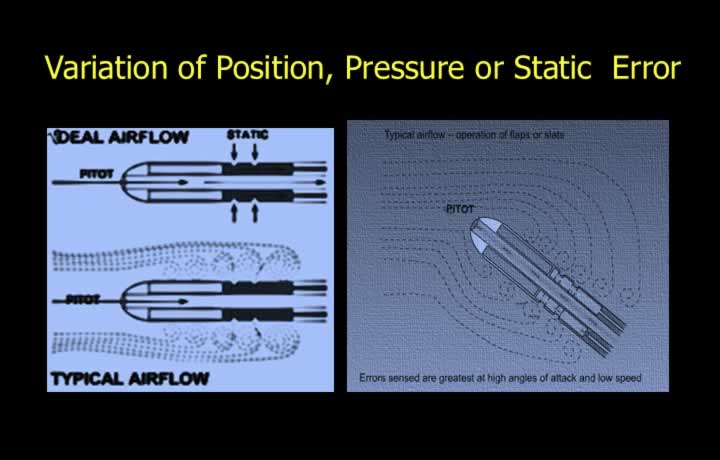
- Greater turbulence around the Pitot-Static tube increases Position Error.
- Higher airspeeds increase Position Error.
- Increasing speed produces more turbulent airflow.
- Position Error also increases at high angles of attack, even at low speeds.
- Using flaps increases the angle of attack, thereby increasing Position Error.
Static Vents for Position Error Correction
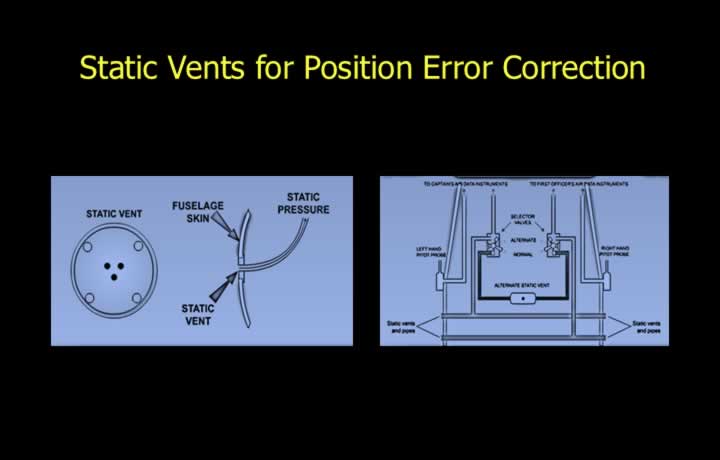
- Independent static vents are used to reduce Position Error.
- They are installed in areas of minimum turbulence, such as the sides of the fuselage.
- Unlike Pitot tubes, static vents are designed to drain water without heating.
- Two interconnected static vents are normally fitted on opposite sides of the fuselage.
- The interconnection minimises errors caused by side-slip or yaw.
- Static vents are unsuitable for high-speed aircraft because of shock-wave effects.
- High-speed fighter aircraft use dedicated high-speed Pitot-Static probes.
Manoeuvre-Induced (Time Lag) Error
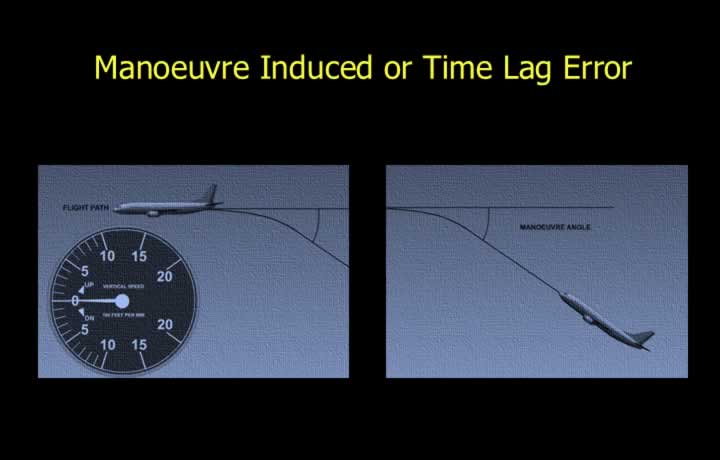
- Manoeuvre-induced errors produce temporary fluctuations during aircraft manoeuvres.
- Aircraft manoeuvres temporarily alter pressure at the static vents.
- This causes a time lag in pressure instrument indications.
- The error is significant during flap or slat configuration changes.
- It is also noticeable during changes in angle of attack.
Minimum and Maximum Time Lag Error
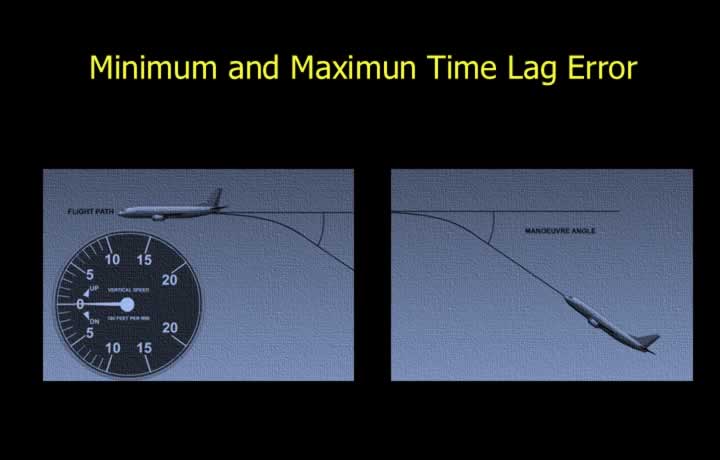
- Time Lag Error is most noticeable during pitch changes.
- Examples include overshooting, take-off, landing, and levelling off.
- The error increases with altitude.
- It occurs even in servo-assisted altimeters and Air Data Computers (ADC).
- Typical time lag ranges from about 3 seconds at low altitude to about 10 seconds at 30,000 ft.
Pitot Static System in Modern Aircraft
Complete Pitot-Static System
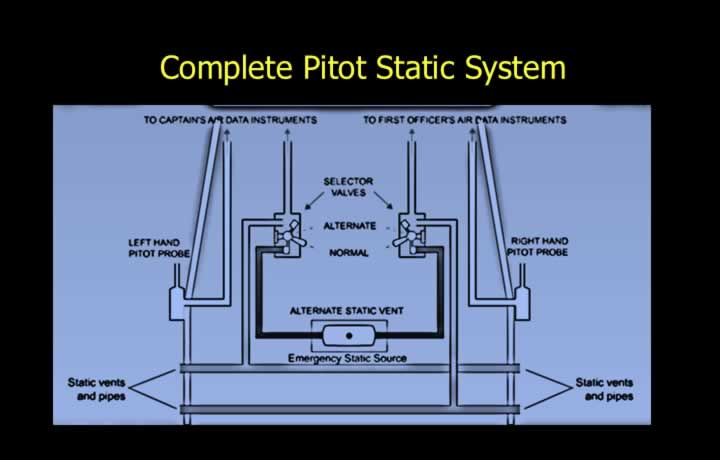
- Modern aircraft have independent Pitot and Static systems for the left and right instrument systems.
- Cross-connection is available in emergencies.
- Pitot heaters and heater warning systems prevent ice accumulation.
Alternate Static Source
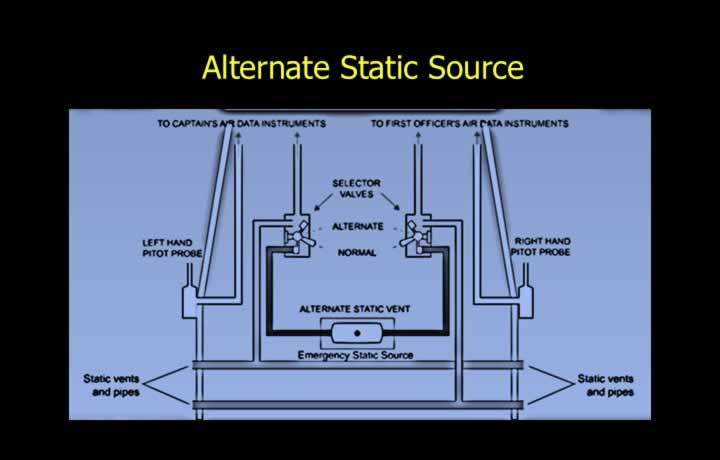
- An alternate static source is provided if the main static source becomes blocked.
- On unpressurised aircraft, the alternate static source may be located inside the cabin.
- Since it is not in the ideal location, it senses lower-than-actual static pressure.
- Using the alternate static source causes the Altimeter and Airspeed Indicator to over-read.
- Correction values for alternate static operation are provided in the Aircraft Flight Manual.