
One in Sixty Rule
The One in Sixty Rule is a simple navigation rule used to estimate an aircraft’s track error. This rule helps pilots quickly calculate heading corrections during flight. It is widely used in dead reckoning and visual navigation. The One in Sixty Rule improves navigation accuracy and helps keep the aircraft on its planned route.
Logic of One in Sixty Rule
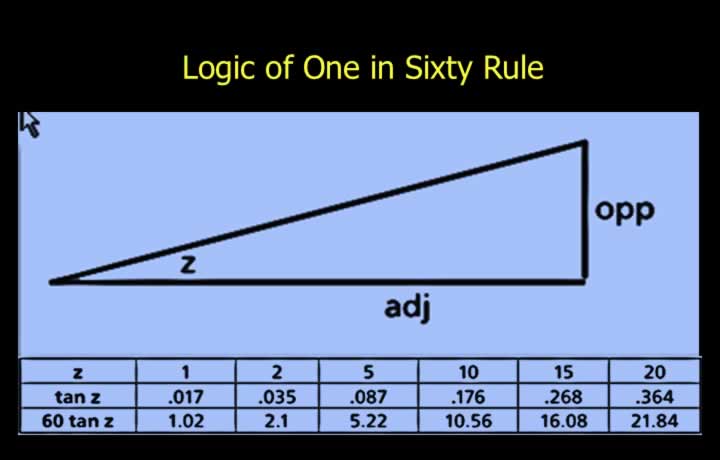
- Calculate the tangent (tan) of angles up to 20° and multiply the value by 60.
- For example, tan 10° × 60 = 10.56.
- The One in Sixty Rule is based on the approximation that, for angles up to 20°, the angle in degrees is nearly equal to tan(angle) × 60.
- Angle (°) = (Opposite Side / Adjacent Side) × 60.
One in Sixty Rule Formula
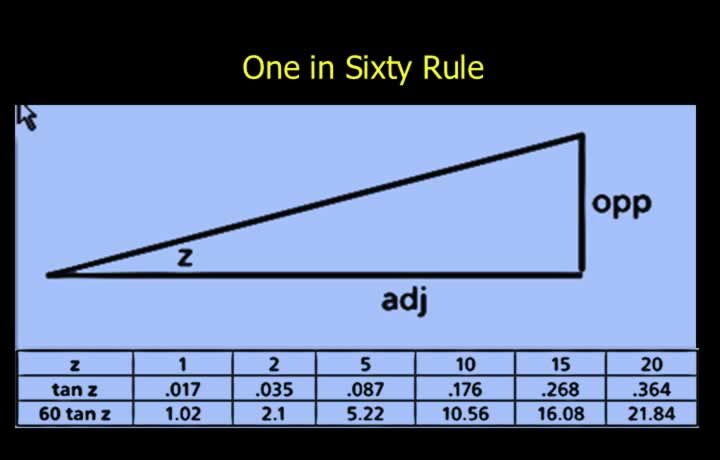
- Replace the Opposite Side with Distance Off-Track.
- Replace the Adjacent Side with Distance Gone.
- Track Error (°) = (Distance Off-Track / Distance Gone) × 60.
- When the adjacent side is replaced with Distance to Go:
- Closing Angle (°) = (Distance Off-Track / Distance to Go) × 60.
Use of One in Sixty Rule
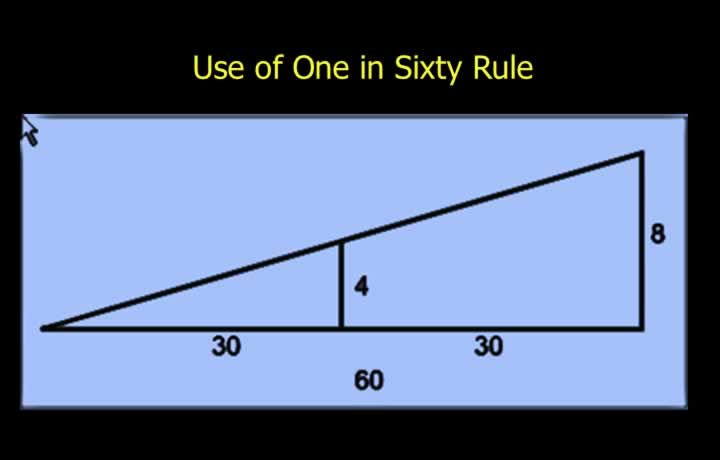
- The One in Sixty Rule enables pilots to make quick mental calculations of heading and track corrections.
- Rule Statement:
- One unit off-track after travelling 60 units along track results in a track error of approximately 1°.
- Example: If an aircraft is 1 NM off-track after flying 60 NM, the track error is approximately 1°.
Pilot Navigation
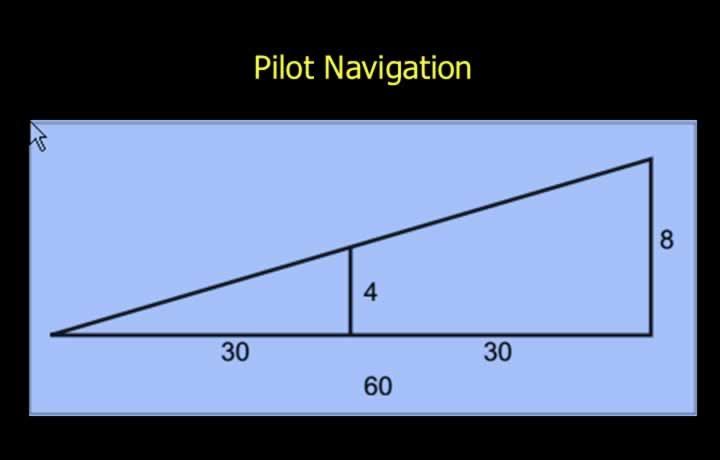
- The One in Sixty Rule provides acceptable accuracy only for angles up to 20°.
- Beyond 20°, the approximation becomes increasingly inaccurate.
- The rule is commonly used to determine the required heading correction.
- Two common methods are:
- Closing Angle Method
- Double Track Error Method
Closing Angle Calculation
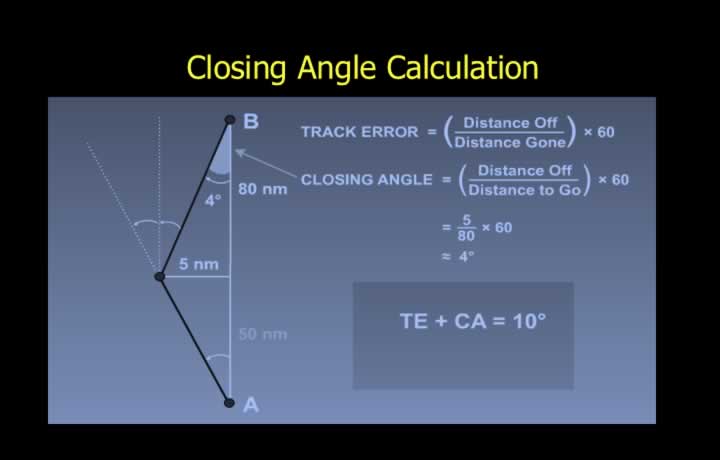
- This method is used to calculate the heading required to reach the destination directly.
- Alter Heading = Track Error + Closing Angle.
- The heading correction must always be applied in the opposite direction to the drift.
- Turn right if the aircraft has drifted left.
- Turn left if the aircraft has drifted right.
Double Track Error Calculation
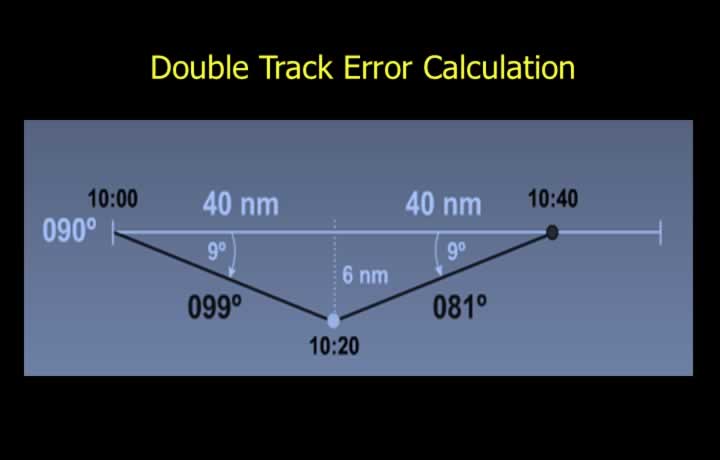
- This method is used to regain the planned track.
- First calculate the Track Error:
- Track Error = (Distance Off-Track / Distance Gone) × 60.
- The required heading alteration equals 2 × Track Error.
Regaining Track Using Double Track Error
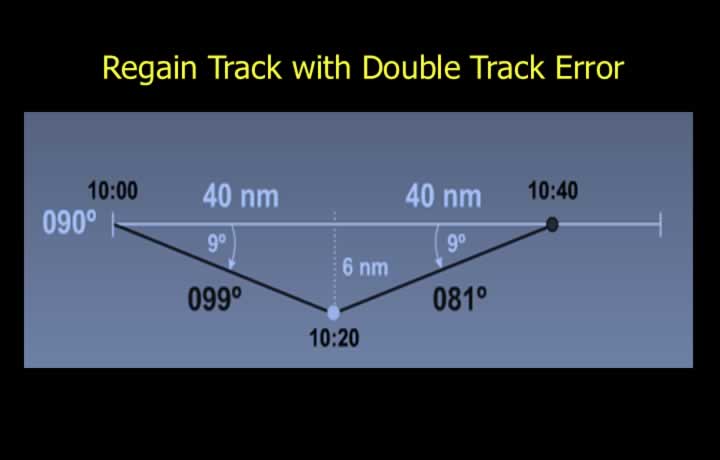
- Apply a heading change equal to twice the calculated Track Error.
- The heading correction is always applied opposite to the direction of drift.
- Turn right if the aircraft has drifted left.
- Turn left if the aircraft has drifted right.
- The aircraft will regain the planned track after flying approximately the same distance and for the same time as the distance and time already flown off-track.