
Earth Magnetism
Earth Magnetism is the Earth’s natural magnetic field, which acts like a giant magnet with magnetic north and south poles. It allows magnetic compasses to indicate direction for aircraft navigation. Pilots use Earth’s magnetic field to maintain the correct heading during flight.
Earth Magnetic Field
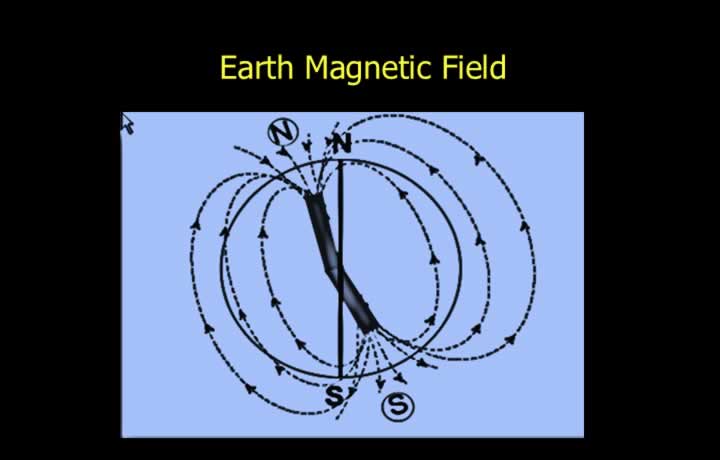
- The Earth behaves like a giant magnet with a Magnetic North Pole and a Magnetic South Pole.
- The Earth’s magnetic field is not exactly aligned with its rotational (polar) axis.
- Magnetic North is not co-located with True North.
- Magnetic North is approximately 400 NM away from True North.
- Magnetic North drifts at approximately 22 NM per year.
- The Magnetic North and South Poles are not diametrically opposite each other.
Magnetic Compass
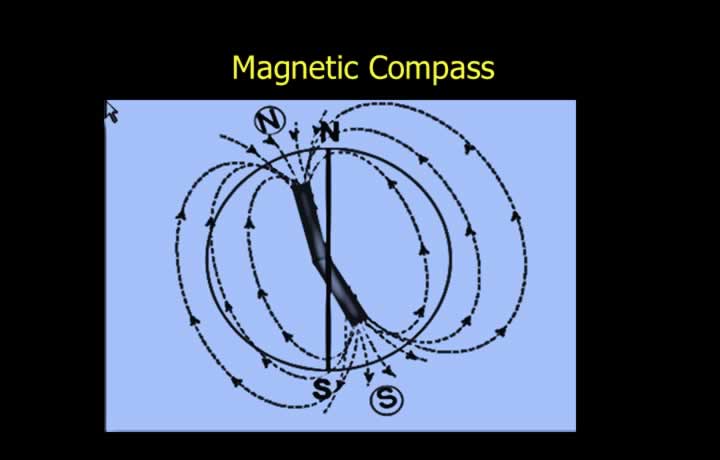
- The magnetic compass is the primary direction-finding instrument in an aircraft.
- It uses only the north-seeking end of the magnet for direction indication.
- The magnetic south-seeking end plays no role in direction finding.
Magnetic Variation
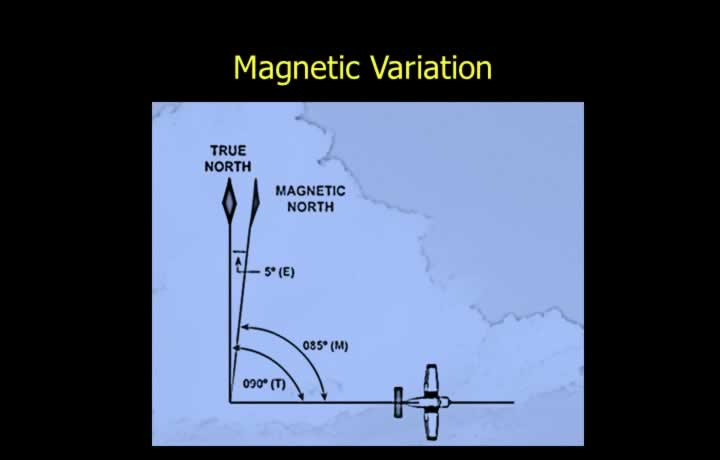
- Variation is the angular difference between True North and Magnetic North.
- Variation is measured in degrees.
- It is expressed as Magnetic North being East or West of True North.
- Variation depends on the aircraft’s position relative to the Magnetic North Pole.
- The maximum possible variation is 180° East or 180° West.
Isogonal and Agonal Lines
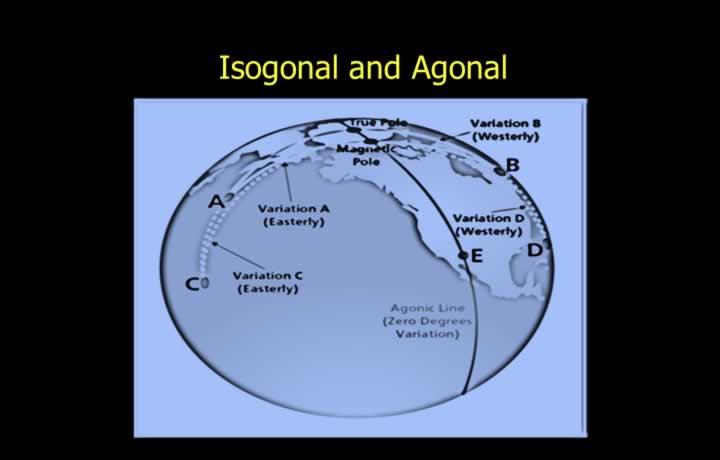
- Isogonals are lines joining places of equal magnetic variation.
- Isogonal lines converge toward the True and Magnetic Poles.
- Agonal lines join places where the magnetic variation is zero.
- An agonal line is approximately a great circle connecting the True and Magnetic North Poles.
Calculation of Magnetic Variation
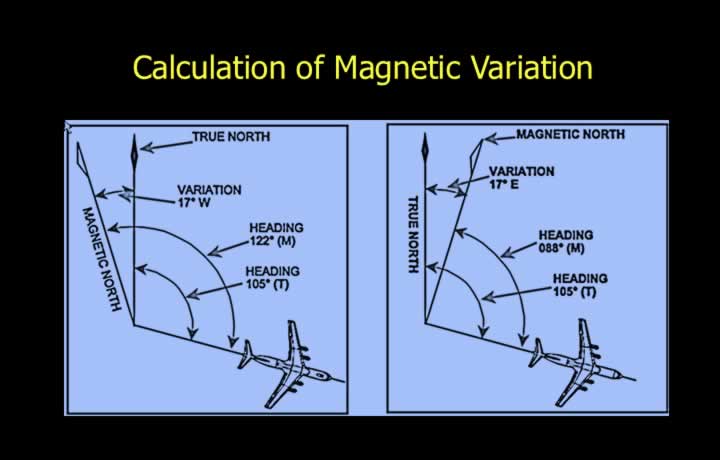
- Variation is applied to Magnetic Heading to obtain True Heading.
- West variation is considered negative (-).
- East variation is considered positive (+).
- Magnetic direction can be calculated using the local variation.
- Variation West (-): Magnetic Best (subtract variation).
- Variation East (+): Magnetic Least (add variation).
Magnetic Dip Angle
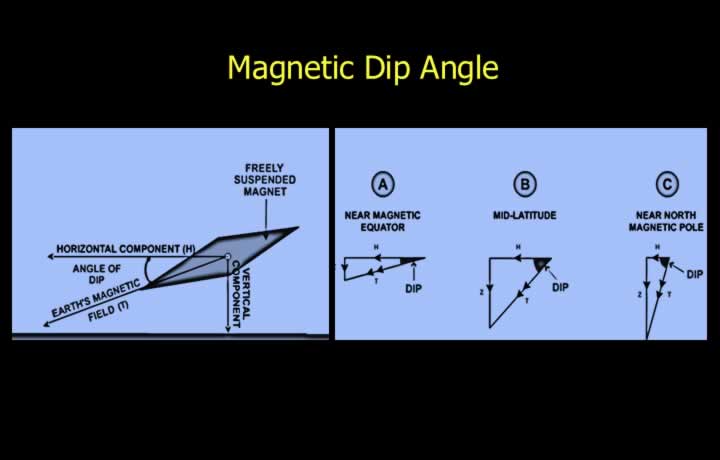
- The Earth’s magnetic field can be resolved into horizontal and vertical components.
- The horizontal component provides the directive force for the magnetic compass.
- Magnetic dip is the angle between the Earth’s magnetic field and the horizontal plane.
- The dip angle is 0° at the Magnetic Equator, where a freely suspended magnet remains horizontal.
- The dip angle is 90° at the Magnetic Poles, where the magnet becomes vertical.
Lines of Inclination
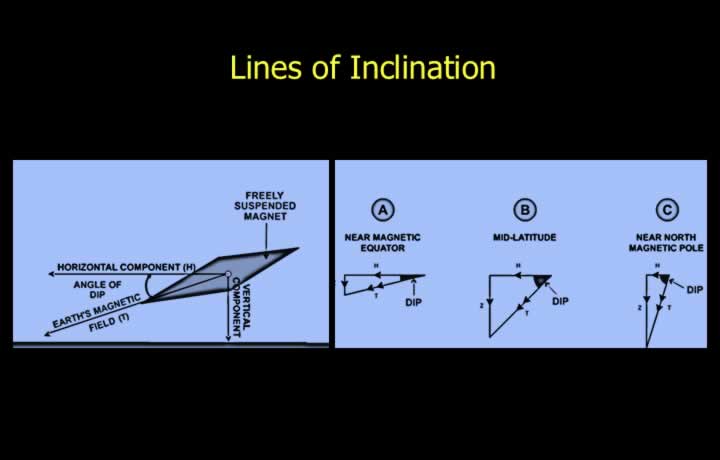
- Lines of inclination join places having equal magnetic dip.
- An Aclinic Line joins places where the magnetic dip angle is zero.
- The Aclinic Line coincides with the Magnetic Equator.
- Magnetic field strength is measured in microtesla (µT).
- A magnetic compass requires a minimum field strength of 6 µT to function properly.
Compass Deviation
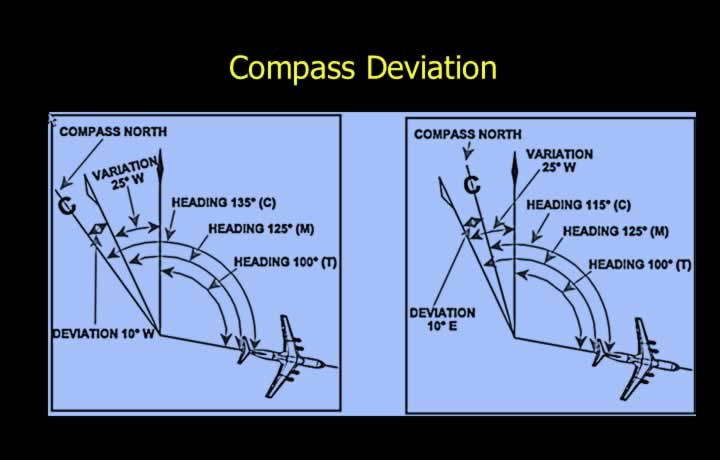
- Electrical equipment and metallic objects near the aircraft compass produce compass deviation.
- Compass deviation is the angular difference between Magnetic North and Compass North.
- Deviation is measured in degrees.
- It is expressed as Compass North being East or West of Magnetic North.
- A Compass Swing is performed to prepare a compass deviation card.
Calculation of Compass Deviation
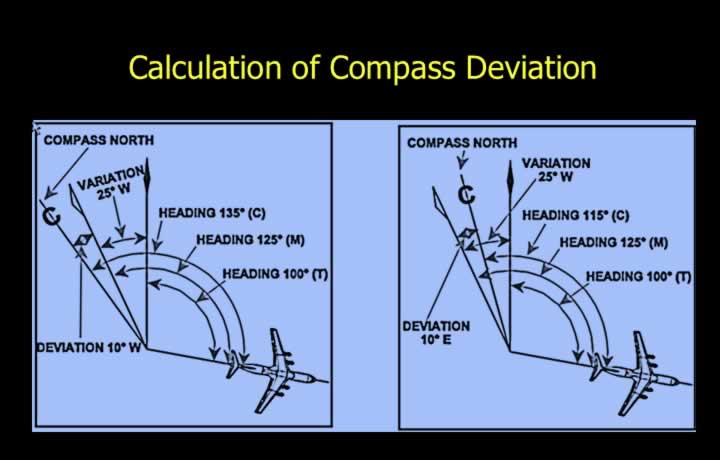
- Deviation is applied to Compass Heading to obtain Magnetic Heading.
- Compass direction can be calculated using magnetic direction and deviation.
- Deviation West (-): Compass Best (subtract deviation).
- Deviation East (+): Compass Least (add deviation).