Airborne Collision Avoidance System (ACAS) or Traffic Collision Avoidance System (TCAS)
ACAS (Airborne Collision Avoidance System) or TCAS (Traffic Collision Avoidance System) is required to detect nearby aircraft and reduce the risk of mid-air collisions. It provides traffic alerts and, when necessary, resolution advisories that guide pilots to climb or descend to avoid a collision.
Introduction to ACAS or TCAS
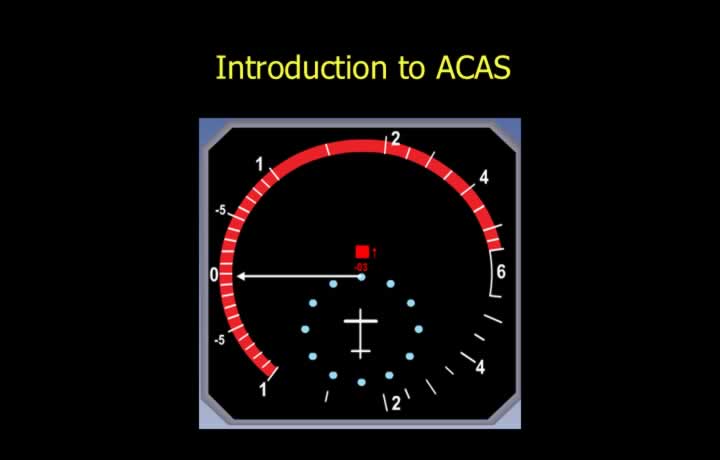
- The Airborne Collision Avoidance System (ACAS) is commonly known as the Traffic Collision Avoidance System (TCAS).
- TCAS II is mandatory for most commercial aircraft carrying 19 passengers or more.
- The system detects, assesses, and warns pilots of potential collision threats.
- It generates two types of alerts:
- Traffic Advisories (TA) – alert pilots to nearby traffic.
- Resolution Advisories (RA) – provide avoidance manoeuvre instructions in the vertical plane.
Principle of ACAS
- ACAS operates using the principle of Secondary Surveillance Radar (SSR) in air-to-air mode.
- It requires aircraft to be equipped with at least Mode A SSR transponders.
- It operates on frequencies between 1030 MHz and 1090 MHz.
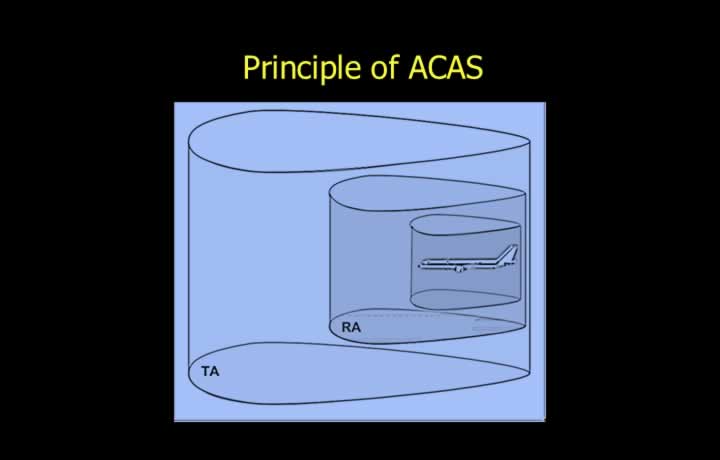
- TCAS generates two protective “spherical safety bubbles” around the aircraft.
- These bubbles represent time-to-collision thresholds with intruding aircraft.
Types of ACAS Advisories
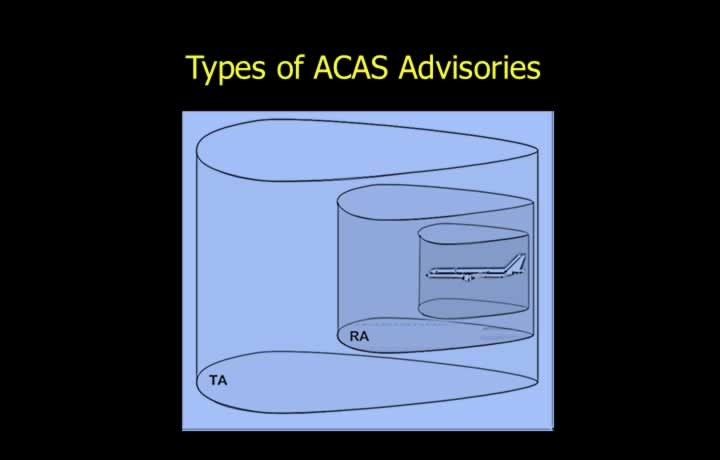
- The type of advisory depends on the intruding aircraft’s transponder capability:
- Mode A – provides only Traffic Advisories (no altitude data).
- Mode C – provides both Traffic and Resolution Advisories.
- Mode S – enables coordinated resolution advisories between aircraft.
Operation of TCAS (ACAS)
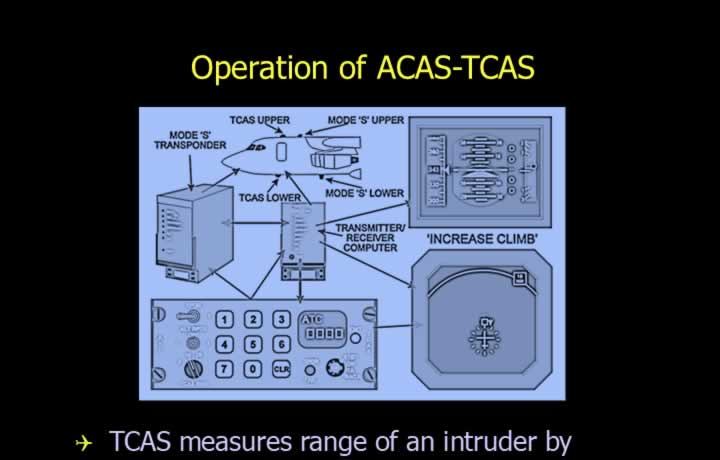
- TCAS determines range using time-delay interrogation principles.
- Interrogation occurs approximately once per second with a range up to 30 NM.
- In high traffic density areas, surveillance is reduced (once every 5 seconds, ~5 NM range).
- Altitude information is obtained from Mode C transponders.
- Bearing is determined using directional antennas, though accuracy is limited.
- TCAS provides vertical avoidance only (no horizontal manoeuvre commands).
Types of TCAS Advisories
Traffic Advisory (TA)
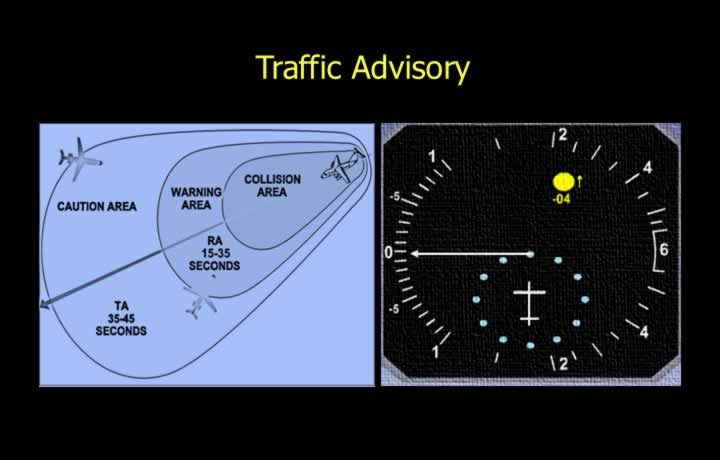
- Traffic Advisories are issued when an intruder enters the outer safety bubble.
- Typically corresponds to 35–45 seconds to potential collision.
- Displayed as amber circles on the TCAS display.
- Audio alert: “Traffic, Traffic”.
Preventive Resolution Advisory
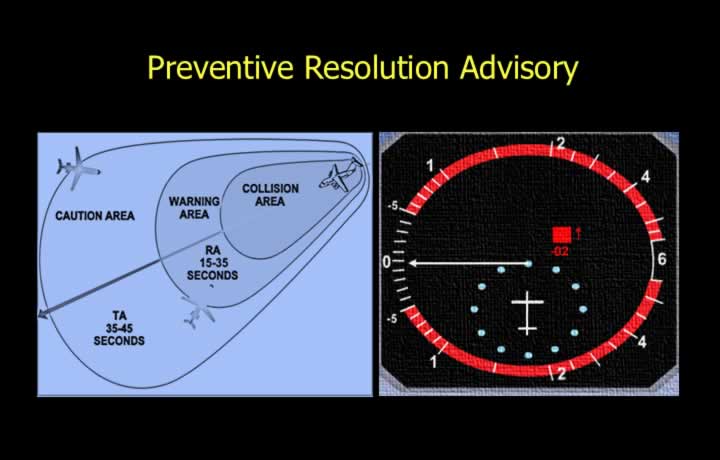
- Issued when an intruder enters the inner safety bubble.
- Typically corresponds to 15–35 seconds to potential collision.
- Displayed as red symbols on the TCAS display.
- Audio instruction: “Monitor Vertical Speed”.
- Indicates that no immediate manoeuvre is required unless conditions change.
Corrective Resolution Advisory
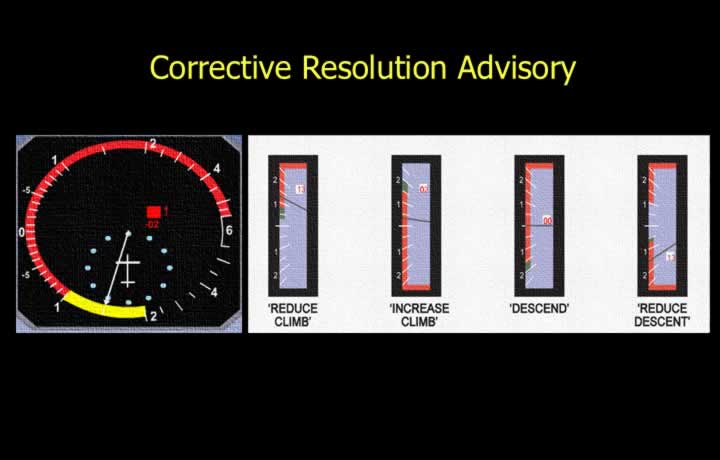
- Issued when an immediate collision risk exists.
- Requires prompt vertical manoeuvring action.
- Typical commands include:
- Climb
- Descend
- Increase Climb
- Reduce Climb
- Increase Descent
- Reduce Descent
Mode S SSR Coordination
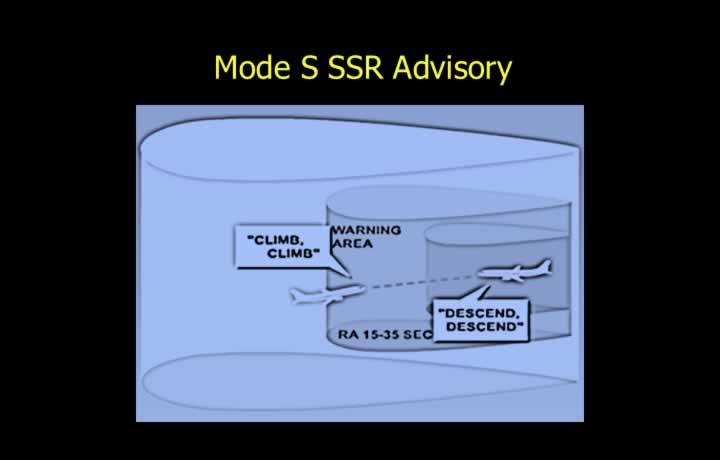
- Mode S transponders provide unique aircraft identification.
- Resolution advisories are coordinated between equipped aircraft.
- One aircraft is instructed to climb while the other descends to ensure separation.
Displays of TCAS or ACAS
Proximate Traffic
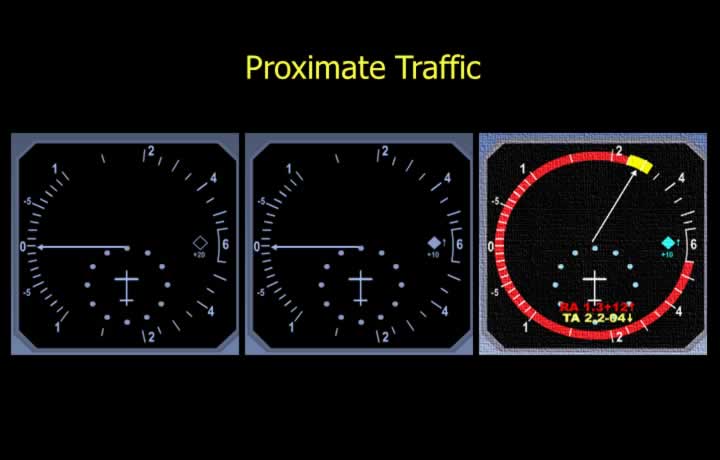
- Proximate traffic is shown as a solid cyan diamond.
- Represents aircraft within approximately 6 NM and 1200 ft relative altitude.
- Other traffic appears as hollow cyan symbols.
- Includes aircraft within display range and up to 2700 ft relative altitude.
- Trend arrows indicate vertical movement of intruders (≥500 ft/min rate).
ACAS or TCAS Display
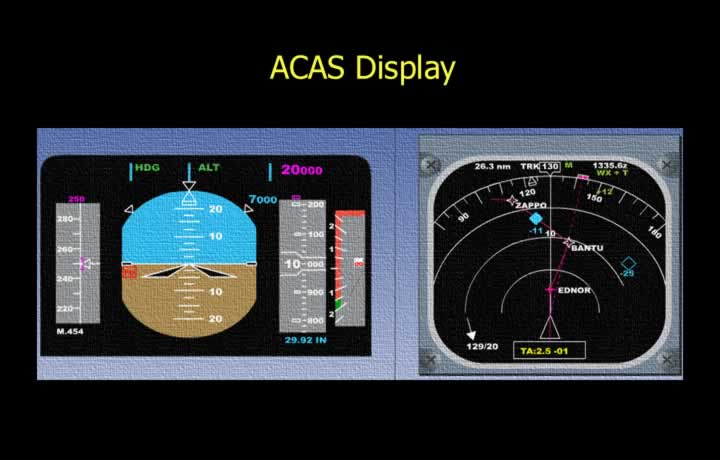
- TCAS information is displayed on:
- Electronic Flight Instrument System (EFIS)
- Weather radar display
- Independent TCAS display unit
Restricted Advisories
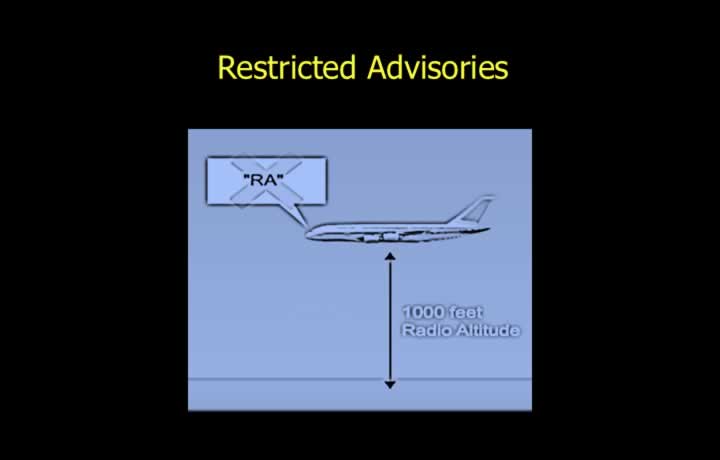
- TCAS modifies advisories near the ground based on radio altitude.
- No descent RA is issued below approximately 1000 ft AGL.
- No RA is issued below approximately 400 ft AGL.
- Climb advisories are inhibited when landing configuration (gear/flaps down) is detected.
- Aircraft performance limitations also restrict certain advisories near operational ceiling.
Action on ACAS Advisories
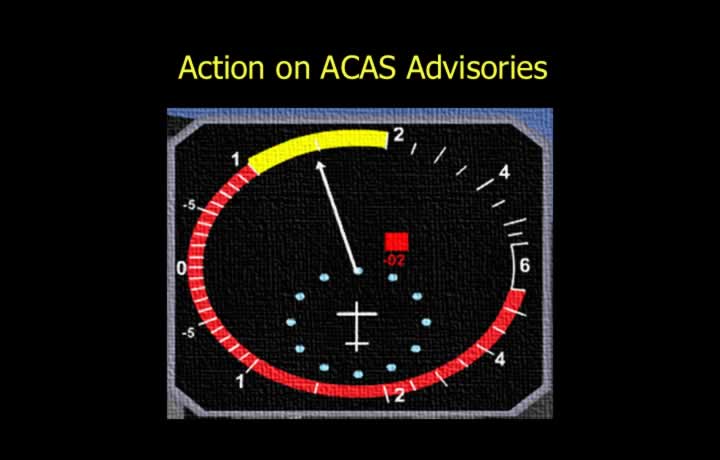
- On Traffic Advisories:
- Visually search for intruding aircraft.
- Notify Air Traffic Control if traffic is not identified.
- On Resolution Advisories:
- Immediately follow TCAS manoeuvre instructions.
- Maintain visual lookout for other traffic.
- Inform ATC of deviation from assigned clearance.
- If ATC instructions conflict with TCAS, TCAS takes priority.