
Warning Systems in an Aircraft
Aircraft warning systems provide visual and audible alerts to help pilots detect hazards and take timely corrective action.
Visual Warning Systems
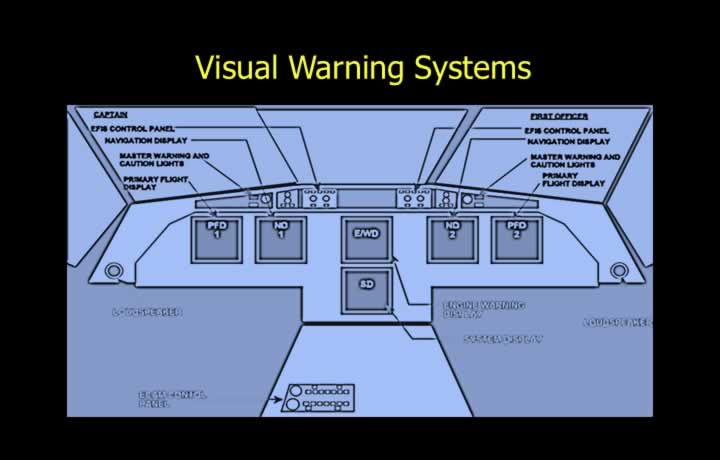
- Aircraft warning systems receive inputs from GPWS, TCAS, engine systems, and other aircraft systems.
- They alert the flight crew to unsafe conditions based on priority levels.
- Warning levels are categorised as follows:
- Level A – Red alerts requiring immediate pilot action.
- Level B – Amber alerts requiring crew attention and possible corrective action.
- Level C – Advisory alerts in other colours requiring awareness but no immediate action.
Types of Visual Warning Systems
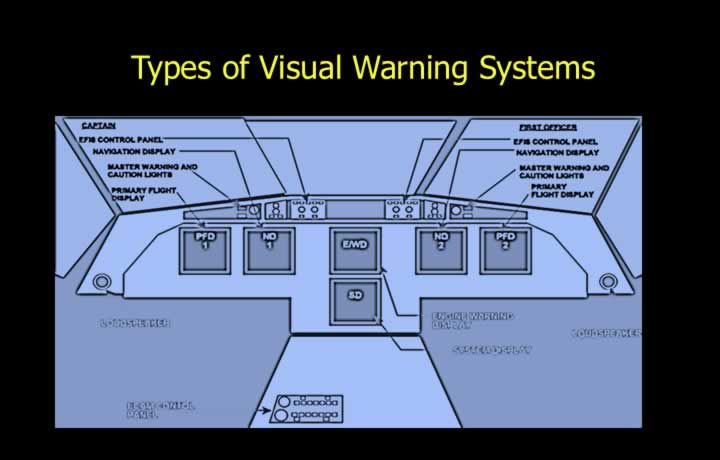
- Warnings may be displayed as visual flags or illuminated caution/danger lights.
- The Electronic Flight Instrument System (EFIS) can display warning symbols.
- Master warning lights act as attention-getting indicators for the crew.
- Red and amber alerts typically trigger the master warning system.
Audible Warnings
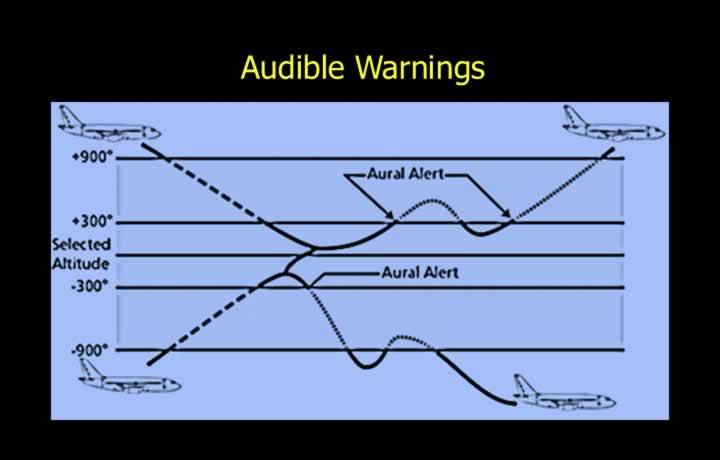
- Audible warnings indicate high-priority or critical flight situations.
- These alerts require immediate pilot response and corrective action.
- Examples include fire warnings and system alert tones.
- Aircraft systems such as GPWS generate synthetic voice alerts.
Sensory Warnings
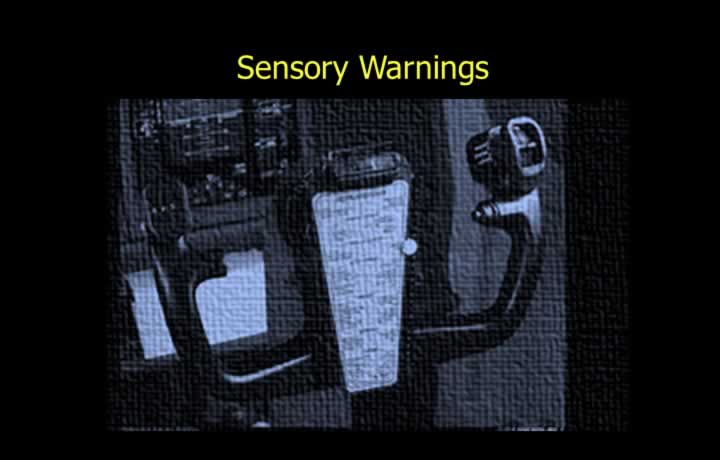
- Sensory warnings provide physical feedback to the pilot in critical situations.
- A common example is the stick shaker used during stall conditions.
- Stall warning systems are considered high-priority safety systems.
- In some aircraft, stall protection systems may limit pilot inputs automatically.
- Flight control systems may increase thrust and restrict elevator inputs during stall protection activation.
Altitude and Speed Alerts
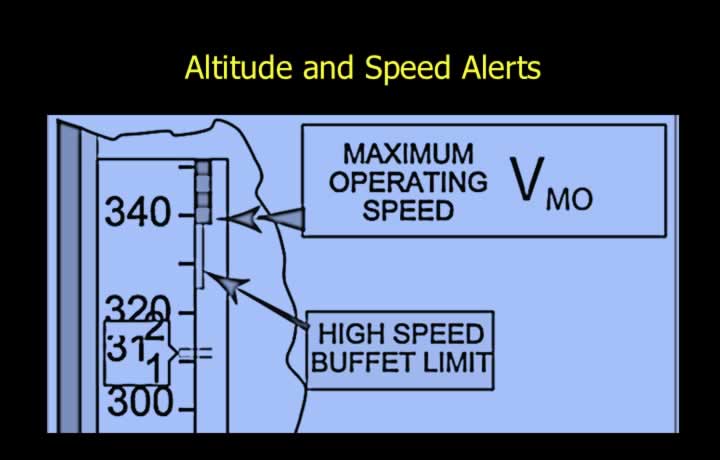
- Altitude alert systems warn pilots of deviation from selected altitude settings.
- Inputs are received from the Air Data Computer (ADC) and radio altimeter systems.
- An audible tone may be triggered when approaching selected altitude (e.g., 900 ft remaining) and stops near (e.g., 300 ft remaining).
- Overspeed warnings activate when aircraft exceeds maximum operating speed limits.
- These warnings use inputs from the ADC and flight warning systems.
Stall Warning System
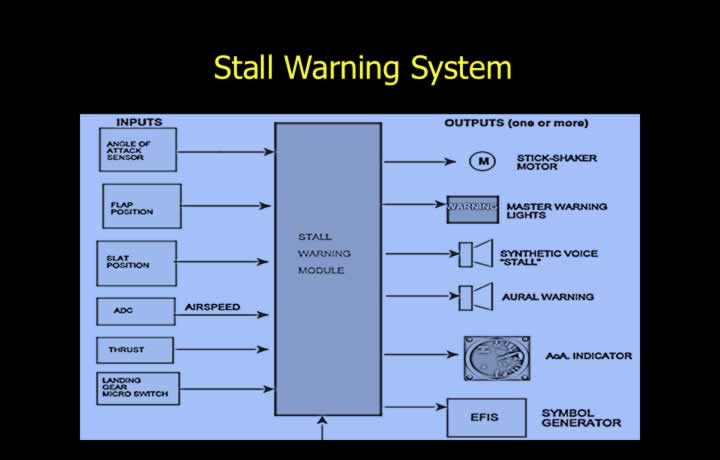
- The stall warning system activates when the aircraft approaches critical angle of attack or stall speed.
- Inputs include:
- Angle of Attack (AoA) sensors
- Flap position indicators
- Airspeed data
- Engine power settings
- A weight-on-wheels switch prevents stall warning activation on the ground.