Air Traffic Management using Secondary Surveillance Radar (SSR)
Secondary Surveillance Radar (SSR) is a ground-based radar that communicates with an aircraft’s transponder. It provides air traffic controllers with the aircraft’s identity, altitude, and position. SSR improves the accuracy, efficiency, and safety of air traffic control.
Principle of Secondary Surveillance Radar (SSR)
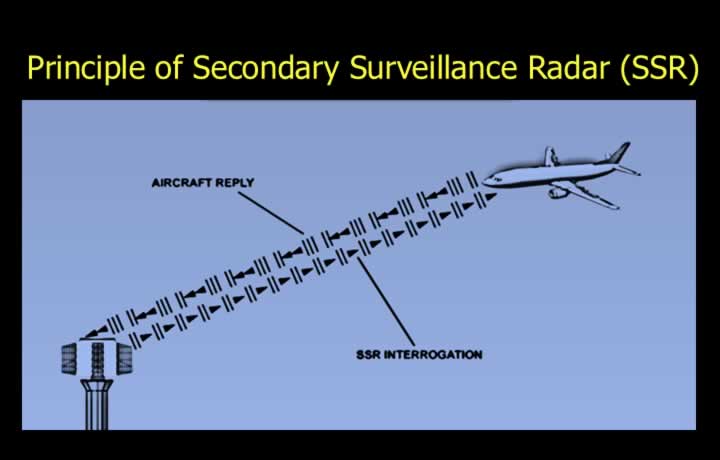
- Secondary Surveillance Radar works on the principle of interrogation and response.
- It operates in the UHF band and therefore works on a line-of-sight principle.
- SSR requires active cooperation from the target aircraft.
- It provides positive identification of aircraft.
- It detects aircraft at greater ranges using lower transmission power.
SSR Interrogator
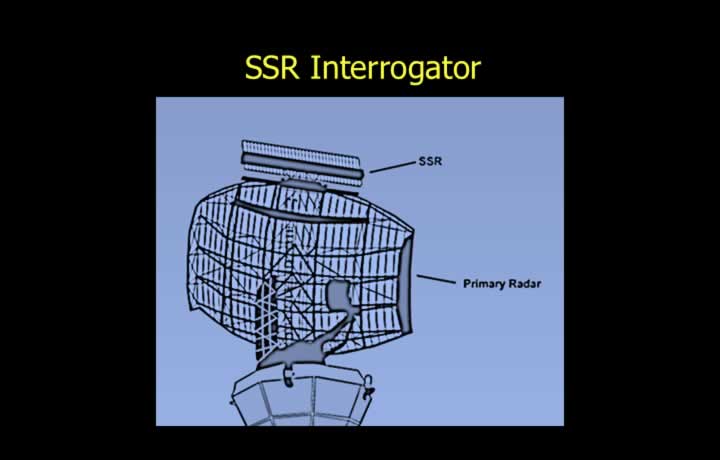
- The SSR interrogator is a ground-based equipment.
- The SSR antenna is a flat antenna mounted on top of the primary radar antenna.
- This arrangement synchronises primary and secondary radar operations.
- The interrogator transmits on 1030 MHz in the horizontal plane.
- The interrogator receives on 1090 MHz in the horizontal plane.
Interrogation by the SSR Ground Interrogator
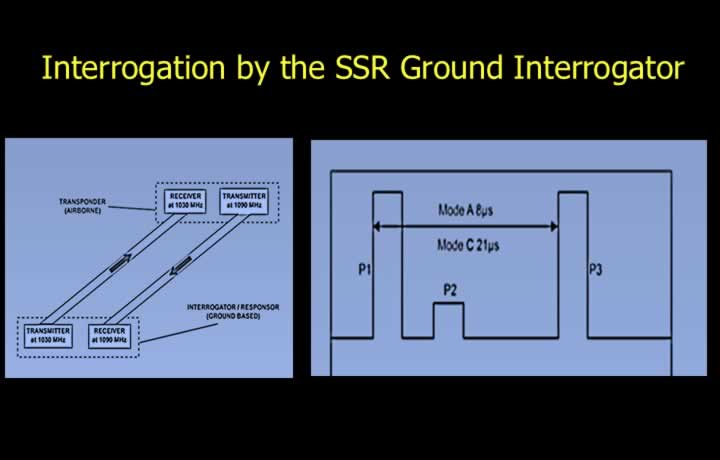
- The interrogator transmits narrow horizontal beams.
- It transmits a series of pulses on 1030 MHz.
- The interrogation signal is contained between two framing pulses called P1 and P3.
- The interrogator may suffer from side lobe transmission.
- The interrogator can operate in two modes:
- Mode A
- Mode C
- Mode A transmission duration: 8 microseconds
- Mode C transmission duration: 21 microseconds
Reply by SSR Transponder in the Aircraft
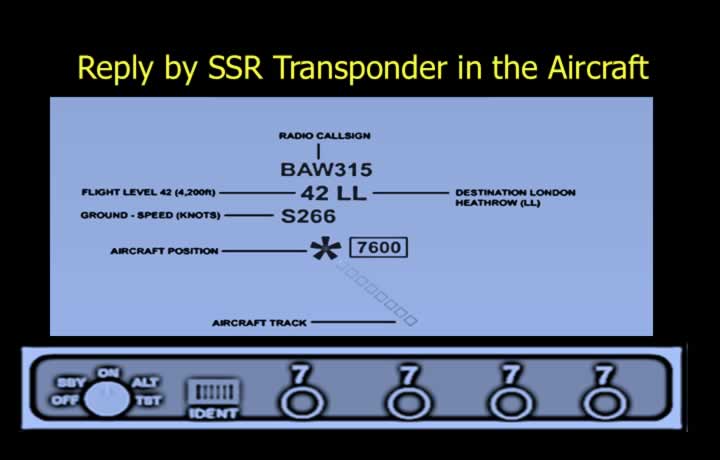
- The SSR transponder transmits omni-directional pulses on 1090 MHz.
- Replies are transmitted after a delay of 50 microseconds.
- Air Traffic Control allocates a unique four-digit code to each aircraft.
- The code is linked with the aircraft flight plan.
- The selected code is set on the aircraft transponder.
- This enables display of:
- Aircraft call sign
- Track
- Altitude
- Information is displayed on the radar scope.
Side Lobe Suppression
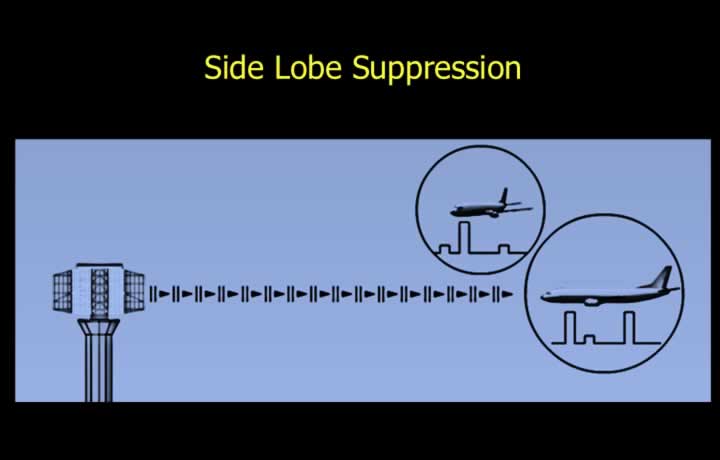
- The aircraft transponder must identify side-lobe interrogations.
- The interrogator transmits an additional framing pulse called P2 in all directions.
- P2 is transmitted from a separate antenna.
- P2 is transmitted 2 microseconds after the first framing pulse P1.
- P2 strength is lower than P1 but higher than side-lobe signals.
- If P2 is stronger than P1, the signal is identified as a side-lobe interrogation.
- The aircraft transponder will not reply to side-lobe interrogations.
Reply of Aircraft Transponder
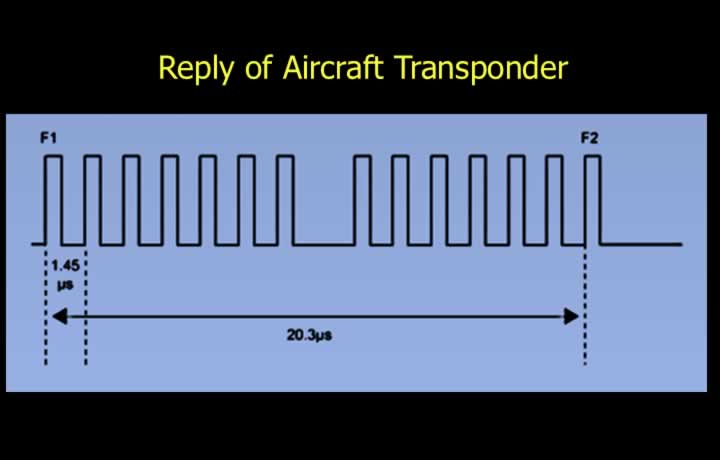
- The aircraft transponder replies to SSR interrogations.
- The reply message is enclosed between two framing pulses called F1 and F2.
- F1 and F2 are separated by 20.3 microseconds.
- Information is contained in 12 pulses between F1 and F2.
- Three pulses represent each digit of the SSR code.
- Total available code combinations are 4096.
Transponder Reply Code
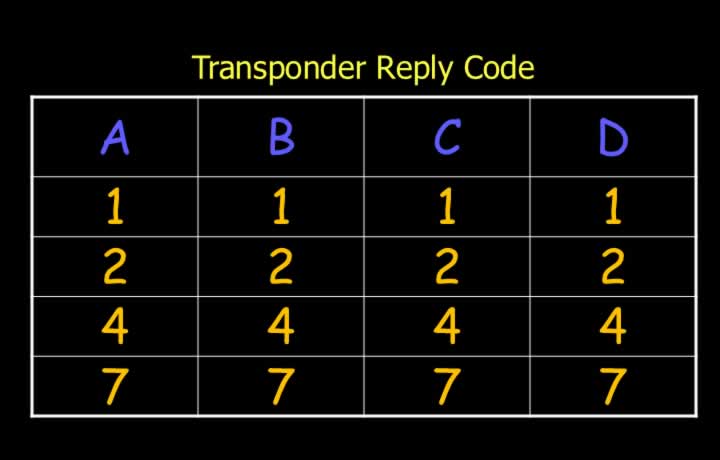
- Each digit of the SSR code is represented by information pulses.
- The maximum SSR code value is 7777.
- Examples:
- 7 is transmitted as 1 + 2 + 4
- 3 is transmitted as 1 + 1 + 1
- 6 is transmitted as 2 + 2 + 2
Special Position Identification (SPI)
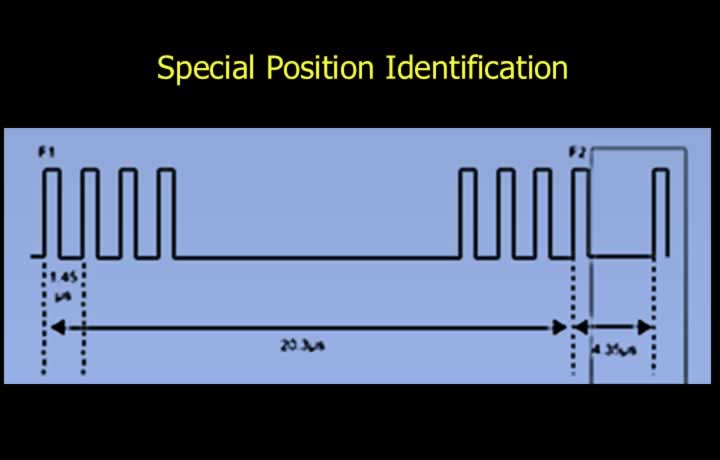
- The Ident button is used for Special Position Identification.
- When ATC requests “Squawk Ident”, the spring-loaded button is pressed.
- The Ident pulse is transmitted 4.35 microseconds after F2.
- The pulse continues for approximately 20 seconds.
- A ring appears around the aircraft return on the radar screen.
Mode A Mode C and Mode S in SSR
SSR Mode A and C
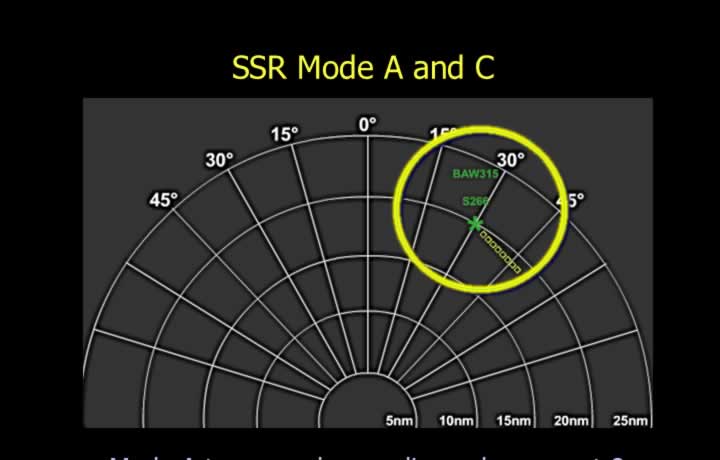
- Mode A:
- Reply pulses are spaced at 8 microseconds.
- Provides identification, bearing, and range.
- Mode C:
- Interrogation pulses are spaced at 20.5 microseconds.
- Aircraft selects the ALT button on the control panel.
- Provides altitude information along with range and bearing.
- Altitude reference is based on 1013 hPa pressure setting.
- Altitude information is transmitted by the altimeter encoder.
- Altitude accuracy is approximately 50 feet.
- Radar display accuracy is approximately 100 feet.
Reserved Codes in SSR
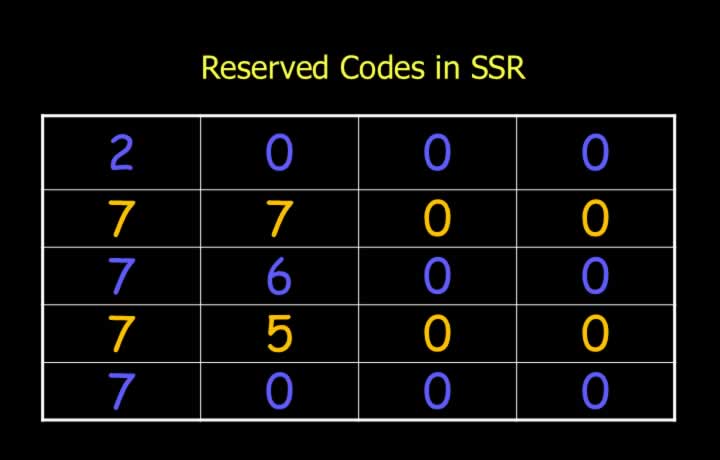
- 7700 – Aircraft emergency
- 7600 – Communication failure
- 7500 – Aircraft hijacking
- 2000 – Code not allocated at departure station
- 7000 – Default code
Advantages and Disadvantages of SSR
Advantages
- Requires less power and can provide ranges up to 200 NM.
- Not dependent on aircraft aspect or radar echo area.
- Provides clutter-free returns.
- Ensures positive identification of aircraft.
- Displays aircraft speed, track, and altitude.
- Provides special codes for emergency, communication failure, and hijacking.
Disadvantage
- Only 4096 available codes, which is insufficient for global operations.
Garbling and Fruiting
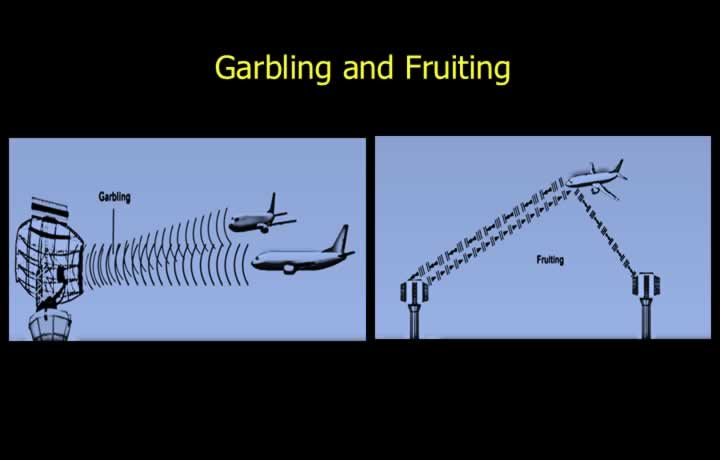
- Garbling: Caused by overlapping replies from two aircraft.
- Occurs when transponders are within approximately 1.7 NM of each other.
- Fruiting: Caused by interference at one interrogator due to replies from aircraft responding to another interrogator.
Mode S SSR
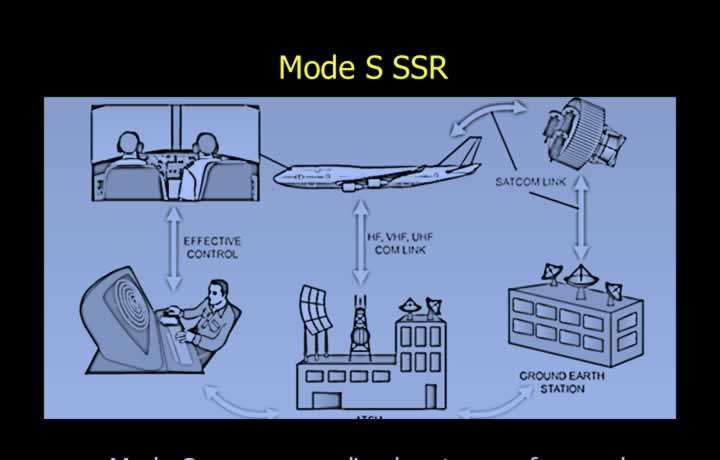
- Mode S overcomes limitations of conventional SSR through selective addressing.
- Provides approximately 16.7 million unique aircraft addresses.
- Addresses are incorporated during manufacture.
- Data link capability allows transmission of written messages.
- Supported by ground data networks.
- Allows uplink and downlink communication.
- Provides ground-to-air and air-to-ground data exchange.
- Reduces voice communication traffic.
- Mode S transmits automatically every second without interrogation.
- Operating frequencies remain 1030 MHz and 1090 MHz.
- Height accuracy is approximately 25 feet.
Mode S SSR Interrogation
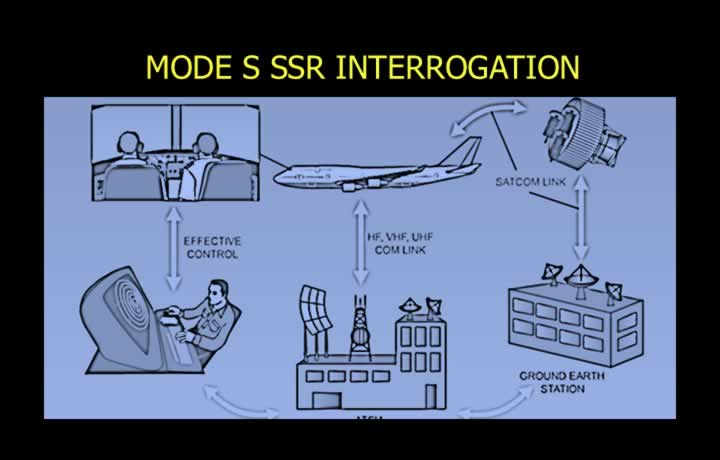
- ALL CALL: Interrogates all Mode S transponders.
- BROADCAST: Sends information to all transponders.
- SELECTIVE: Requests replies from selected aircraft only.
- INTER-MODE: Allows interaction with Mode A and Mode C transponders.
- If a Mode A or C ground station interrogates a Mode S transponder, it replies using Mode A or C with 4096 codes.
Benefits of Mode S SSR
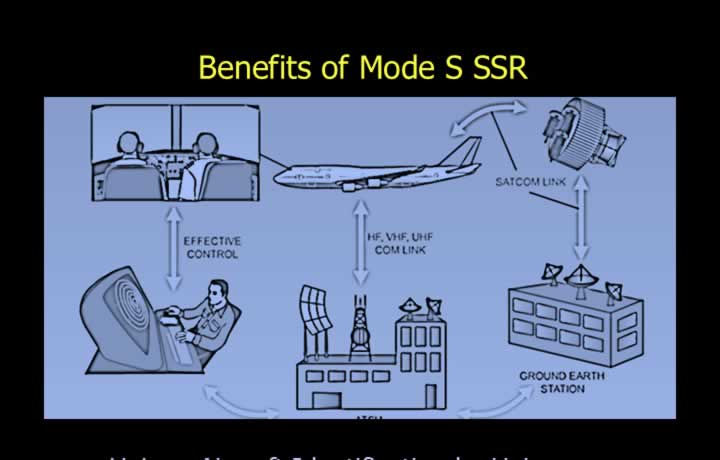
- Unique aircraft identification using a permanent aircraft address.
- Selective calling facility in addition to All Call.
- Improved identification integrity.
- Reduced garbling.
- Reduced fruiting.
- Simplified aircraft identification.
- Improved horizontal and vertical aircraft tracking.
- Supports more aircraft through a larger address capacity.
- Reduces radio communication workload.
- Altitude accuracy of approximately 20 feet with 100 feet display accuracy.
- Improves Short Term Conflict Alert (STCA).