Distance Measuring Equipment (DME) using principle of Secondary Radar
Distance Measuring Equipment (DME) is a radio navigation system that measures the slant-range distance between an aircraft and a ground station. It works by transmitting UHF radio pulses from the aircraft and measuring the time taken for the ground station to reply. DME helps pilots determine distance for en-route navigation, instrument approaches, and position fixing.
Distance Measuring Equipment
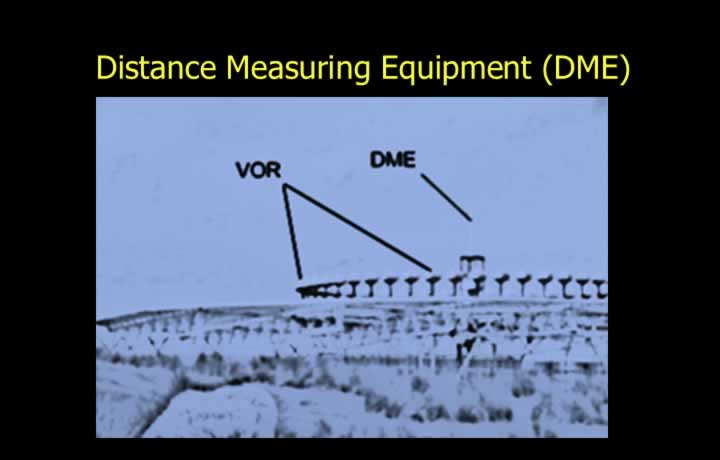
- Distance Measuring Equipment works on the principle of secondary radar.
- Provides accurate slant range.
- Combination of VOR and DME is an ICAO-approved equipment for airways.
- TACAN is military equipment equivalent to DME.
- Installed in military airfields.
- Indications in the aircraft are the same as DME.
Radar Mile
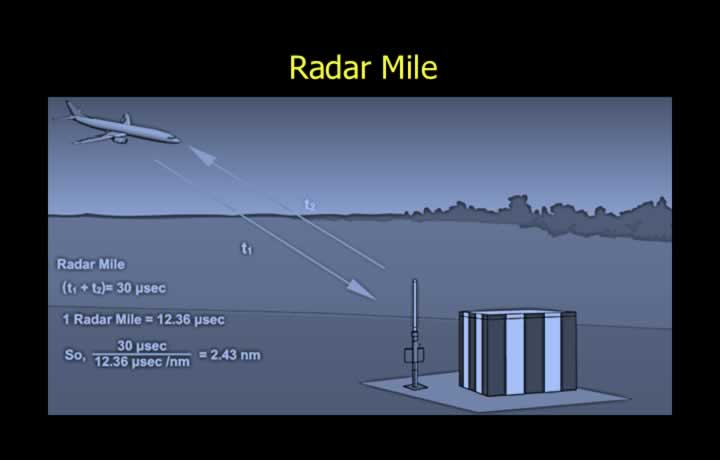
- Radar Mile is the time taken for a pulse to travel 1 NM and return back to the radar.
- Radar Mile can be calculated using the speed of radio waves.
- 1 Radar Mile = 12.36 Microseconds
- Distance of the target can be calculated using Radar Mile.
- One-way Distance (NM) = Time Taken for Pulse to Return ÷ 12.36
Principle of DME
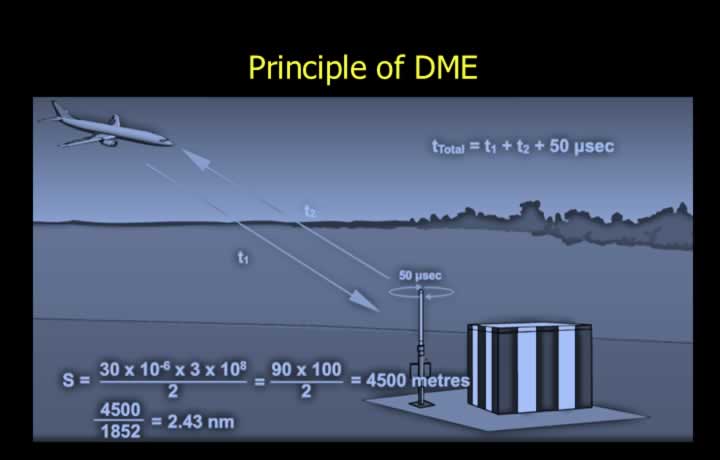
- DME equipment onboard the aircraft sends a pair of interrogation pulses.
- Ground transmitter responds after a 50-microsecond delay.
- The time difference between the pulses gives the slant range in the aircraft.
- Slant range is the straight-line distance of the aircraft from the DME.
- Slant range is calculated using the speed of radio waves.
Slant Range and Plan Range
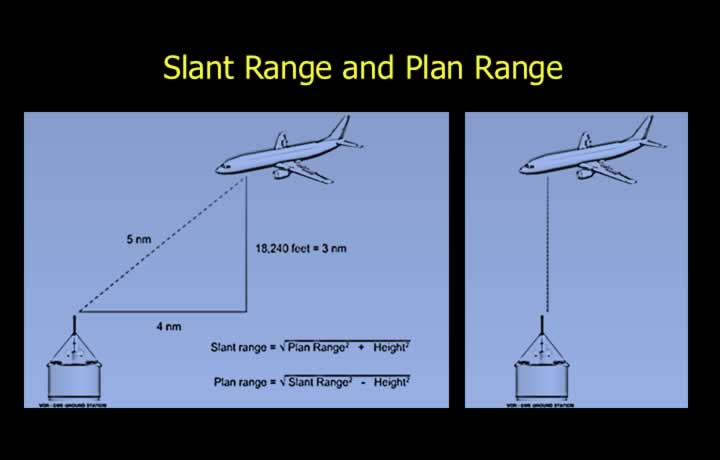
- Plan range is the range of the aircraft on the ground.
- Plan range can be calculated from slant range using Pythagoras’ Theorem.
- Plan Range² = Slant Range² − Height²
- Slant range is considered equal to plan range when the distance exceeds three times the height.
- If the aircraft is close to the beacon, slant range must be converted to plan range.
DME Operating Frequencies
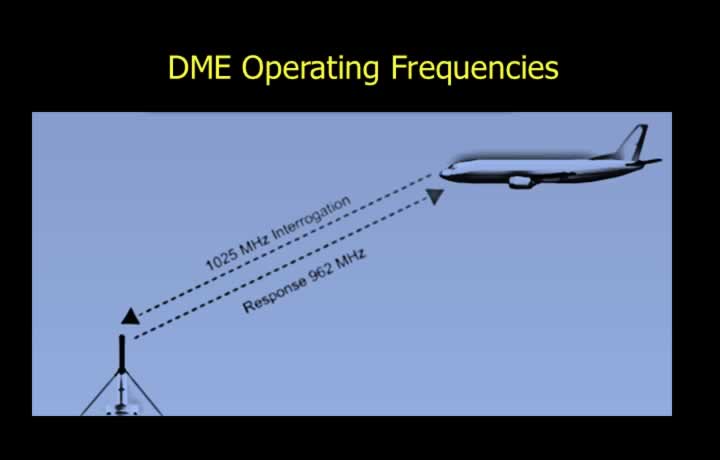
- Frequency range: 962–1213 MHz (UHF Band).
- 1 MHz spacing between two DME channels.
- Accommodates 252 channels.
- DME uses two different frequencies for transmission and reception.
- The two carrier frequencies are spaced 63 MHz apart.
- If the aircraft transmits at 962 MHz, the ground station responds on 1025 MHz.
Echo Protection Unit
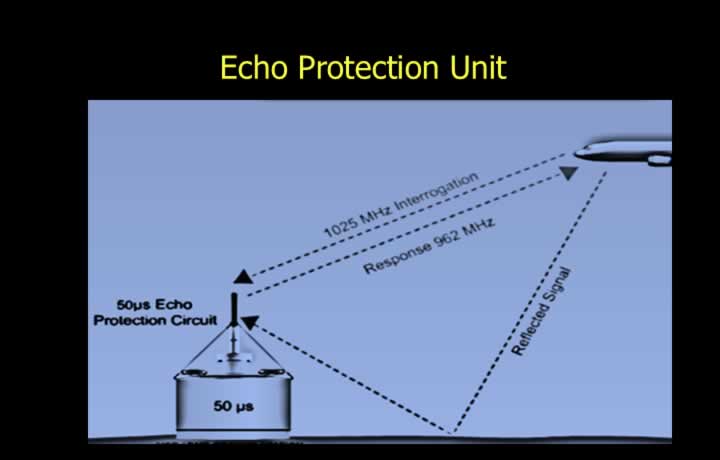
- Transmission frequencies of the aircraft and ground station differ by 63 MHz.
- This frequency difference eliminates certain problems.
- Prevents aircraft from receiving its own pulses reflected by clouds or the ground.
- Prevents repeated self-triggering of the transponder due to cloud reflections.
- DME is equipped with an Echo Protection Unit.
- The Echo Protection Unit provides a 50-microsecond delay to avoid ground-reflected waves.
Jittering of Pulses
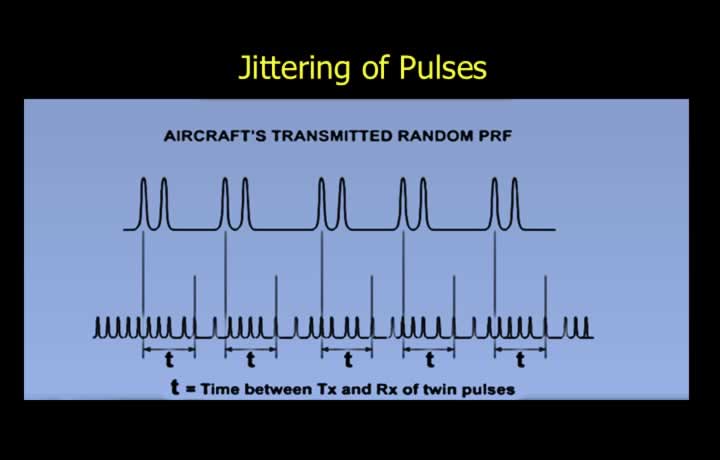
- DME uses the Random Pulse Repetition Frequency (PRF) technique.
- This technique is called Jittering.
- The aircraft transmits pulse pairs at random intervals.
- The receiver gates open only to accept the corresponding response.
- This prevents confusion between replies intended for different aircraft.
Electronic Gates
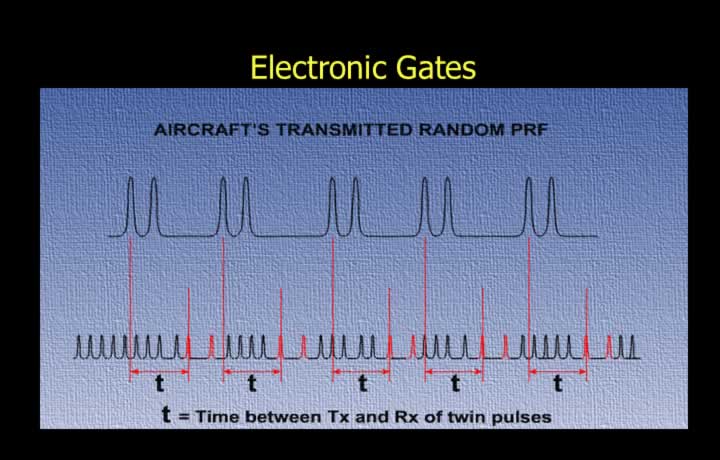
- Twin pulses are transmitted to avoid accepting matching randomised single pulses from ignition systems or other radars.
- Electronic gates are established by the aircraft transponder as part of jittering.
- These gates open the receiver only for the correct response pulse.
- Only responses matching the transmitted PRF are accepted.
Operating Modes and Features of DME
Search, Track and Memory Modes of DME
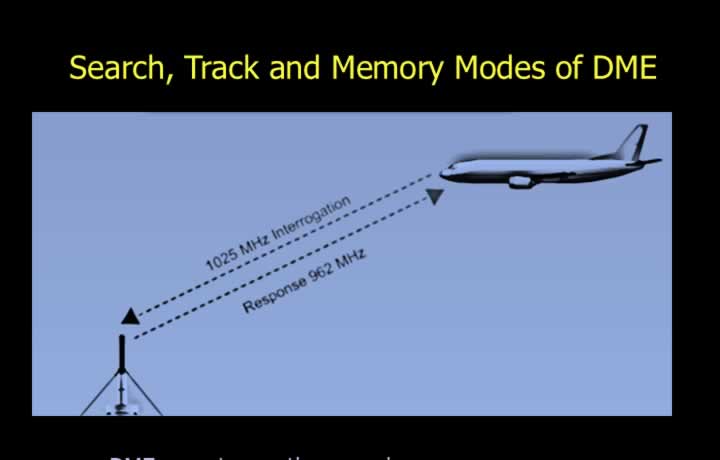
Search Mode
- Active during initial contact.
- Aircraft transmits 150 pulse pairs per second.
- After approximately 100 responses are received, transmission is reduced to 60 pulse pairs per second until lock-on.
Tracking Mode
- Activated after contact with the ground station is established.
- Aircraft transmits 25 pulse pairs per second.
- Uses the lock-and-follow technique with electronic gates.
- The electronic gates continuously adjust according to the changing distance from the station.
Memory Mode
- Operates during temporary loss of DME responses.
- DME display shows calculated distances based on ground speed.
- Airborne equipment retains memory for approximately 10 seconds.
Beacon Saturation
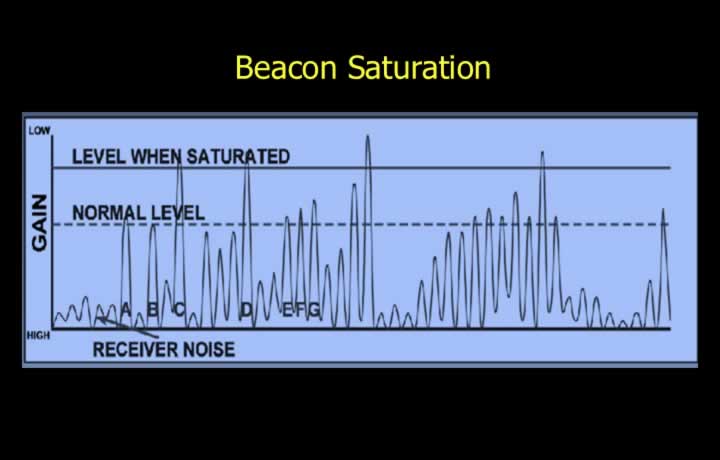
- Assumes 95% of aircraft are in tracking mode and 5% are in search mode.
- Average requirement is 27 pulse pairs per second per aircraft.
- Ground station average output is 2700 pulse pairs per second.
- Can accommodate approximately 100 aircraft.
- Beacon saturation occurs when the ground station exceeds 2700 pulse pairs per second.
- Occurs when more than 100 aircraft interrogate the beacon.
- The ground station reduces receiver gain, excluding distant aircraft.
Associated VOR/DME
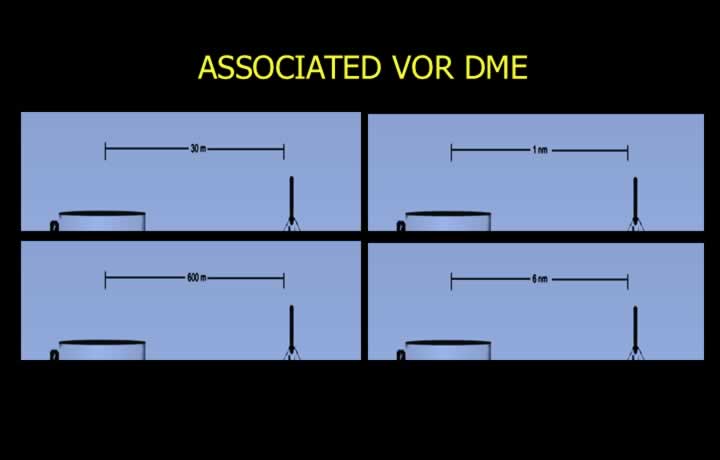
- VOR and DME are selected using the same frequency selection in the aircraft.
- Associated Terminal VOR-DME stations are located within 100 ft (30 m).
- Associated Route VOR-DME stations are located within 2000 ft (600 m).
- Non-associated VOR/DME may be located at the same place.
- Non-associated VOR/DME stations separated by 1 NM have the third ident letter Z.
- Example: VOR BBB may have DME BBZ.
- Non-associated VOR/DME stations more than 6 NM apart have different identifiers.
Accuracy of DME
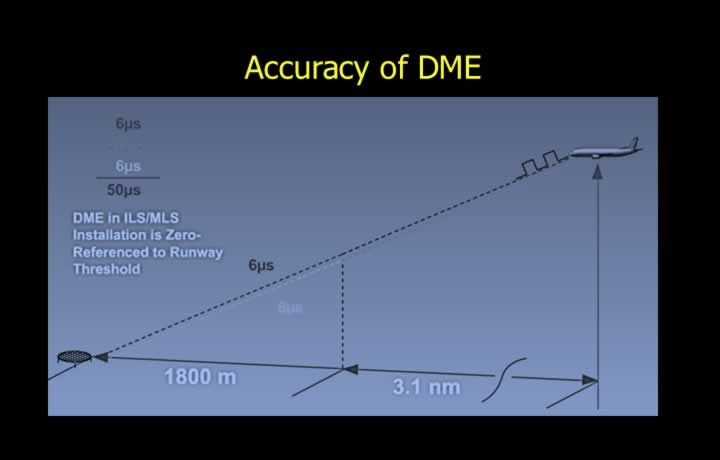
- DME accuracy is based on a 95% probability.
- Narrow Spectrum DME (DME/N): ±1.25% of range or ±0.25 NM.
- Precision DME (DME/P): ±0.20 NM.
- Ground speed computation becomes less accurate when directly overhead the station.
- Ground speed indication is valid only when flying directly toward or away from the station.
- ILS/DME distance is measured from the runway threshold.
- This distance is accurate only during the approach.
Designated Operational Coverage (DOC)
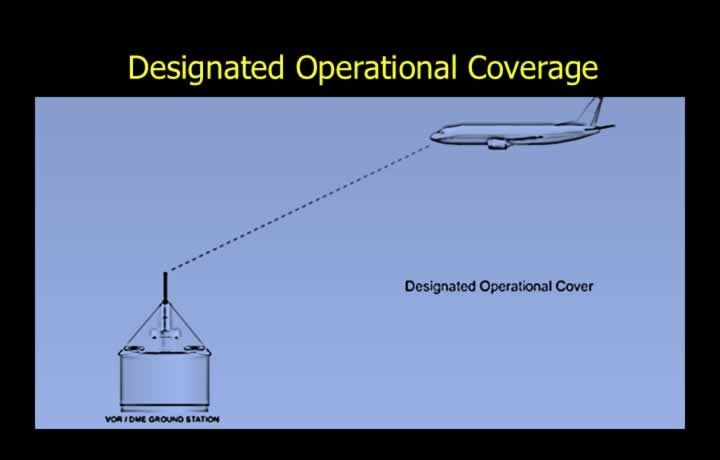
- Maximum range is based on the line-of-sight equation.
- Practical range is approximately 250 NM.
- Designated Operational Coverage (DOC) protects DME from range errors caused by co-channel interference.
- DOC 20/240 indicates coverage of 20 NM at 24,000 ft.