
Antenna – Ariels used for Transmitting and Receiving Signals
An antenna is used to transmit and receive radio waves for navigation and communication. Its important properties are gain, directivity, and bandwidth, which determine signal strength and coverage. A good antenna provides efficient, reliable, and accurate signal transmission.
Transmitter and Receiver Antennas
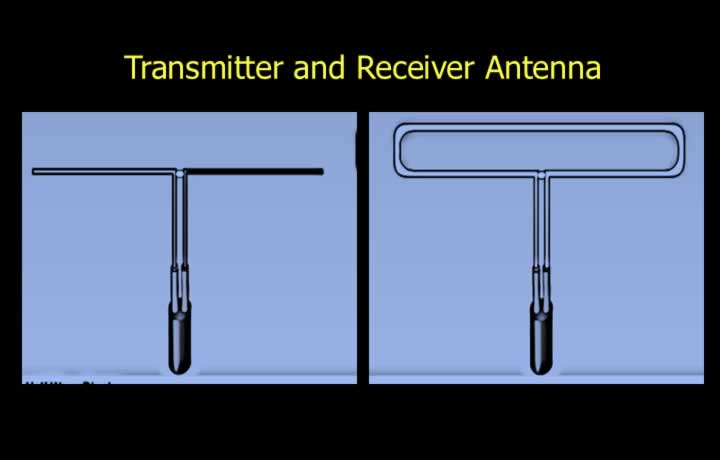
- Antennas (aerials) should be made of good electrical conductors such as aluminum.
- A transmitter antenna radiates radio waves into space.
- Radio waves carry intelligence in the form of a modulated signal.
- A receiver antenna receives incoming radio waves.
- The transmitted intelligence is recovered by demodulating the received signal.
Antenna Characteristics
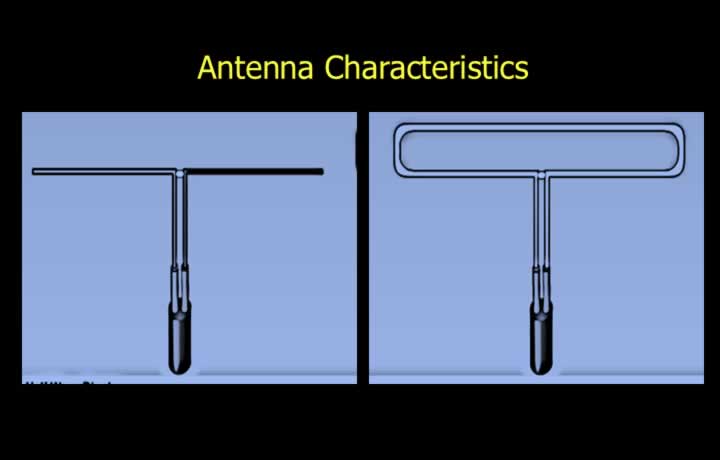
- The length of an antenna should be proportional to the wavelength being transmitted or received.
- Low Frequency (LF): 10–1 km wavelength.
- Medium Frequency (MF): 100–10 m wavelength.
- Very High Frequency (VHF): 10–1 m wavelength.
- Super High Frequency (SHF): 10–1 cm wavelength.
Antenna Length
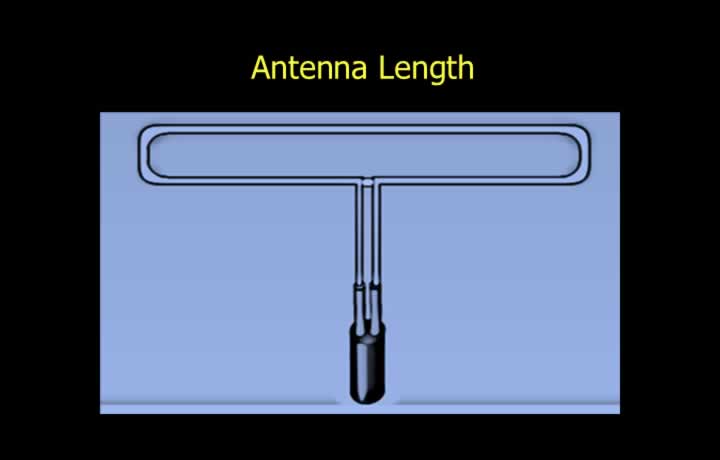
- The ideal antenna length is proportional to the transmitted wavelength.
- A half-wave dipole antenna has a length equal to one-half of the wavelength.
- Half-wave dipoles are widely used in television and communication systems.
- Folded half-wave dipoles provide a wider operating bandwidth.
Marconi Antenna
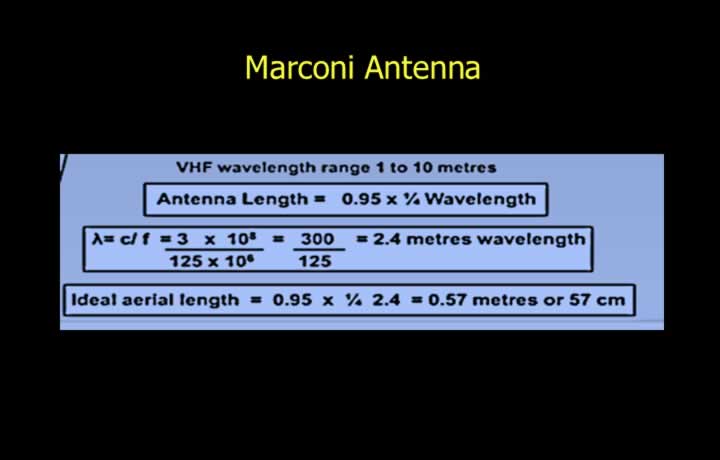
- A quarter-wave antenna is commonly known as the Marconi antenna.
- The practical length of a Marconi antenna is approximately 95% of one-quarter wavelength.
- Installing a Marconi antenna on the metallic surface of an aircraft effectively increases its electrical length.
Aerial Loading Unit
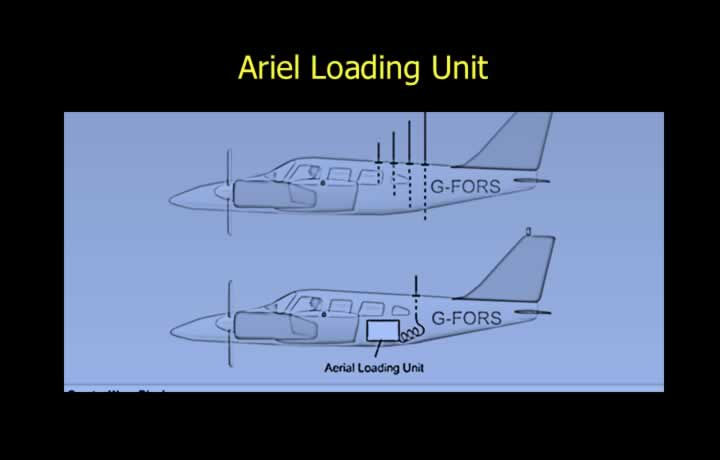
- Aircraft antennas are required to operate over a wide range of frequencies.
- An Aerial Loading Unit (ALU) enables the same antenna to be matched to different frequencies.
Directional Antennas
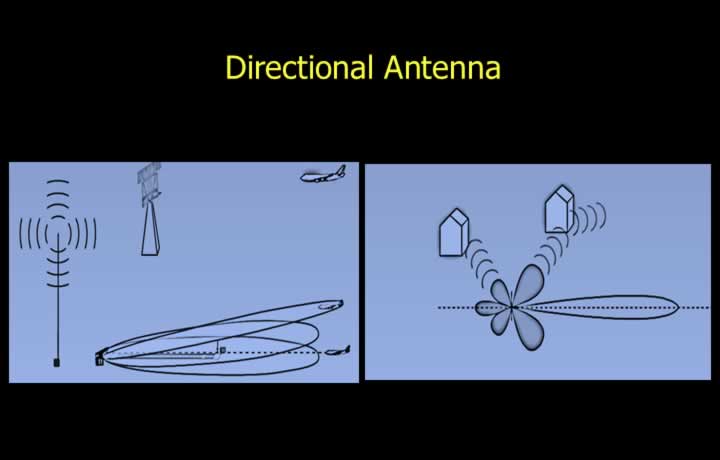
- Directional antennas concentrate radio energy in a specific direction.
- The Instrument Landing System (ILS) transmits signals along the runway centreline.
- Parasitic elements such as reflectors improve antenna directivity.
- Reflectors are typically about 5% longer than the driven element.
- They are positioned approximately one-quarter wavelength behind the antenna.
Yagi Antenna
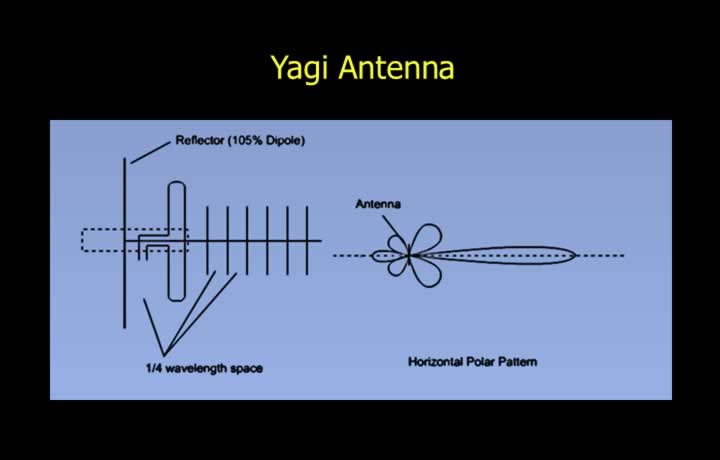
- A Yagi antenna uses additional parasitic elements (directors) in front of the driven element to improve directivity.
- It may produce unwanted side lobes in addition to the main radiation beam.
Loop Antenna
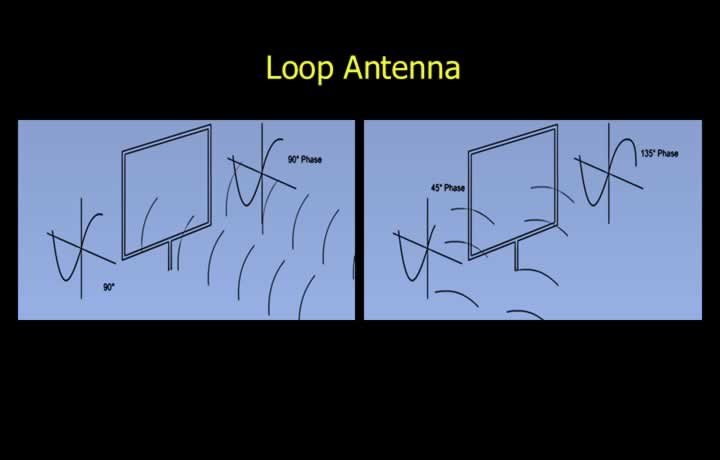
- A loop antenna is a rotating loop-shaped antenna used for radio direction finding.
- It determines direction by measuring the phase difference between its vertical elements.
- The phase difference becomes zero when the loop is perpendicular to the incoming radio wave.
- At all other positions, a phase difference creates an error signal.
- The error signal produces a current used to determine the direction of the signal.
- Automatic Direction Finder (ADF) systems use the loop antenna principle.
Introduction to Radar
Radar (Radio Detection and Ranging) is a system used to detect and locate objects using radio waves. It measures the distance, direction, and speed of objects by analysing reflected signals. Radar is widely used in aviation, marine navigation, weather monitoring, and defence.
Radar Systems
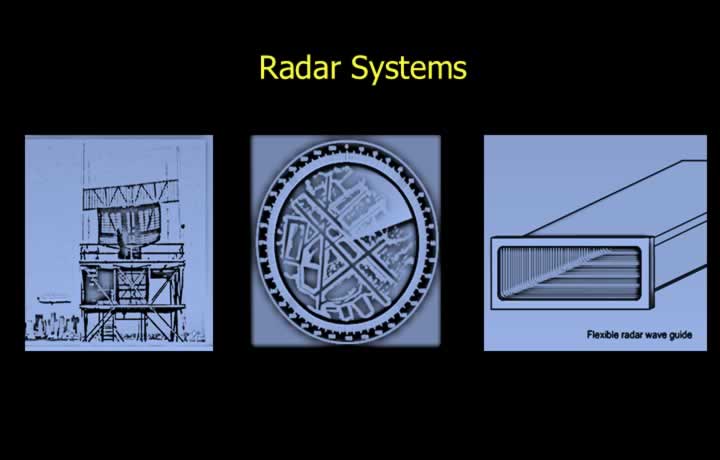
- Radar (Radio Detection and Ranging) systems are used to detect and locate objects.
- Radar operates using narrow directional beams in the SHF and EHF frequency bands.
- A rotating antenna provides 360° area coverage.
- Radar antennas receive RF energy through waveguides rather than conventional wires.
- Waveguides are hollow metallic tubes that efficiently carry microwave energy.
- The low electrical resistance of waveguides minimises transmission losses.
Parabolic Radar Antenna
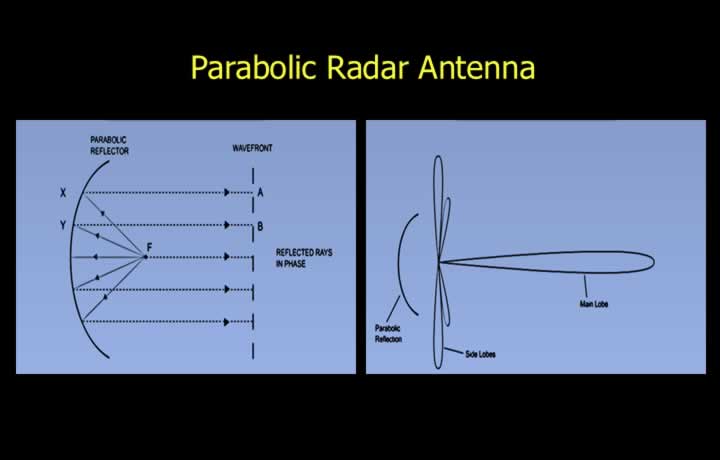
- Radar systems commonly use parabolic dish antennas to produce highly directional beams.
- The parabolic reflector converts spherical waves into parallel beams.
- All transmitted waves have equal path lengths and remain in phase.
- Side lobes generated by the parabolic dish may interfere with nearby radio aids.
Flat Plate Radar Antenna
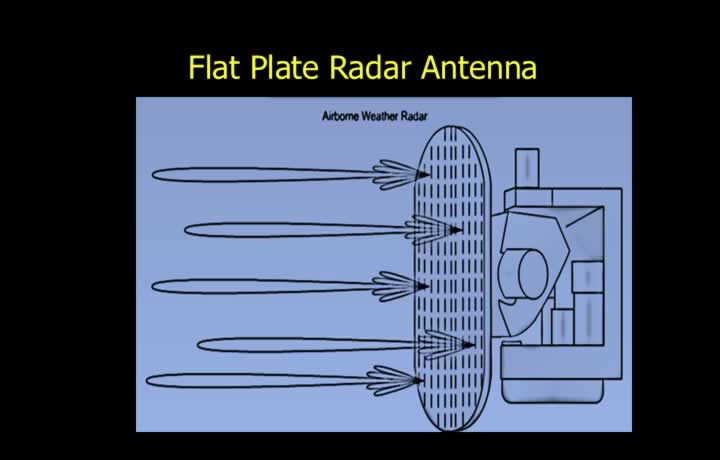
- Flat plate (slotted planar array) antennas are commonly used in airborne weather radar systems.
- Multiple half-wave radiating elements transmit through slots in a metal plate.
- These antennas produce narrow, high-energy beams.
- Advantages include reduced side lobes and lower power consumption.