
Calculation of Take-off Performance
Take-off performance is the aircraft’s ability to accelerate, lift off and safely climb after take-off under specific conditions. It depends on factors such as aircraft weight, runway length, weather, altitude and engine performance.
Defined Speeds during Take-off
Take-off Segment
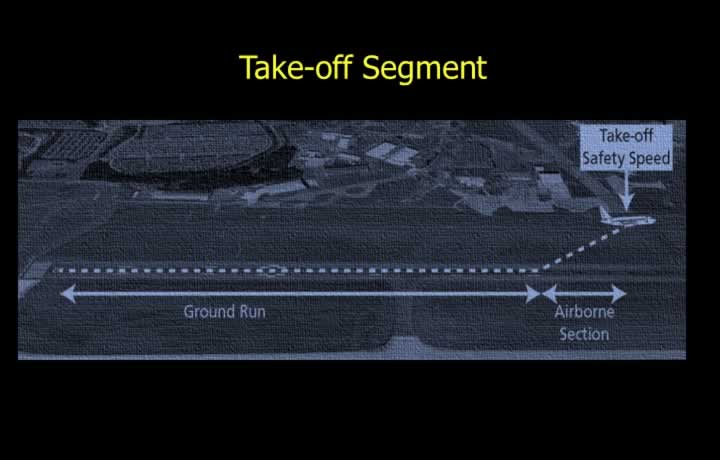
- The take-off segment extends from the Brake Release Point (BRP) to screen height.
- Take-off consists of a ground run followed by an airborne section.
- The ground run extends from the start of the take-off roll until lift-off.
- The airborne section begins at lift-off and ends at screen height.
Stalling Speed
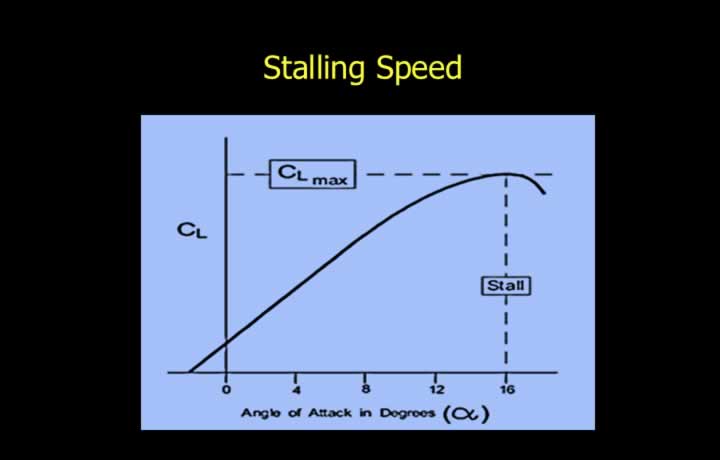
- Lift is the aerodynamic force acting vertically upward on the aircraft.
- This lift enables the aircraft to remain airborne.
- Lift is produced by a combination of airspeed and angle of attack (AoA).
- At higher airspeeds, a smaller angle of attack is required to generate sufficient lift.
- At lower airspeeds, the angle of attack can be increased to maintain lift.
- Beyond the critical angle of attack, lift decreases rapidly while drag increases sharply.
- Stalling speed is the minimum speed required to maintain level flight.
Minimum Control Speeds
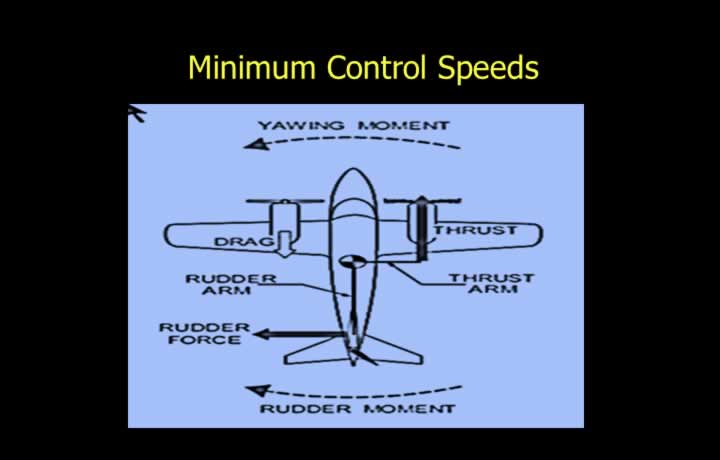
- Minimum control speed is the lowest speed at which the aircraft remains controllable after failure of the critical engine.
- Above this speed, yaw resulting from engine failure can be corrected using rudder.
- The two minimum control speeds during take-off are VMCG and VMCA.
- VMCG is the minimum control speed on the ground.
- VMCA is the minimum control speed in the air.
Rotation Speed (VR)
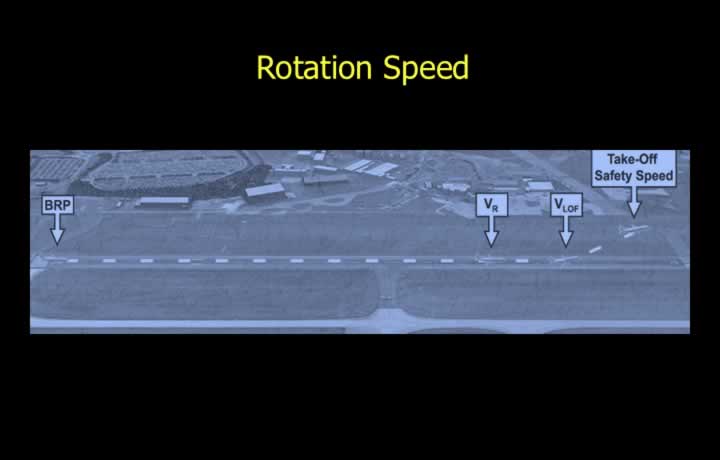
- Rotation speed is the speed at which the pilot initiates aircraft rotation.
- Backward control pressure raises the aircraft nose.
- At VR, the elevator has sufficient authority to rotate the aircraft.
- The aircraft is rotated to the required angle of attack for lift-off.
Lift-off Speed (VLOF)
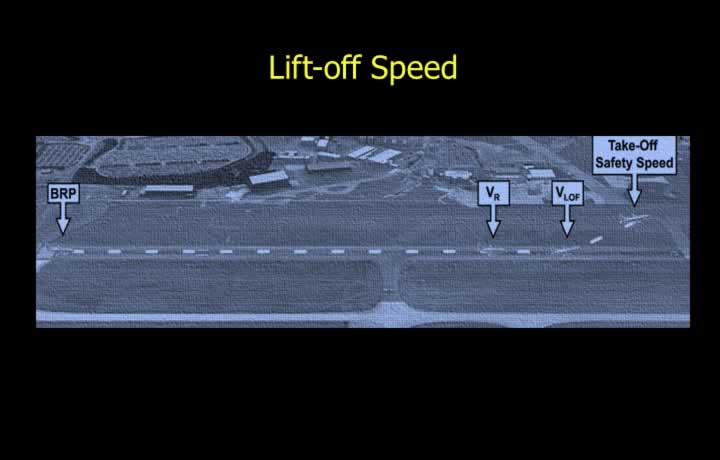
- Lift-off speed is the speed at which the aircraft leaves the runway.
- VLOF is the speed at which the main wheels become airborne.
- It is also known as the unstick speed.
- Typically, VLOF is between 1.1 and 1.2 times the stall speed.
Take-off Safety Speed (V2)
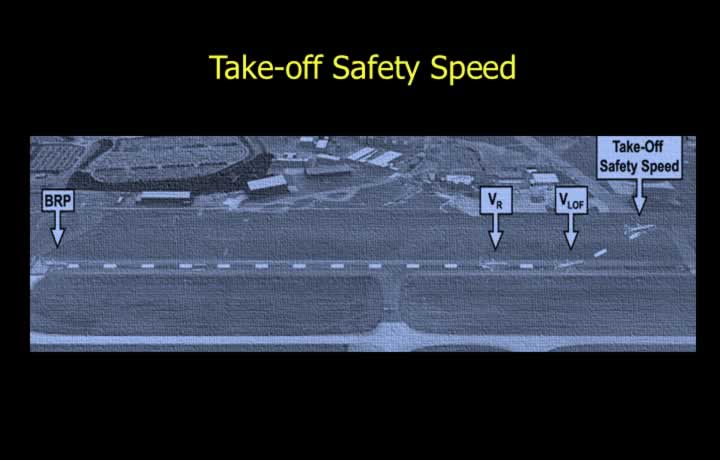
- Take-off safety speed must be achieved before reaching screen height.
- V2 is determined using stall speed and minimum control speed requirements.
Decision Speed (V1)
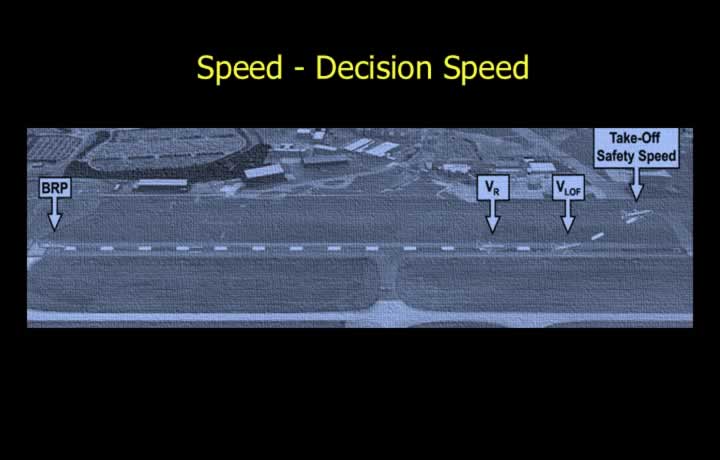
- If an engine fails, the pilot has two possible actions.
- Reject the take-off and stop the aircraft if sufficient runway remains.
- Continue the take-off with one engine inoperative.
- The aircraft must still achieve lift-off performance on one engine.
- Decision speed (V1) is the speed where:
- Take-off Run Required (TORR) equals Accelerate-Stop Distance Required (ASDR).
- At V1, both stopping and continuing the take-off require the same distance.
Aerodrome Limitations during Take-off
Take-off Run Required (TORR)
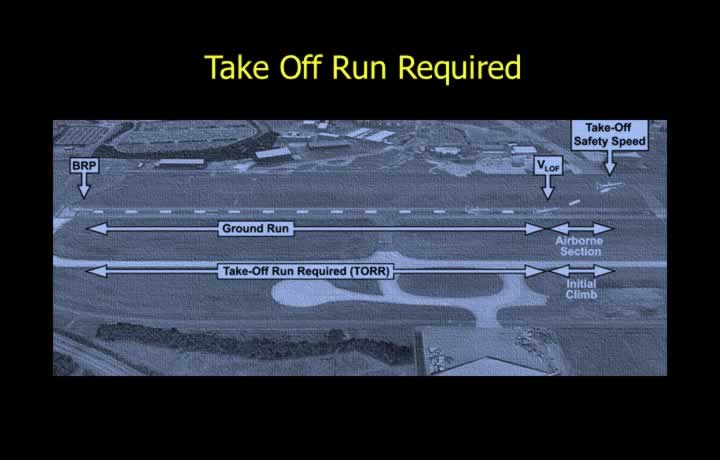
- TORR is the runway distance required to complete the take-off.
- It begins at brake release.
- It ends when the aircraft reaches screen height.
Take-off Distance Required (TODR)
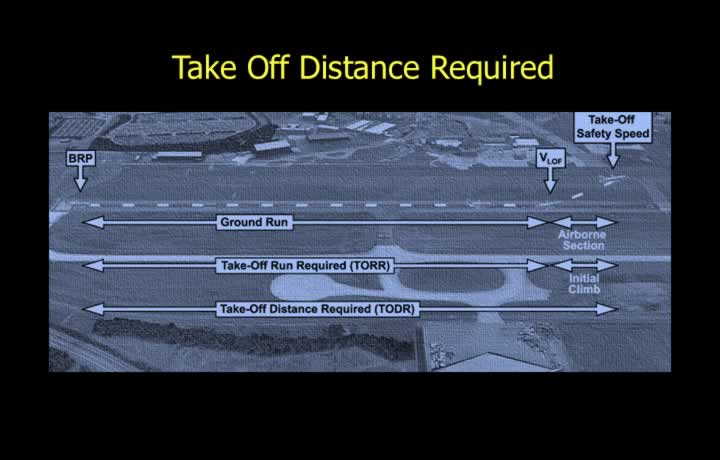
- Initial climb distance extends from lift-off to screen height.
- TODR equals the take-off run plus the initial climb distance.
- It represents the distance from brake release to screen height.
- TODR must not exceed TODA.
Aerodynamics in Take-off Segment
Effective Mass
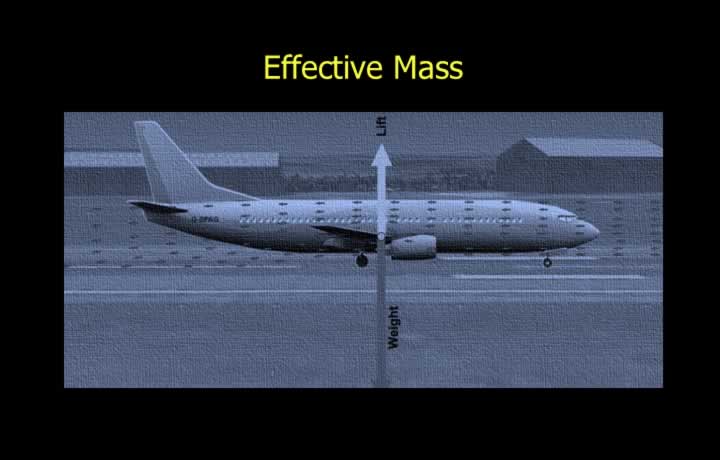
- Aircraft performance is directly influenced by aircraft weight.
- The weight carried is commonly referred to as payload.
- Aircraft mass acts vertically downward through the centre of gravity.
- The gravitational force acting on mass is called weight.
- Weight is also referred to as the effective mass of the aircraft.
Thrust
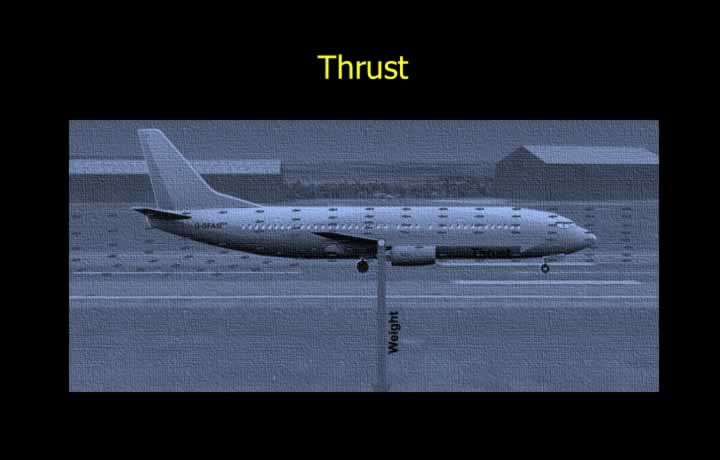
- Thrust accelerates the aircraft to generate lift.
- Higher airspeed produces greater lift over the wings.
- Thrust is the forward propulsive force generated by the engines.
- Sufficient thrust allows the aircraft to reach take-off speed.
Jet Engine Thrust
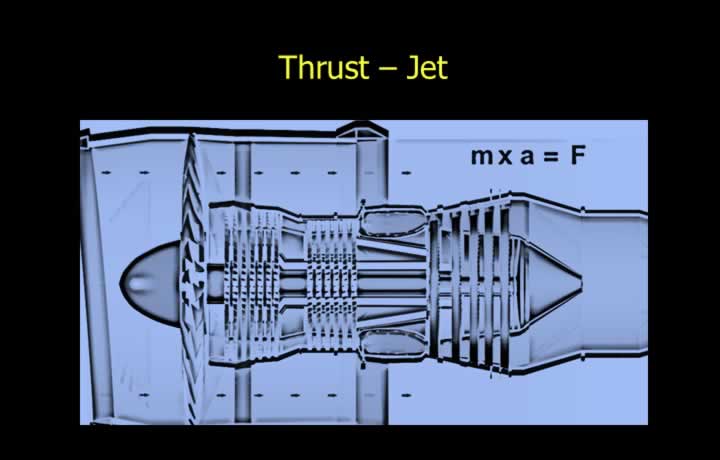
- Jet engines ingest large quantities of air through the intake.
- The engine accelerates this air rearwards, producing forward thrust.
- According to Newton’s Second Law:
- Force = Mass × Acceleration
- Greater airflow mass increases thrust.
- Greater acceleration of airflow also increases thrust.
Intake Momentum Drag
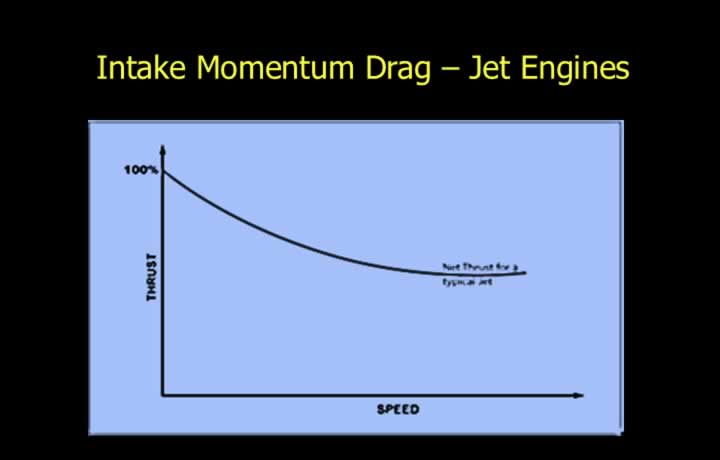
- As aircraft speed increases, intake momentum drag also increases.
- The incoming air already possesses forward velocity.
- This reduces the change in air velocity across the engine.
- Reduced acceleration of airflow decreases engine thrust.
Compressibility Effect (Ram Recovery)
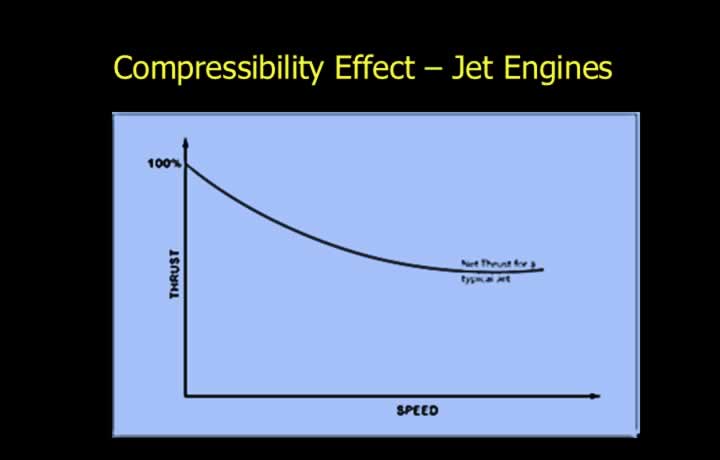
- Above approximately Mach 0.2, compressibility increases air density entering the engine.
- This reduces intake momentum drag.
- The reduction is known as thrust recovery or ram recovery.
- Ram recovery causes thrust to increase at higher speeds.
Take-off Thrust – Jet Aircraft
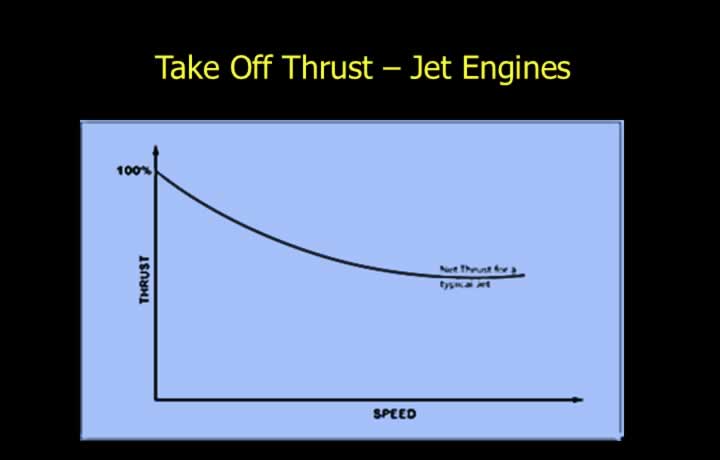
- Ram recovery does not significantly occur during take-off.
- Take-off speeds remain below Mach 0.2.
- Consequently, thrust gradually decreases during the take-off roll.
Propeller Thrust
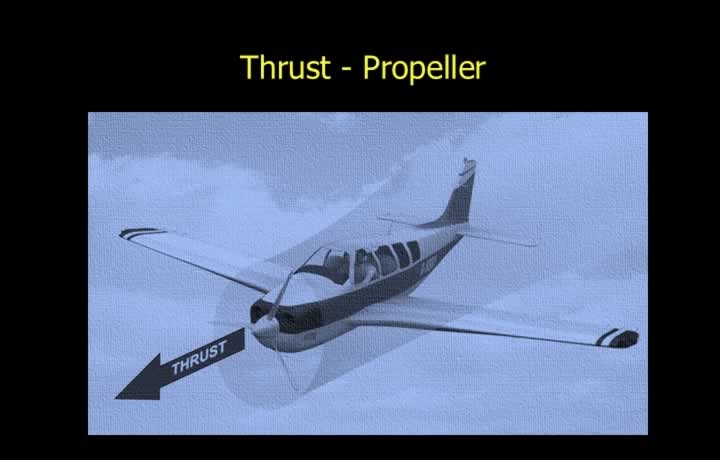
- Propellers accelerate air rearwards to generate thrust.
- The engine drives the propeller through the air.
- The accelerated airflow produces lift over the wings.
Propeller Thrust Variation
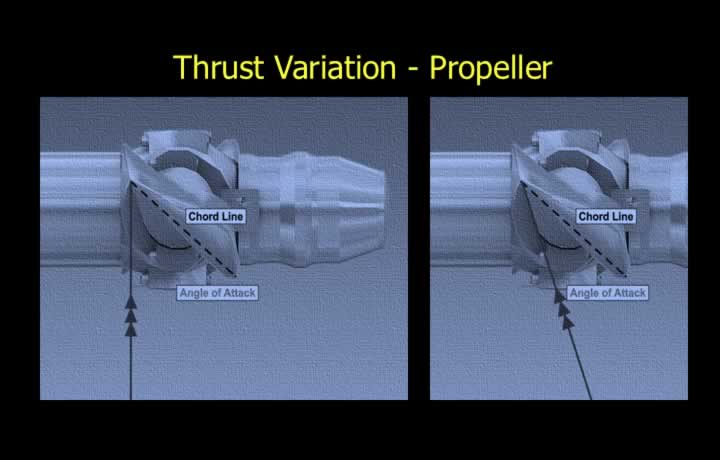
- Propeller thrust depends on blade angle of attack.
- Higher blade angle of attack generates greater thrust.
- Increasing aircraft speed changes the relative airflow.
- This reduces blade angle of attack and therefore reduces thrust.
Take-off Thrust – Propeller Aircraft
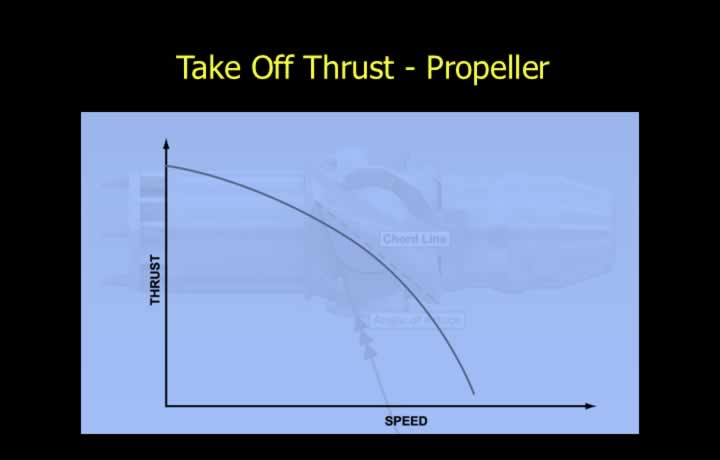
- As speed increases during take-off, propeller thrust decreases.
- This behaviour is similar to that of jet aircraft.
Drag
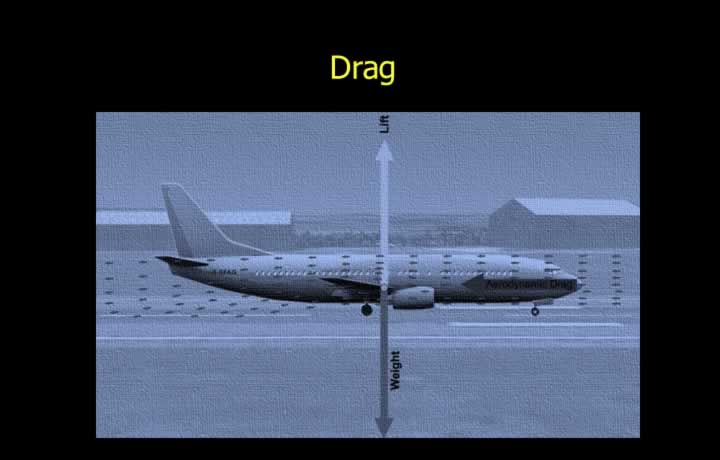
- Drag is the resistance opposing aircraft motion.
- Air resistance is called aerodynamic drag.
- Wheel friction produces wheel drag.
- Aerodynamic drag consists of parasite drag and induced drag.
Aerodynamic Drag
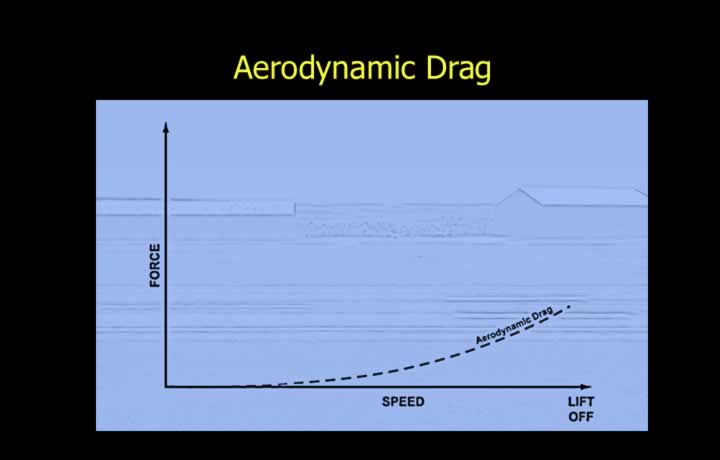
- Parasite drag results from airflow over the aircraft structure.
- It depends primarily on airframe design.
- Induced drag is associated with lift generation.
- Induced drag increases as aircraft speed increases.
- Overall aerodynamic drag increases with speed.
Wheel Drag
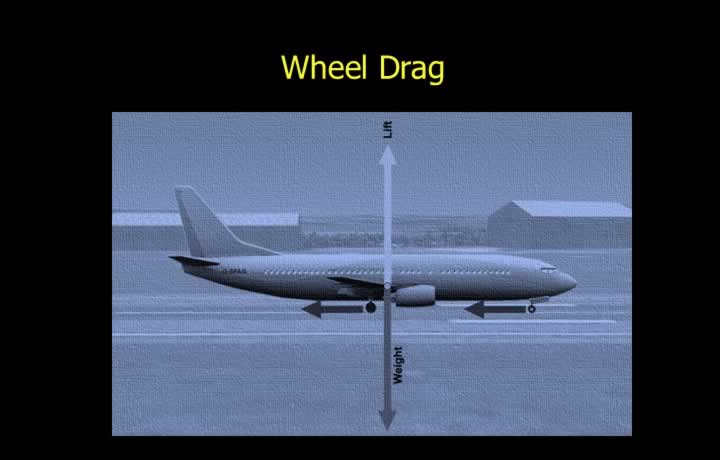
- Wheel drag is caused by tyre friction with the runway.
- It depends on wheel loading and surface friction.
- As lift increases during take-off, wheel loading decreases.
- Wheel drag reduces to zero at lift-off.
Total Drag
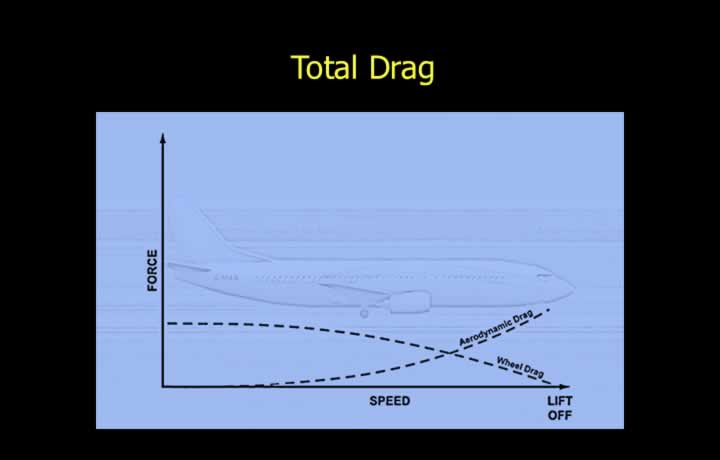
- Aerodynamic drag increases while wheel drag decreases during take-off.
- Total drag gradually increases throughout the take-off roll.
- Initially, excess thrust is high.
- Excess thrust reduces as take-off progresses.
- Acceleration therefore decreases throughout the take-off roll.
Excess Thrust
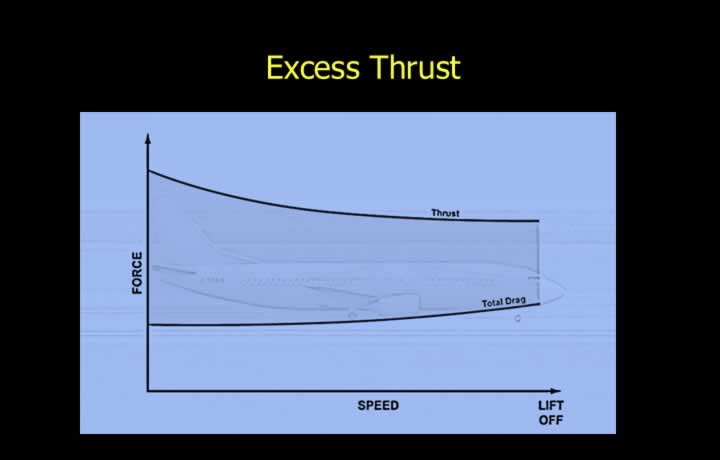
- Engine thrust decreases while drag increases during take-off.
- Initial excess thrust is greatest at brake release.
- Reducing excess thrust results in lower acceleration.
Simple Take-off Equation
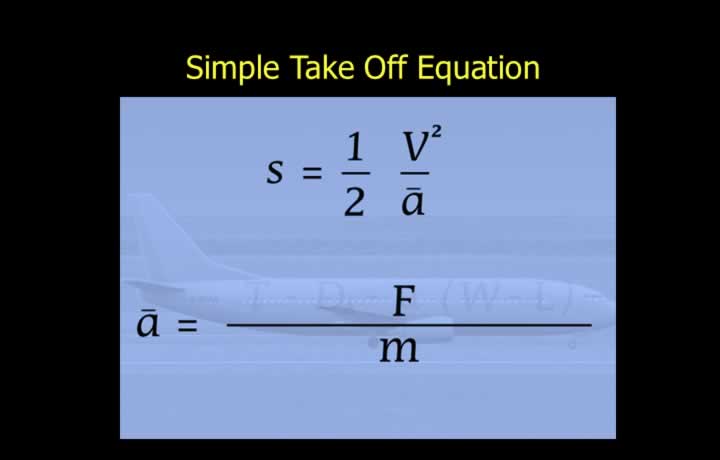
- Acceleration decreases during the take-off roll.
- Drag increases while excess thrust decreases.
- Take-off distance is proportional to:
- Velocity² ÷ (2 × Acceleration)
- Acceleration equals force divided by mass.
- Acceleration is directly proportional to excess thrust.
- Available thrust equals total thrust minus total drag.
- Acceleration is inversely proportional to effective mass.
Factors affecting Take Off Performance
Effect of Aircraft Mass
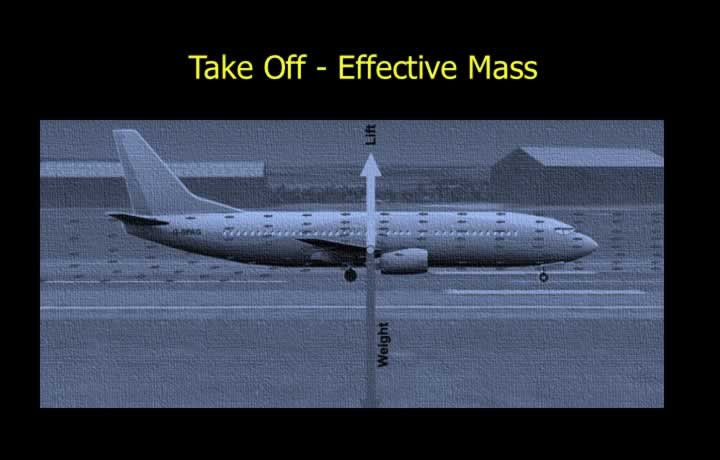
- Increasing aircraft mass increases inertia.
- Higher mass increases wheel loading and wheel drag.
- Acceleration decreases.
- Higher lift-off speed becomes necessary.
- Ground run increases.
- Initial climb angle decreases.
- The aircraft requires more distance to reach screen height.
- Overall take-off distance increases.
Effect of Air Density
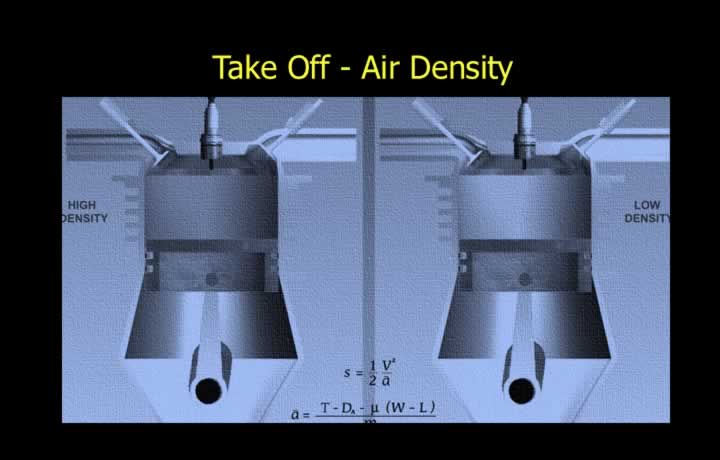
- Lower air density reduces engine thrust.
- Lift-off speed increases.
- Acceleration decreases.
- Dynamic pressure decreases.
- True Airspeed (TAS) must increase to maintain the same IAS.
- Initial climb gradient decreases.
- High temperature, high altitude and high humidity all reduce air density.
- Hot, high and humid conditions reduce aircraft performance.
Effect of Wind
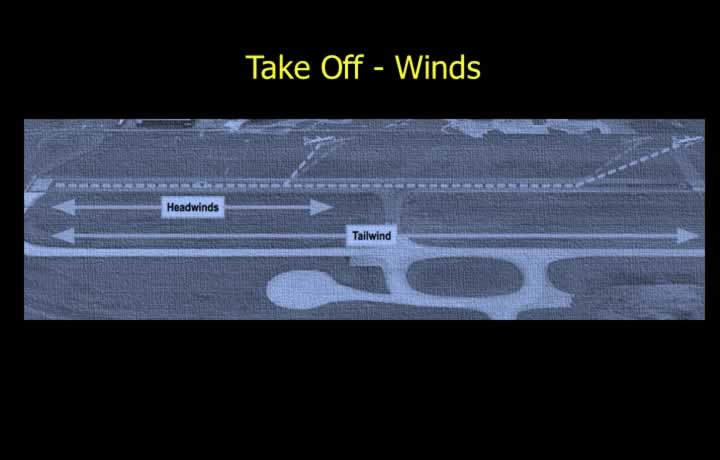
- Headwinds increase dynamic pressure.
- Ground speed required for take-off decreases.
- Take-off distance decreases.
- Tailwinds increase ground speed.
- Take-off distance increases.
- Headwinds improve climb angle while tailwinds reduce climb angle.
Wind Calculations
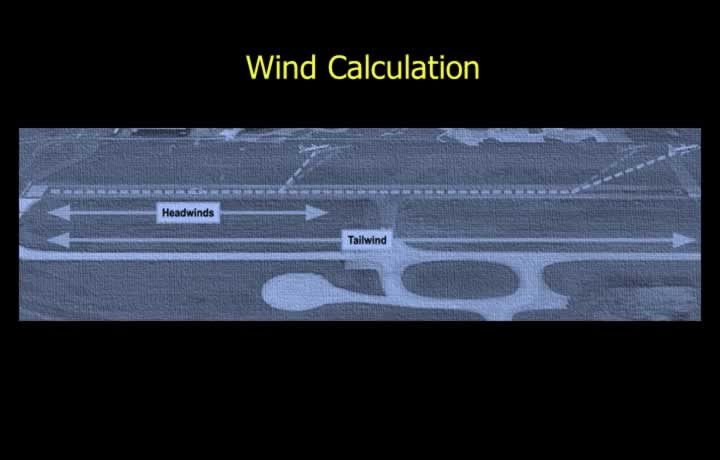
- Performance calculations use conservative wind assumptions.
- Only 50% of the reported headwind is credited.
- 150% of the reported tailwind is assumed.
- Aircraft are also limited by maximum allowable crosswind components.
Effect of Runway Slope
Upslope
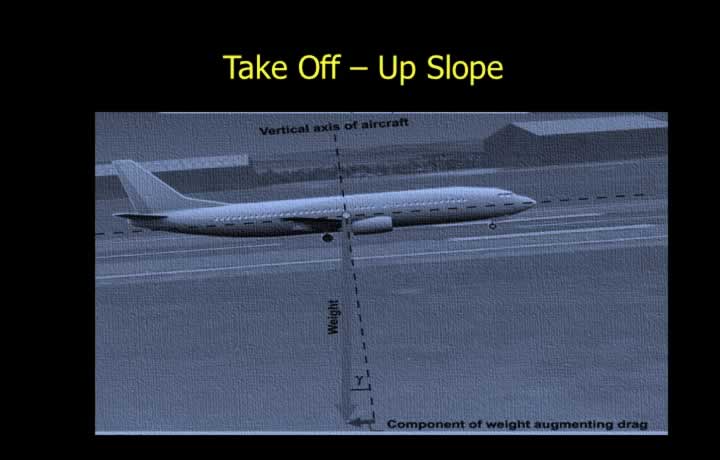
- On an upslope, a component of aircraft weight acts opposite to thrust.
- This increases effective drag.
- Take-off distance increases.
Downslope
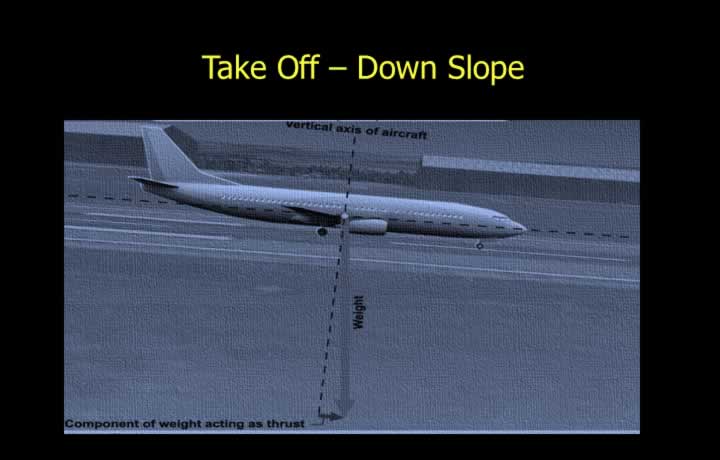
- On a downslope, a component of weight acts in the direction of thrust.
- This improves acceleration.
- Take-off distance decreases.
Slope Rule of Thumb
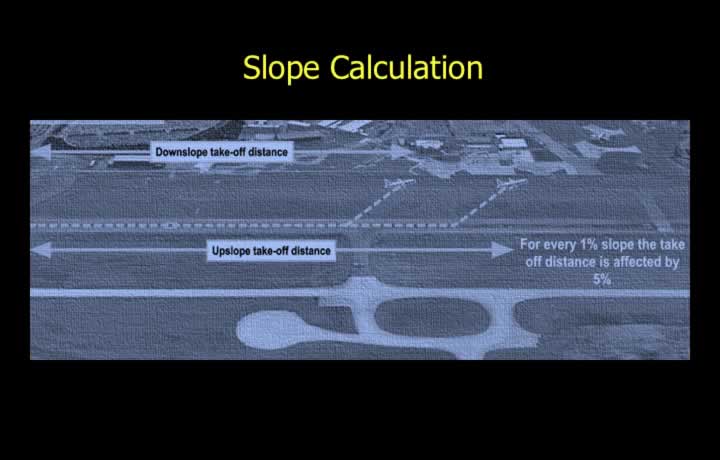
- A 1% runway slope changes take-off distance by approximately 5%.
- This corresponds to a correction factor of 1.05.
- Maximum runway slope at most aerodromes is approximately 2%.
Runway Surface
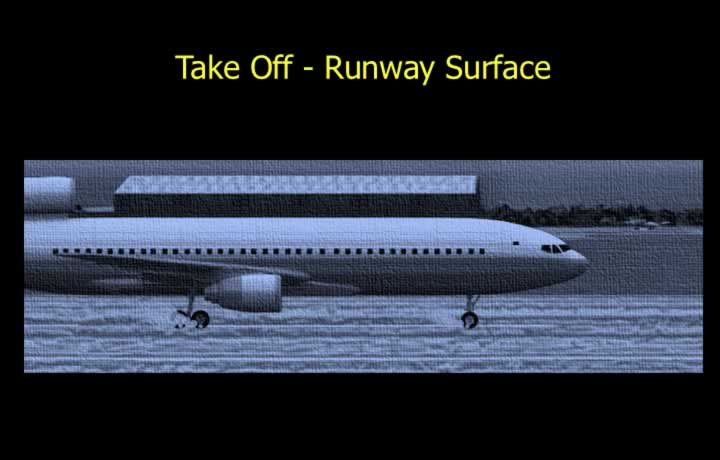
- Grass runways increase wheel drag and take-off distance.
- Standing water, slush and snow also increase drag.
- Spray impingement creates additional aerodynamic drag.
- Water, snow and ice reduce braking effectiveness.
- Accelerate-stop distance increases on contaminated runways.
- Water ingestion may lead to engine failure.
- Contaminated runways can also reduce directional control and increase structural damage risk.
Runway Surface Condition
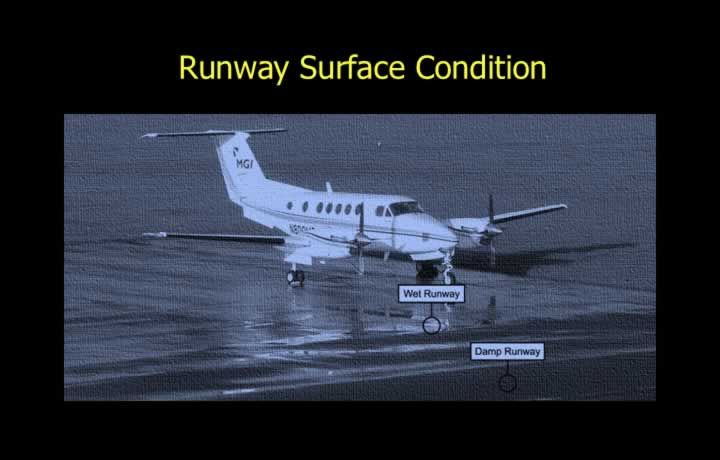
- Runway surfaces are classified as damp, wet or contaminated.
- Damp: moist but non-reflective.
- Wet: moist and reflective.
- Contaminated: at least 25% of the runway covered with 3 mm or more of water, slush or snow.
- Contamination details are published in SNOWTAMs or NOTAMs.
Airframe Contamination
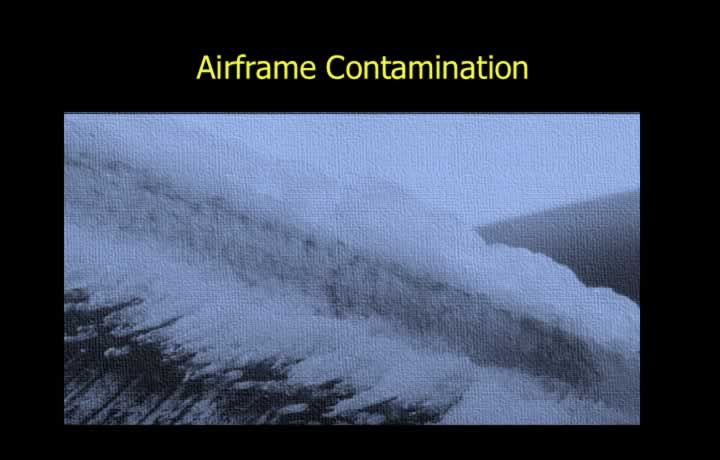
- Ice, snow and water contamination disrupt airflow over the aircraft.
- They increase drag and reduce lift.
- Aircraft weight increases.
- Wheel drag increases.
- Acceleration decreases.
- Take-off distance increases significantly.
Weather
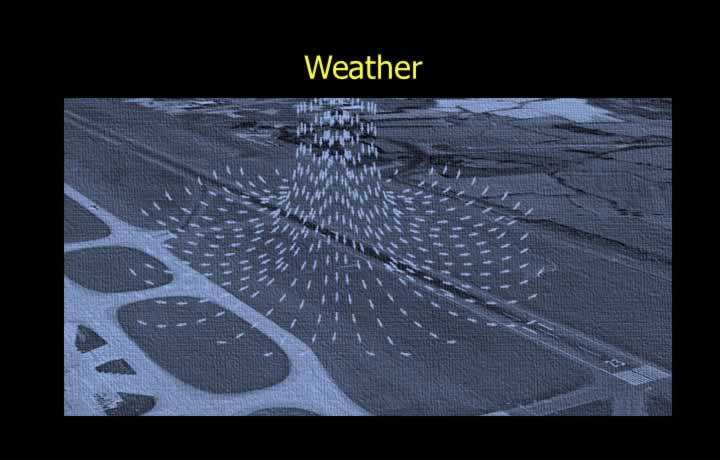
- Heavy rain reduces lift and increases drag.
- Hazards include wind shear, micro-bursts and airframe icing.
Aircraft Configuration
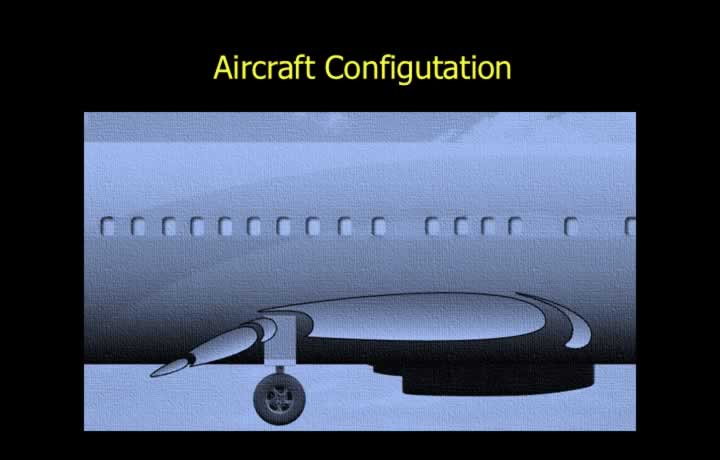
- Flaps are trailing-edge devices that increase wing camber.
- Flaps increase lift but also increase drag.
- The aircraft can lift off at a lower speed.
- Initial climb angle becomes shallower with flap extension.
- Using the recommended flap setting generally reduces take-off distance.
- Smaller flap settings improve obstacle clearance and climb gradient.