Aeroplane Classification System based on Performance Requirements
Aeroplanes are classified based on performance requirements such as speed, range, altitude, payload, or take-off and landing capabilities. This classification groups aircraft according to the missions they are designed to perform. It helps engineers design aircraft that meet specific operational and safety requirements efficiently.
Introduction to Aeroplane Classification System
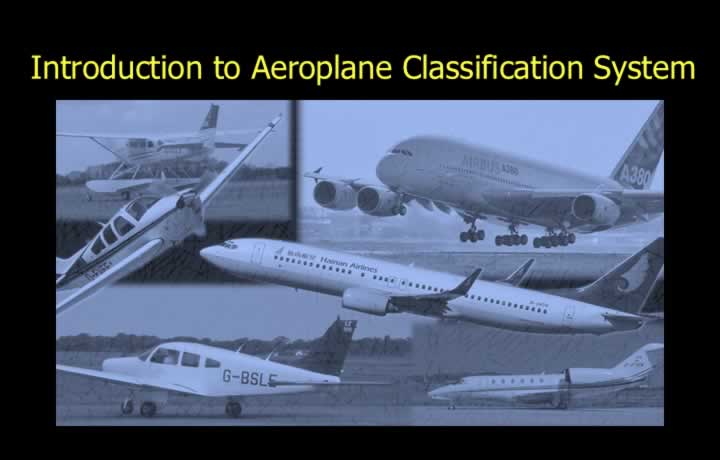
- Aeroplane classification systems differ based on their roles.
- Different aircraft are built for different operational roles.
- Safety requirements differ between aircraft categories.
- The classification system ensures that the appropriate level of performance regulations is applied.
- Higher performance regulations are applied to public transport aeroplanes.
- Public transport aircraft carry large numbers of passengers.
- Aircraft are categorised into four classes: Class A, Class B, Class C and Unclassified.
Type – Class A Aircraft
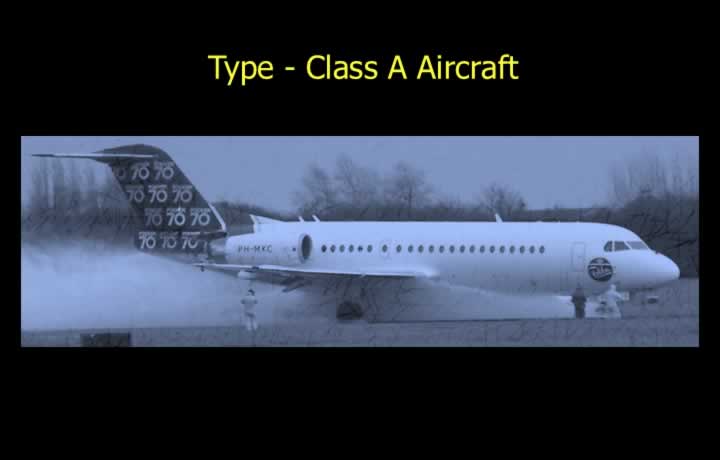
- Class A consists of all multi-engine turbojet and turboprop aircraft.
- Carrying capacity of 10 or more passenger seats.
- Maximum take-off mass (MTOM) of 5,701 kg or more.
- CS-25 safety standards for large aeroplanes are applicable.
- Certified under European Union Aviation Safety Agency (EASA) Certification Specifications.
- Includes all jets from small business jets to large Airbus and Boeing aircraft.
Performance Standards of Class A Aircraft
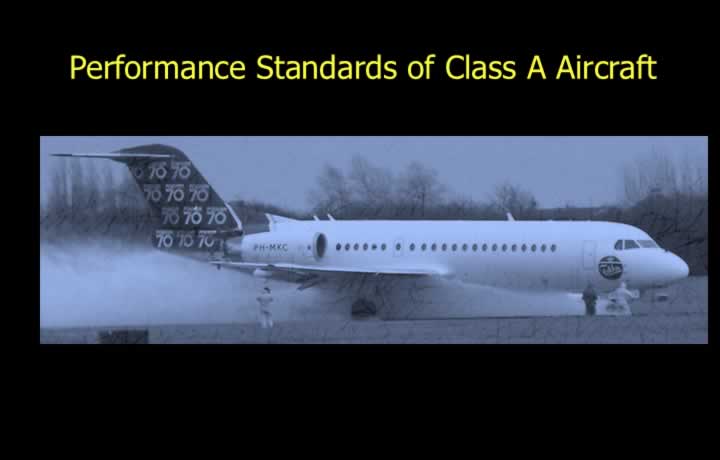
- Class A aircraft are certified for take-off and landing on contaminated runways.
- Snow-covered or waterlogged runways are considered contaminated runways.
- Designed to operate safely in the event of an engine failure or fire during all stages of flight.
- Forced landing is not required following an engine failure or fire.
Type – Class B Aircraft
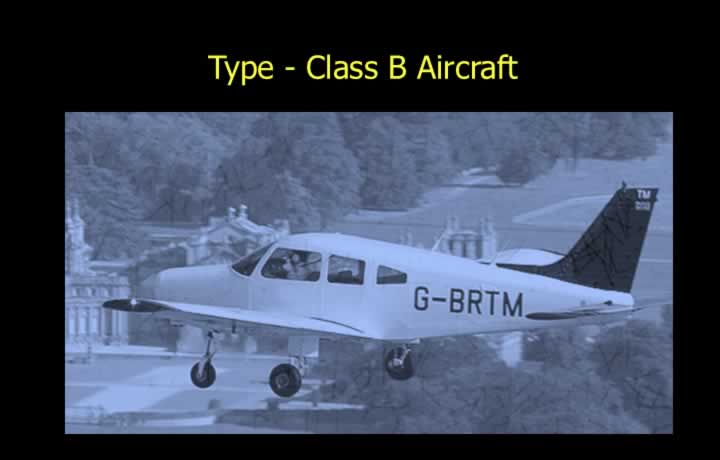
- Class B aircraft consist of propeller-driven aircraft.
- Limited to nine or fewer passenger seats.
- Maximum permitted take-off mass is 5,700 kg or less.
- Performance standards are specified in CS-23.
- Performance standards are lower than those required for Class A aircraft.
Performance Standards of Class B Aircraft
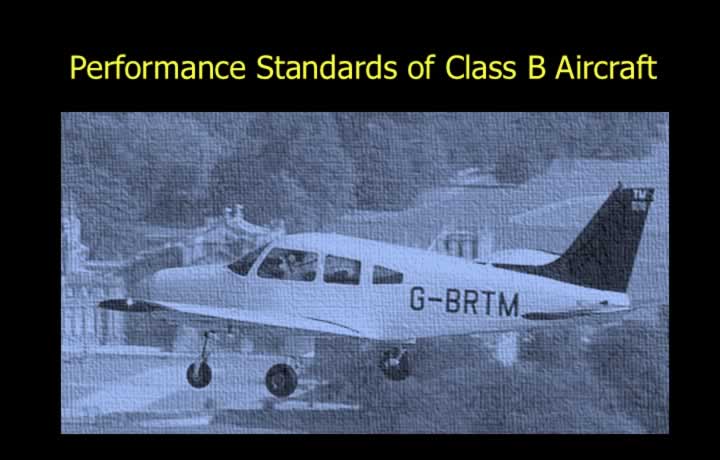
- Class B aircraft are required to meet engine failure performance requirements only above 300 feet.
- In the event of an engine failure below 300 feet, the aircraft should divert.
- The aircraft must be capable of landing safely at a suitable airfield.
- Single-engine aircraft are not permitted to operate at night or under Instrument Meteorological Conditions (IMC).
- Operations are not permitted where suitable diversion airfields are unavailable.
- Examples include the Piper Seneca (twin-engine) and Beech-craft Bonanza (single-engine).
Type – Class C Aircraft
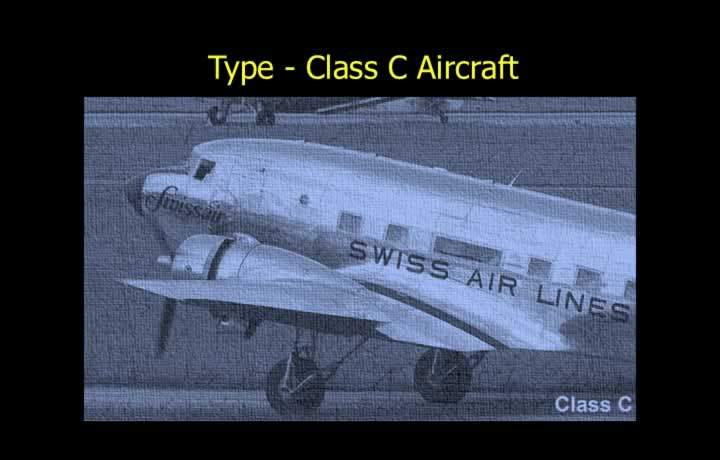
- Class C aircraft consist of all other piston-engine aircraft.
- Maximum seating capacity is 10 passenger seats.
- Maximum permitted take-off mass is 5,701 kg.
- Examples include the Douglas DC-3 and Douglas DC-6.
Type – Unclassified Aircraft

- Aircraft with special capabilities fall under the unclassified category.
- Examples include seaplanes and supersonic aircraft.
- These aircraft operate under specially developed performance specifications.
Comparison of Performance Standards
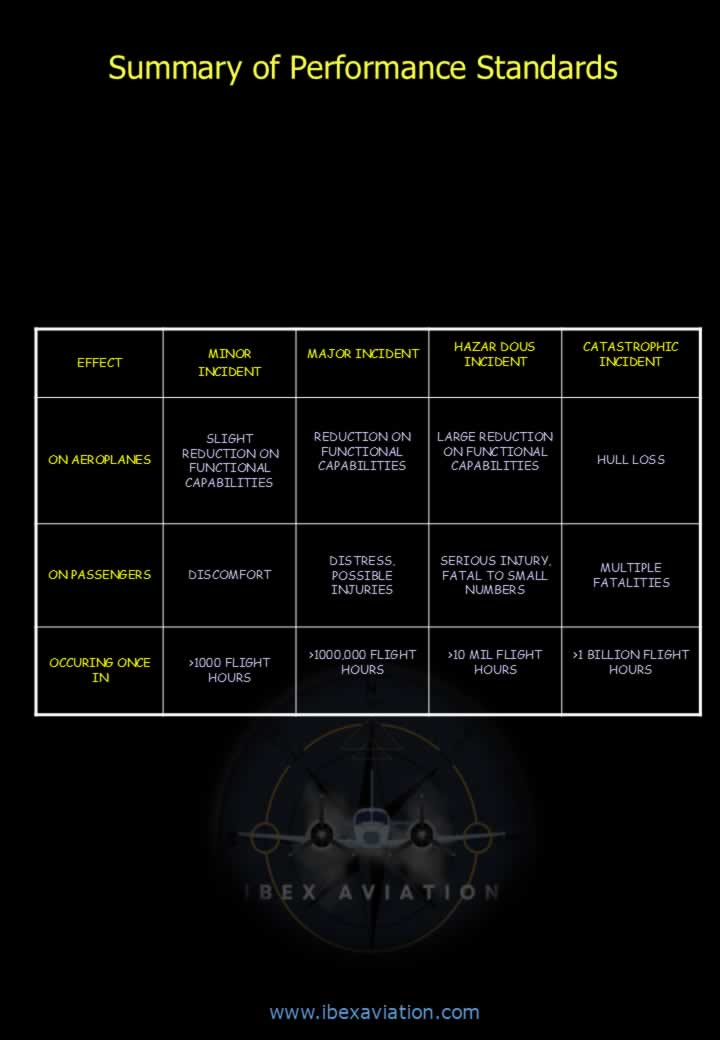
CS and JAR Certification Standards of EASA
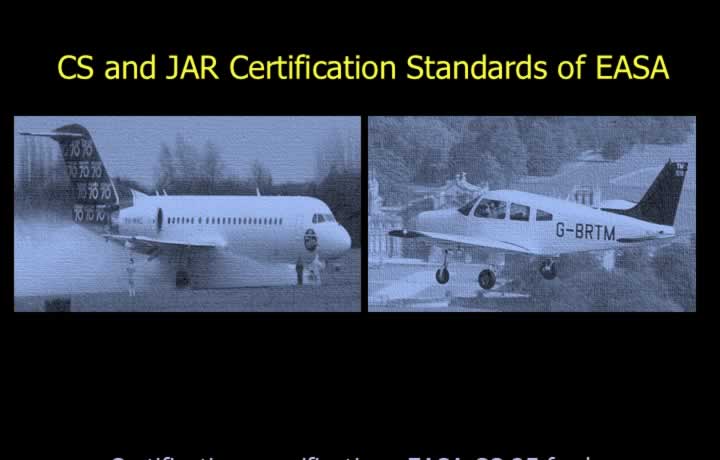
- EASA CS-25 certification specifications apply to large aeroplanes.
- Normal, Utility, Aerobatic and Commuter category aeroplanes are certified under CS-23.
- Equivalent operational regulations are contained in JAR-OPS 1.
- Safety levels are based on the likelihood and significance of an occurrence.
- The objective is to achieve a one-in-a-million safety standard.
- Safety standards and operational requirements complement each other.
- Class B aircraft have stricter operational requirements due to lower certification safety margins.
- Class A aircraft have less stringent operational requirements because of their higher certification standards.
Types of Performance Standards for Civil Aviation
Gross Performance of Aircraft
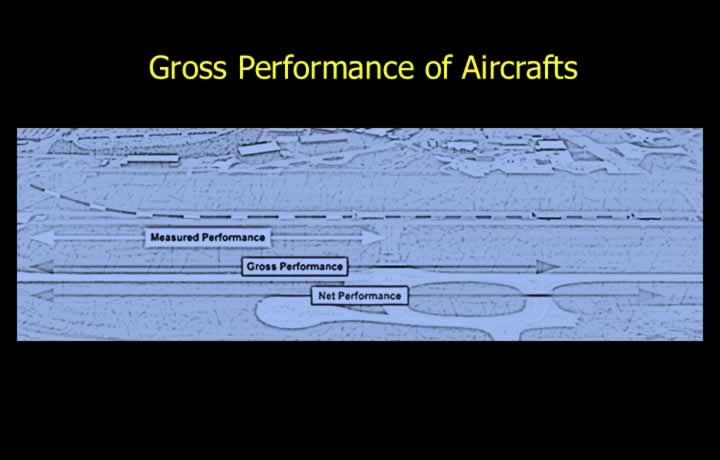
- Gross performance represents the average performance of a fleet of aircraft.
- It is also known as demonstrated performance.
- Aircraft are assumed to be properly maintained.
- Pilots are assumed to possess average flying skills.
- Gross performance is obtained by reducing measured test performance using mathematical factors.
- Actual pilot performance may be better or worse than the average.
Net Performance of Aircraft
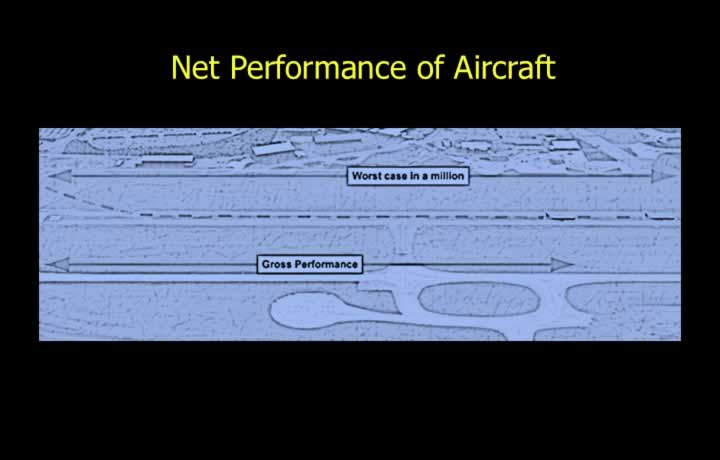
- Net performance assumes pilot performance may be below average.
- It is used to provide additional operational safety margins.
- Performance calculations are based on the worst one-in-a-million aircraft and pilot combination.
- Net performance is used for normal airline operations.
- It is also known as scheduled, planned, or dispatch performance.
- Net performance represents the worst-case operational performance.
- Actual aircraft performance is normally better than net performance.
- In approximately 99.99994% of cases, actual performance exceeds net performance.
Safety Margin
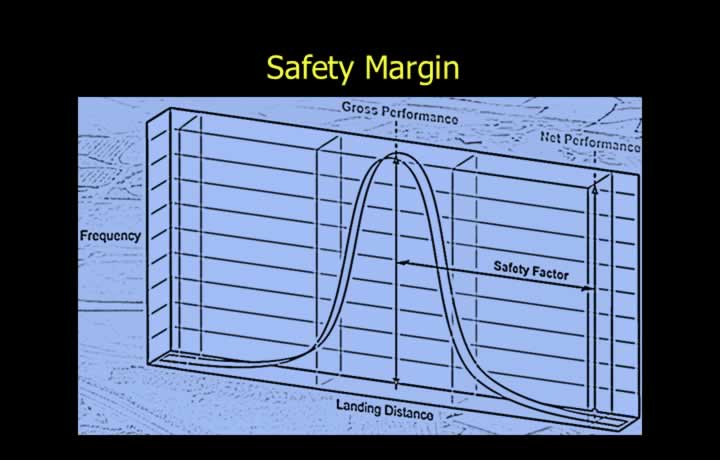
- Safety margin is calculated statistically using operational data.
- Aircraft performance data typically follows a bell-shaped distribution curve.
- The difference between gross and net performance is known as the safety factor.
- The safety factor is also referred to as the safety margin.
Comparison Between Gross and Net Performance
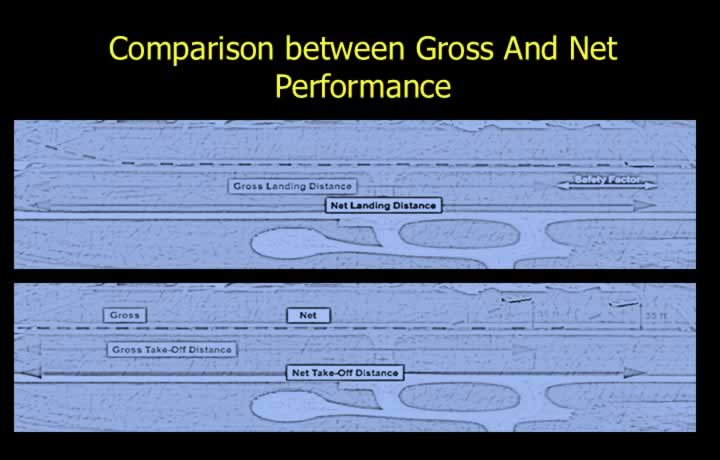
Formula:
Net Performance = Gross Performance × Safety Factor
Examples:
- Net Landing Distance = Gross Landing Distance × Safety Factor
- Net Take-off Distance = Gross Take-off Distance × Safety Factor
Performance Provided in the Flight Manual
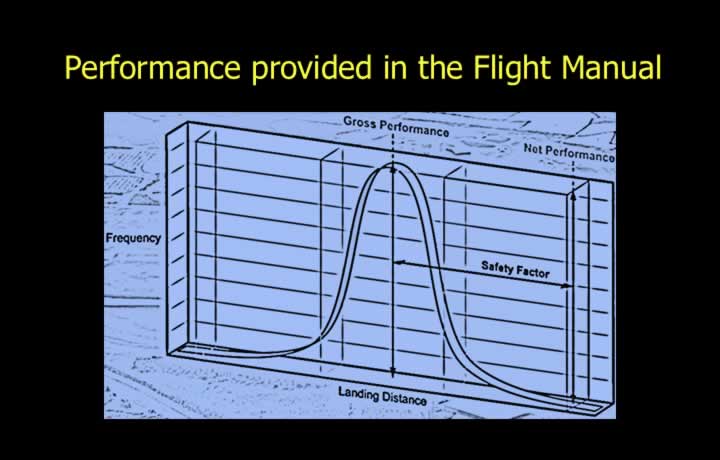
- Net performance is more conservative than gross performance.
- Net take-off distance is longer than gross take-off distance.
- Net climb gradient is shallower than gross climb gradient.
- Net landing distance is longer than gross landing distance.
- Flight manuals for Class A aircraft provide net performance.
- Flight manuals for Class B aircraft provide gross performance.
- Pilots must convert gross performance figures into net performance for operational planning.